“And why are there fawareq tabaqiyya (class differences) between the (tax) collector and the minister?” shouted one of the Minya real estate tax collectors during a meeting with his colleagues to discuss the formation of an independent trade union. “They should be abolished!”
Year: 2008
Trip to Minya: Wedding of a Tax Striker
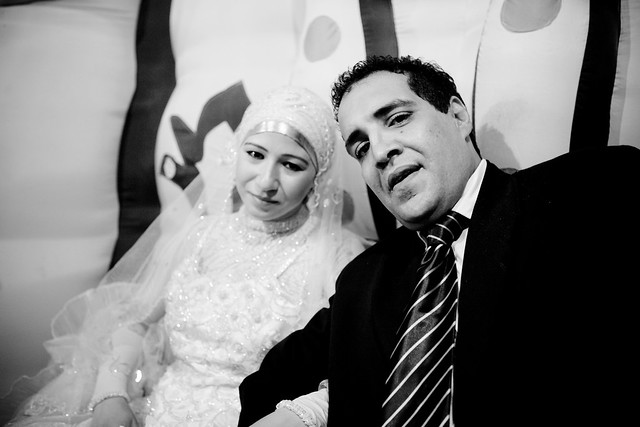
I was invited on Thursday, together with other socialists, to a wedding of one of the Real Estate Tax Collectors’ strike heroes, Islam Muhammad, in the town of el-‘Edwa, located in the Upper Egyptian province of el-Minya. Islam’s original wedding date had been 3 December 2007, the same day 55,000 Real Estate Tax Collectors escalated their strike action to an occupation in downtown Cairo.
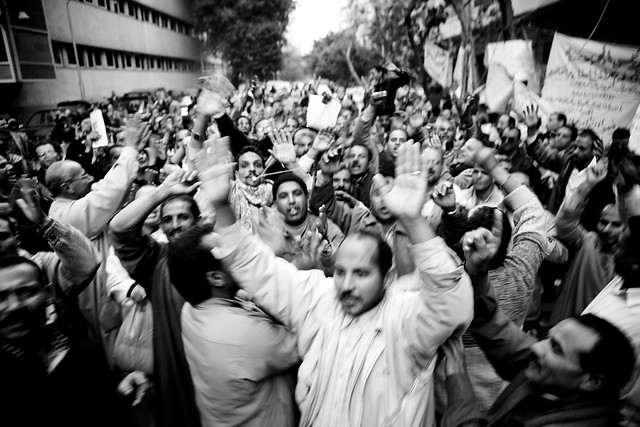
Islam did not hesitate. He decided to postpone his wedding and threw his energies into the occupation, till victory was achieved. In recognition of his efforts, the Real Estate Tax Collectors’ Strike leaders and many of his colleagues whom he got to know throughout the strike came from different provinces to attend his wedding, and invited a group of activist journalists and lawyers who organized in solidarity with the strike.
Before traveling to Minya, we stopped first at one of the provinces, which I won’t mention its name for now, to tour its Real Estate Tax Collection Authority offices, and wait for other members of the strike committee who were coming from different routes to join us there. The first office we visited had five women employees, two of whom I recognized from the camp. Eman was in charge of the “cooking tent” during the downtown occupation while Aziza was a non-stop agitation machine. All the women had a great sense of humor. They were continuously throwing jokes about ten topics in one minute, from teasing me and fellow socialists for being not married though we were in our 30s, to mocking their director whom they referred to as “el-Tok Tok,” to criticizing the Finance Minister and the government as well as the economic situation and food prices, and jump on to another joke about Israel or America… all in one minute…
One of the members of the Higher Committee for the Real Estate Tax Collectors’ Strike, whom I knew, entered the room and took me to his office. “They (the management) have been asking me for years to put up Hosni Mubarak’s photo on the office wall,” he grinned while we were walking. “I finally found one. Have a look!” On the wall, there was a print out of Nasser Nouri’s photo of the Mahalla protesters smashing Mubarak’s poster in el-Shoun Sq. And this was up in a government building office!
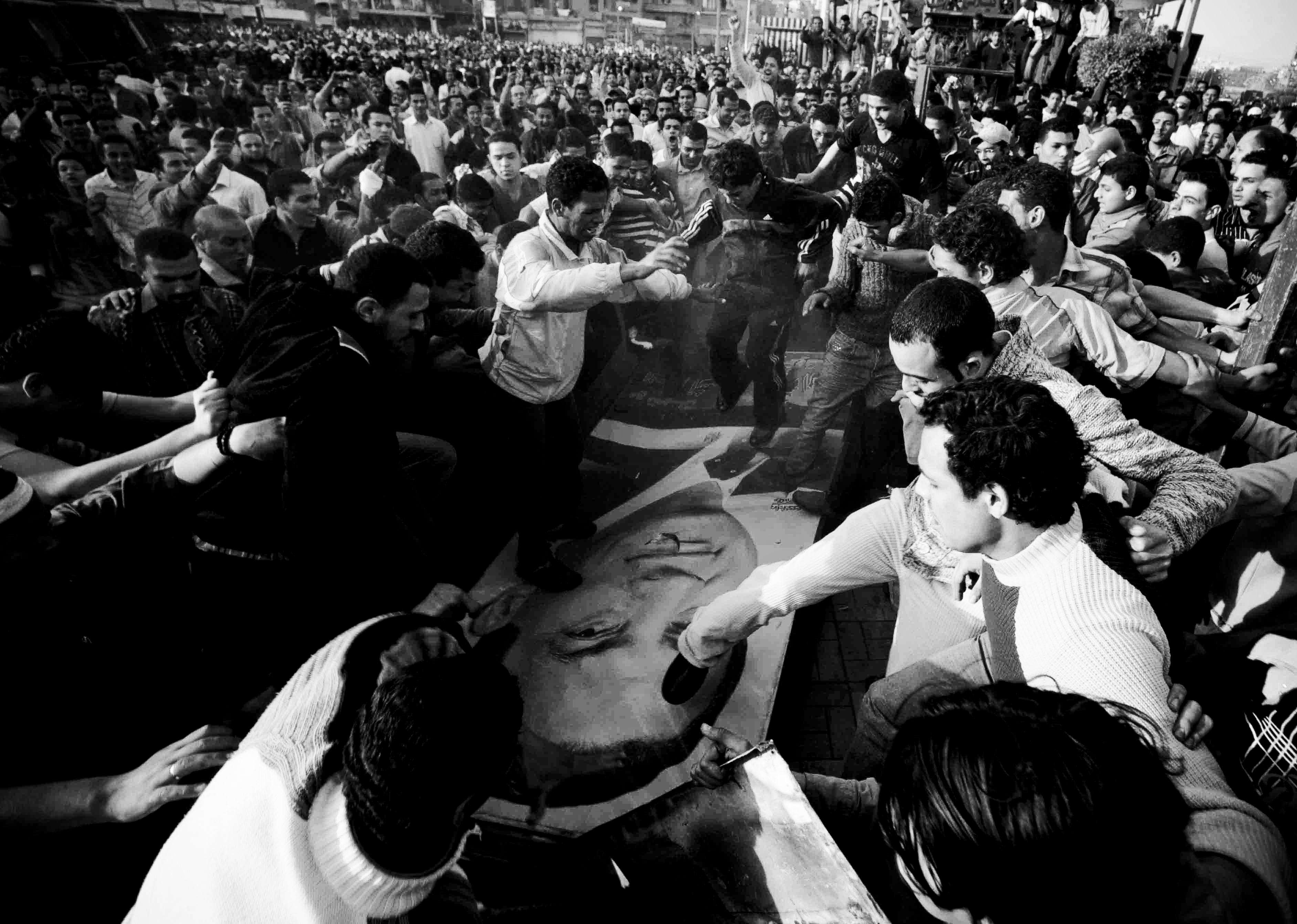
The room was shared by other colleagues, who seemed to have high respect of their strike leader.
We went back to the first room, and were joined by another member of the strike committee who arrived from another provincial directorate. He was wearing a blue shirt, jeans, and black baseball cab with Che Guevara’s picture on it.
“How’s Europe?” He asked, as he knew I was in London.
“They are all talking about those crazy Egyptian tax collectors,” I replied smiling. We started chatting about my trip, and he was keen to know more about the British civil servants’ strikes.
“And what is this?” asked the first strike leader, pointing at his colleague’s Che hat.
“This is Jivara.” he answered.
“Ernesto Chi Jivara,” the first said in an authoritative tone. “That is his full name. He was gamed [solid]! But the Americans killed him.”
Few minutes later, we were joined by a third member of the strike committee who came from a Northern province, and we went out to meet more of the strike leaders and tax collectors who were to accompany us on the trip.
One road to el-‘Edwa, I was sitting beside Kamal Abu Eita, the head of the strike committee. He was also interested in knowing information about the civil servants’ strikes in Britain, and asked in general whether what’s going on in Egypt is filtering to the labor and left circles in Britain.
Naturally the issue of the independent trade union announced by the tax collectors was the one I was so keen on knowing how it was progressing.
“With varying degrees of success,” Abu Eita said. “Things in the Nile Delta are progressing. The Lower Egyptian provinces in the North are the ones where (tax) collectors are active in setting up the new union. But it’s different in Upper Egypt. They are still lagging behind. Historically, it’s always been difficult and a huge challenge for anyone to organize anything political in Upper Egypt. The security is more repressive. They Upper Egyptians are more conservative. We need an extra push in the south.”
On his right side, sat the other strike leader who’s dressed in Guevara’s hat, reading some book. “We have to ensure the new union we are building is democratic,” he said, while Abu Eita nodded. “We have to be a model for democratic practices, and learn from other experiences in other parts of the world.” I asked if I could have a look at the book he was reading. It was an Arabic book about international treaties regarding labor unions rights, and the position of the GCC countries towards them. “Look at all these deserts around us,” he continued after few moments, pointing out of the window. “Why can’t they (the govt) grow wheat or something that can feed the people instead of leaving the land like that.”
“They build five star housing on them,” intervened a young man sitting in the front, who judging by the look could have been a construction worker. “They have golf courses inside. But you won’t be allowed in.”
“They have gates, right?” I said.
“Yeah, Big walls.” the construction worker replied. “As I said they won’t allow anyone in.”
I was reminded of La Zona.
To my surprise, there were women tax collectors with us on the trip. Earlier when we were in the office, I was delighted to see those women assertive, strong and confident in dealing with their male colleagues and the strike leaders. But I thought it would still be a far shot to expect those married women, who come from conservative poor white collar families to travel with their male colleagues to another province–a trip from which they won’t be back to their husbands and families before 3am. But I was wrong. There is a strong feeling of brotherhood and sisterhood among the tax collectors, forged by their year of continuous protests, three-month strike and ten-day street occupation.
We were received as soon as we arrived in the town by Islam.
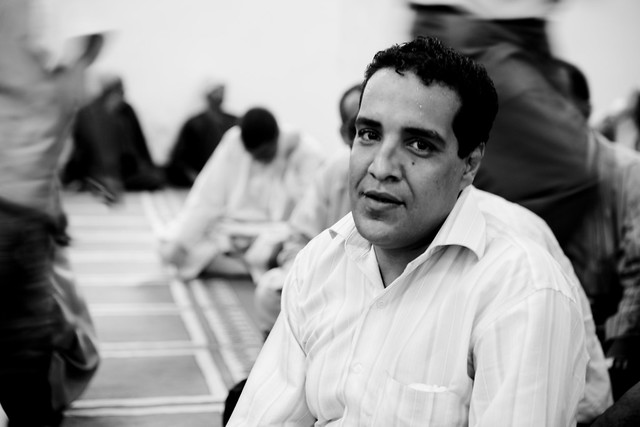
…who led us to his family’s house for a meal, and rounds of tea and cigarettes.
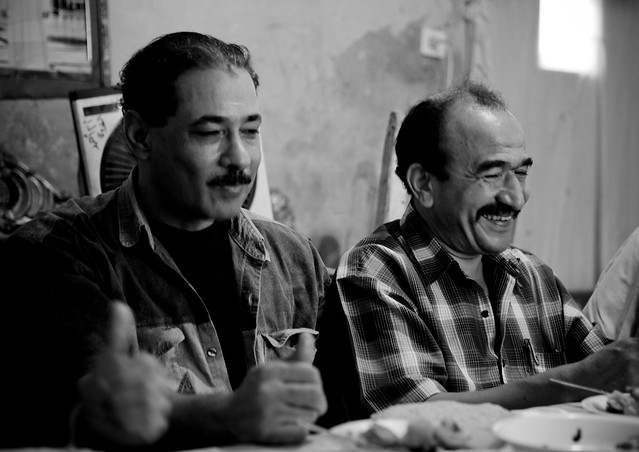
The wedding, in line with the tradition, was conducted first in a mosque…
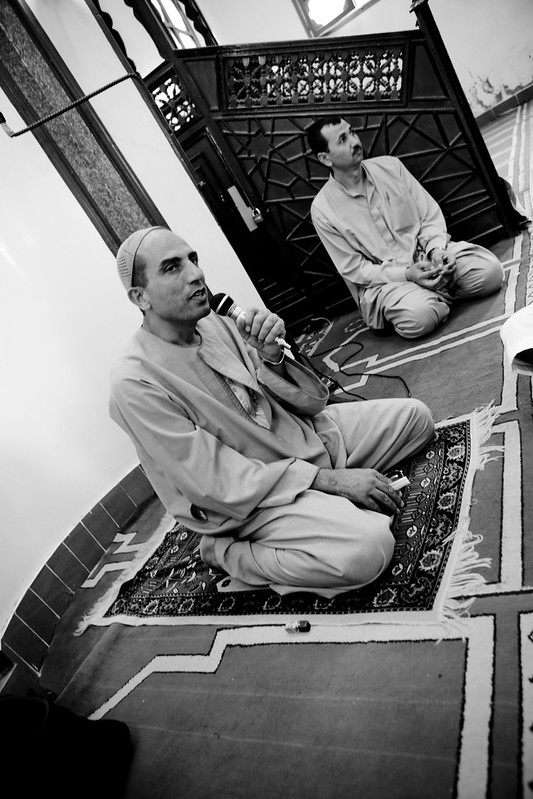
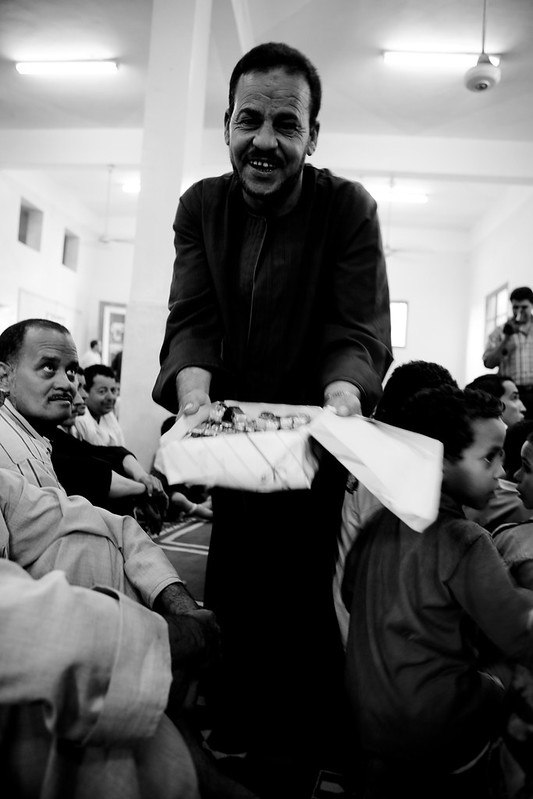
…where the father of the bride and that of the groom read the Fateha, and blessed the marriage…

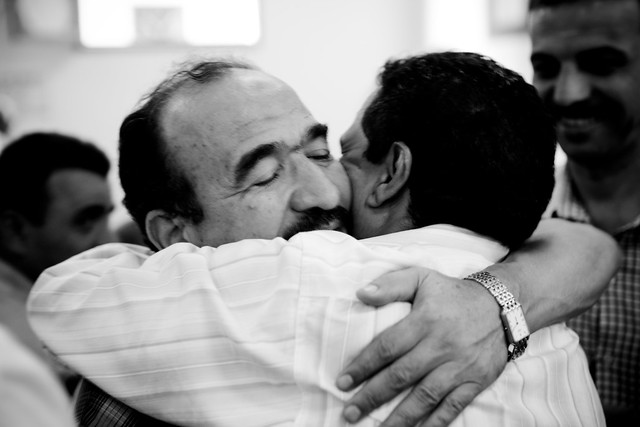
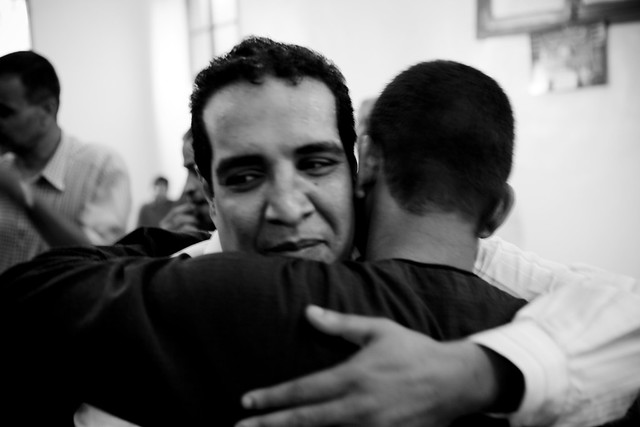
Islam, “the poet of the sit-in,” as described by his colleagues, enjoyed their love. Lots of hugs and kisses were exchanged.
The tax collectors used the opportunity that there were a good number of their Minya colleagues present to start chatting on the side about the new trade union. Three women were present in the discussions, and again I was impressed by their militancy and confidence in arguing for ideas, debating suggestions proposed by their male colleagues. It was evident they had a voice in how the struggle is steered.
After hours of political discussions, everyone went back to the wedding…

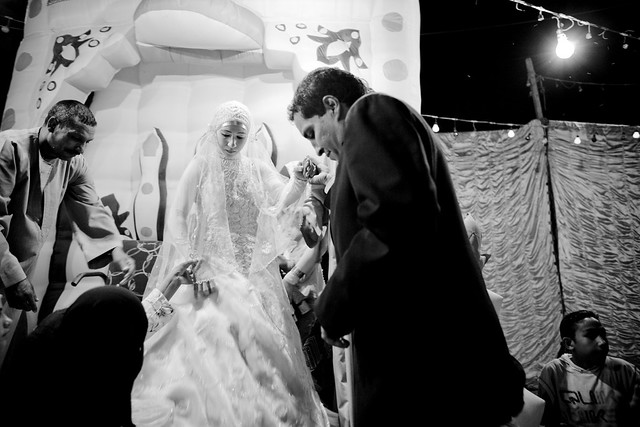
… for a good doze of belly dancing…
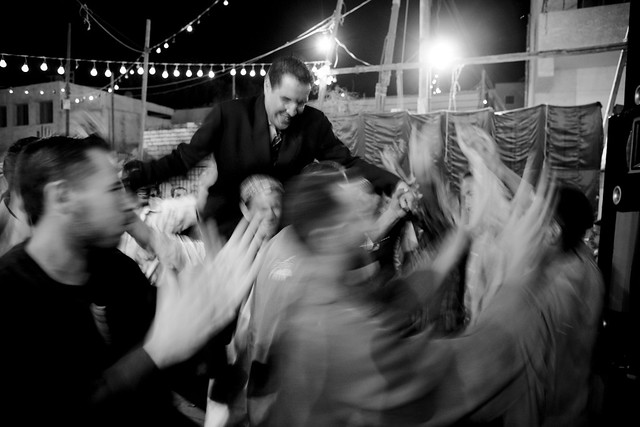
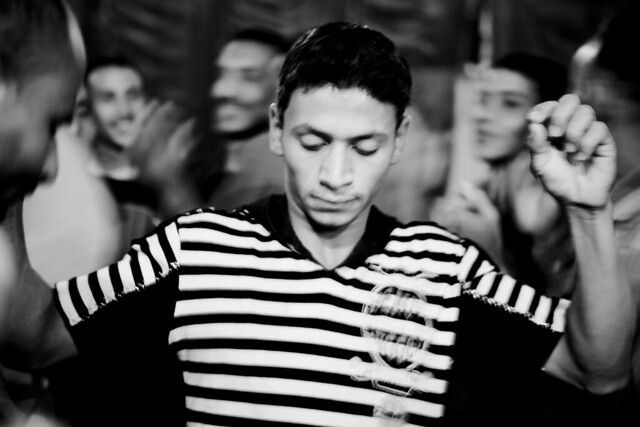
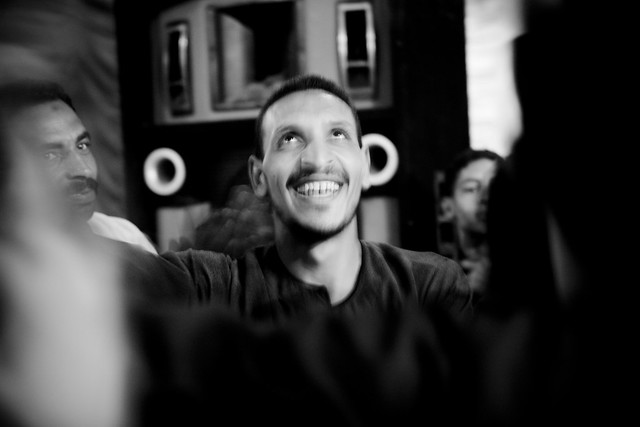
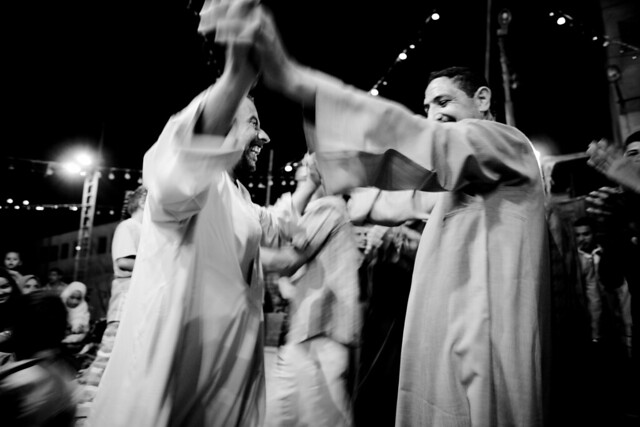
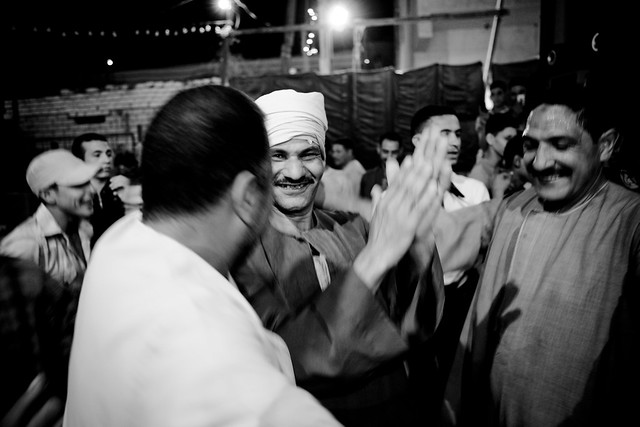
I was happy too to discover some hidden talents among the comrades.. So it turned out Haitham is not just a militant labor lawyer, but also one hell of a Nabbout-dancer…!

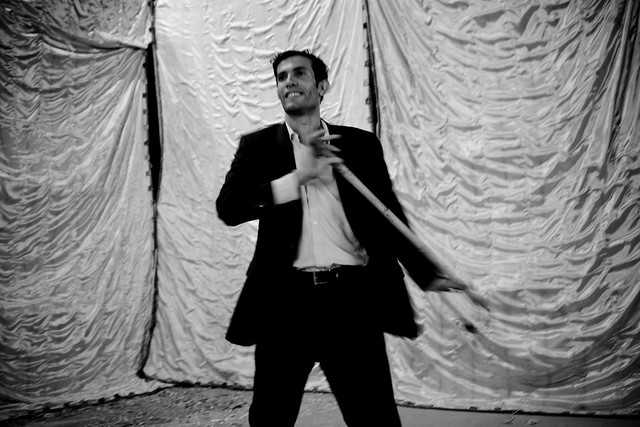
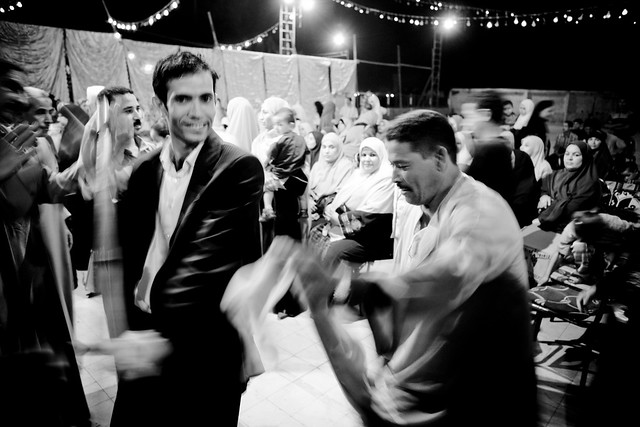
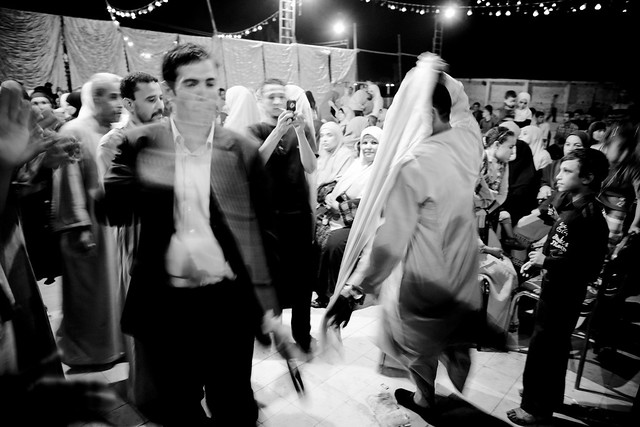
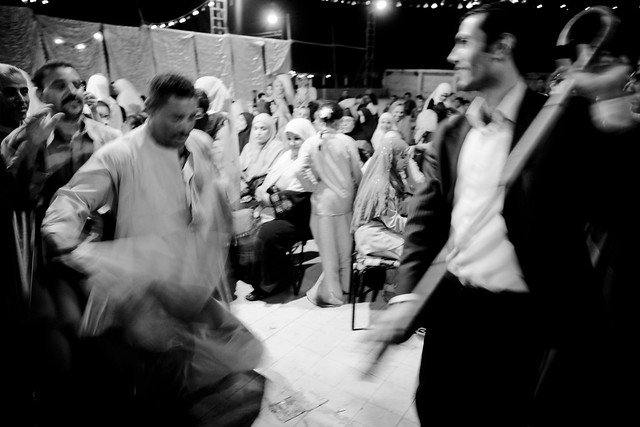
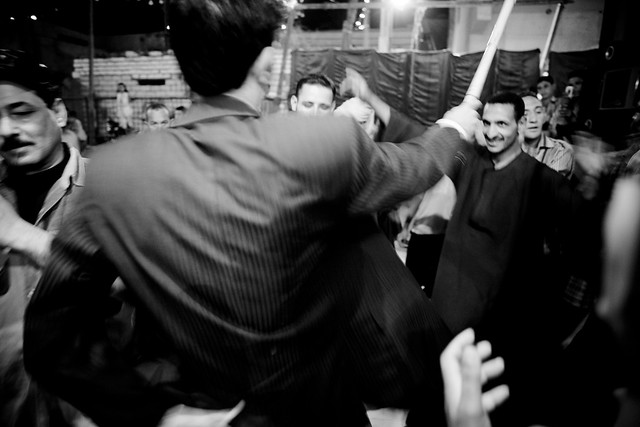
Alf Mabrouk for Islam. And my best wishes and solidarity go for his colleagues who are building Egypt’s first independent trade union since 1957.
Amnesty: No justice for 49 Mahalla citizens facing trial before emergency court
I received the following statement from Amnesty International:
On the eve of the trial of 49 people for alleged involvement in violent protest, Amnesty International calls on the Egyptian authorities to stop trying individuals before special emergency courts that flout basic guarantees for fair trial. The organization also urges the authorities to open immediately a thorough, independent and impartial investigation into the defendants’ allegations of torture.
Forty-nine individuals accused of taking part in violent protests, including nine workers and other craftsmen, will stand trial before the (Emergency) Supreme State Security Court in Nile delta city of Tanta, north of Cairo, on 9 August 2008. They are being tried on account of a range of charges, including assembly of more than five people with the aim of disturbing public order and security, deliberate destruction of public and private property, ransacking and theft, violent resistance and assault on police officers during their duties and illegal possession of firearms. Five of them believed to be on the run will be tried in their absence. They face up to 15 years’ imprisonment, if convicted.
On 5 April 2008, the government banned all demonstrations in advance of a general strike planned for 6 April in support of industrial action by textile workers in Mahalla, some 120 km north of Cairo. Thousands of police and security forces were deployed in Mahalla, Cairo and other cities. Although the industrial action planned by textile worker in Mahalla was called off after negotiations with officials and under pressure from the government, violent protests broke out in the city against the rising cost of living. At least three, including schoolboy Ahmad Ali Mabrouk, were killed by bullet injuries and dozens were wounded due to excessive use of force by security forces, many of whom were also injured. Some 258 who were arrested during the clashes were all released later without charge.
The 49 who are now facing trial were arrested between 13 and 18 April 2008 after the clashes in Mahalla. Following their arrest, the defendants were blindfolded for up to nine days. Many allege that while held initially at the State Security Investigations (SSI) offices in Mahalla and later at SSI headquarters in Lazoughly in Cairo, they were beaten, given electric shocks and threatened that their female relatives would be subjected to sexual abuse.
When they were brought before the Public Prosecutor on 21, 22 and 23 April, their lawyers complained about the torture and other ill-treatment to which the accused were allegedly subjected. However, no independent investigation is known to have been opened into these allegations. The main pieces of evidence used against the defendants are “confessions” allegedly obtained under torture that they had thrown stones at the police as well as the testimonies of witnesses, all of whom are members of the security forces or government officials. Some of the defendants also said that they had not participated in the protest and had witnesses to confirm their statements. Although the Public Prosecutor heard some of these witnesses, he dismissed their testimonies as baseless.
The Egyptian authorities have a right to establish law and order and prosecute those responsible for violence; however, while doing so they must not curb peaceful protest and the rights to freedom of expression and assembly as protected under international law. Those protesters found not to have used violence must be released immediately and unconditionally; the others must be given a fair trial in accordance with Egypt’s obligations under international human rights law and standards.
All the defendants remained in detention until 2 June when the Public Prosecutor ordered the release on bail of 20 of them, including a 58-year old woman. Nine of those released were immediately rearrested under emergency legislation by orders of the Minister of Interior. All those in custody are currently held in Borj al-Arab Prison, near Alexandria. On 6 June, the Public Prosecutor referred their case for trial before the emergency court in Tanta.
They are the first to be tried by an emergency court following the Egyptian authorities’ renewal of the state of emergency in May 2008. Emergency courts are special courts established under emergency legislation. Amnesty International’s research shows that they use evidence obtained under torture and other ill-treatment to secure convictions and their procedures routinely fall short of the basic guarantees for a fair trial. Furthermore, judgements by emergency courts cannot be appealed and become final after ratification by the President.
Amnesty International is urging the Egyptian authorities to rescind the decision to refer the defendants to the emergency court and order a retrial before an ordinary court and ensure they receive a fair trial.
The authorities must also open a full, independent and impartial investigation into the killings in Mahalla which left three dead. In particular the investigation should focus on the circumstances in which police used lethal fire and ensure that any officers or other officials responsible for using or ordering excessive force should be brought to justice.