Skip to content
3arabawy
3arabawy

Hossam el-Hamalawy

  • Home
  • About
  • Archive
  • Blog
  • Photos
  • Books
3arabawy

Hossam el-Hamalawy

Tag: 1977

18 & 19 January 1977: The Lost Revolution

Posted on 19/11/200705/02/2021 By 3arabawy

The Bread Uprising that shook Egypt’s urban towns on the 18th and 19th of January, 1977, is always wrongly treated in the mainstream media as an “Uprising of thieves,” quoting President Sadat’s description of the events, with emphasis on the violence and the looting that accompanied the people’s uprising.

After Mahalla triggered the Winter of Labor Discontent, and once more pushed for a Hot Industrial Autumn, some on the Left today cannot help but drawing parallels between the current situation and the time leading to Jan ’77.

The preconditions that preceded Bread Intifada will be the subject of a future posting; the events were the climax of a rising social movement from February 1968, that culminated in the two-day uprising that was to be crushed by Sadat’s army in 1977.

In this posting, however, I’ll focus on 1976 onwards, and the organized working class movement vs. the rioting which was mainly conducted by the urban poor. The resources used are parts of the MA Thesis I wrote eight years ago.
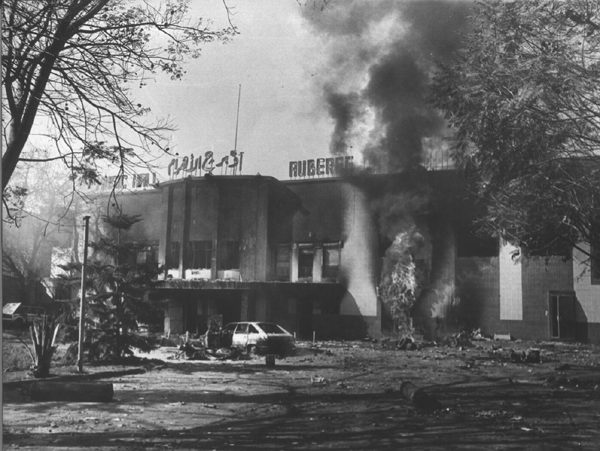
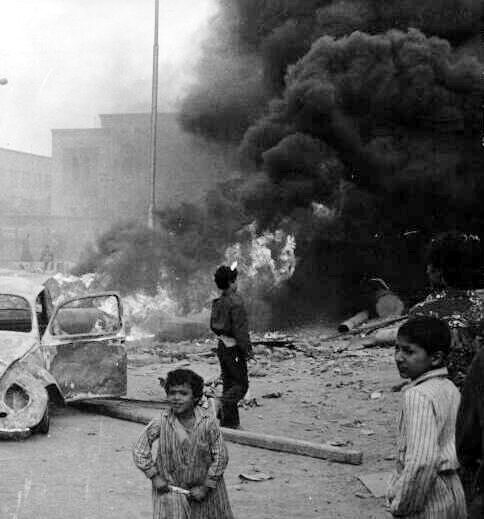
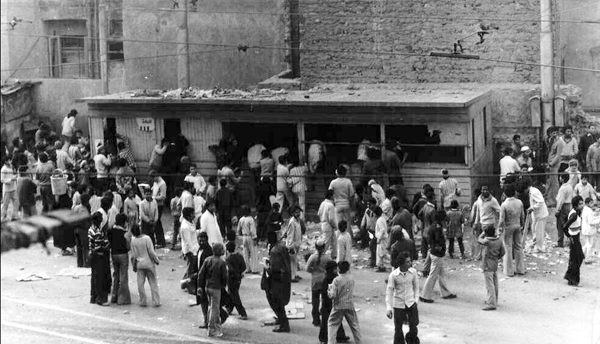
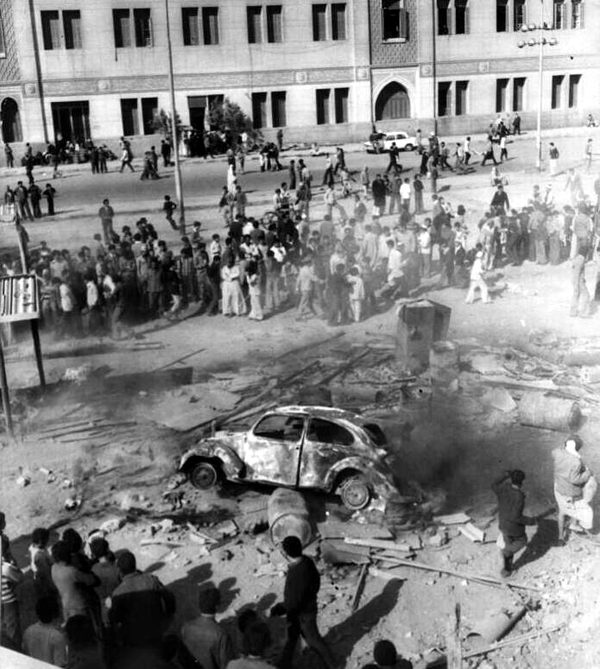
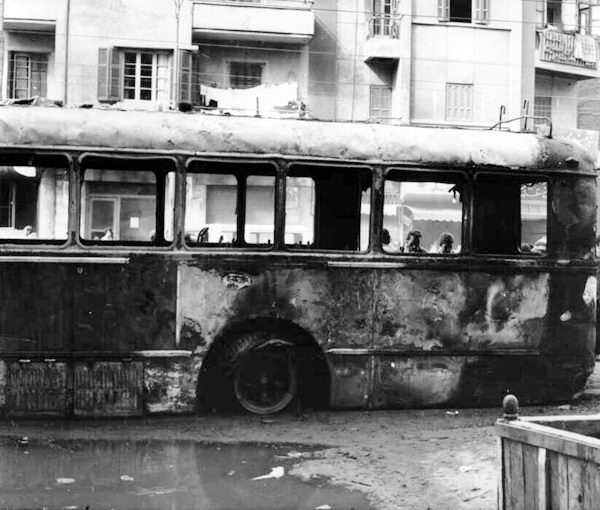
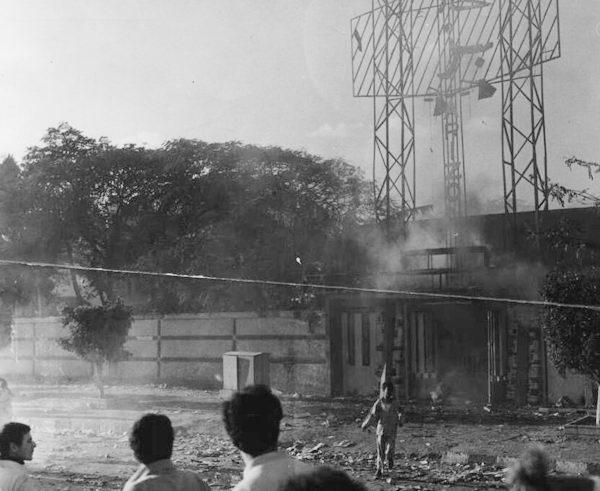
  • January 1977 Bread Uprising (Photo from Al-Ahram Archives)
  • January 1977 Bread Uprising (Photo from Al-Ahram Archives)
  • January 1977 Bread Uprising (Photo from Al-Ahram Archives)
  • January 1977 Bread Uprising (Photo from Al-Ahram Archives)
  • January 1977 Bread Uprising (Photo from Al-Ahram Archives)
  • January 1977 Bread Uprising (Photo from Al-Ahram Archives)
  • January 1977 Bread Uprising (Photo from Al-Ahram Archives)
  • January 1977 Bread Uprising (Photo from Al-Ahram Archives)
  • [19-1-1977] Demonstrators protesting increased food prices regroup on a rubble strewn street in Cairo Wednesday, after battling the Central Security Forces (Photo by AP)

Public transportation workers on strike إضراب عمال النقل العام

Posted on 02/05/200715/01/2021 By 3arabawy

I’m receiving news that 3000 public transportation workers are on strike in Cairo. They include bus drivers, ticket collectors, maintenance workers in the stations of Nasr and Fateh, located in my neighborhood Nasr City, east of the capital.

I’ll post more details soon.

UPDATE: The Sixth District of Nasr City has turned into a military zone, with heavy police deployments. The strikers are under siege. No photographers or reporters are allowed in. The strikers number something between 2000 and 3000. The workers are demanding raising their ridiculously low salaries (you can work for 10 years, and your basic salary won’t exceed LE500). They are also demanding a corruption investigation into their housing society, especially with the existence of 26 emergency cases of workers without houses. The strikers are also demanding equality in food allowances. While the driver receives LE100 a month, the ticket collector receives LE55, and the maintenance worker gets LE20!! The strikers are demanding the food allowance to be raised more than LE100 and to be paid equally to everybody.

The strikers, in addition, want an increase in their percentage of the bus tickets sales. The workers get 2.5% of the value of the sold ticket. They want to increase this to 10%.

The workers are also protesting their treatment when they get transferred from their jobs due to medical reasons. The government cuts down their bonuses from LE300 to LE70!

The workers have occupied the two stations (Nasr and Fateh), which have 149 buses. The government managed only to bring out less than 40. The rest are under the workers’ control.

The public transportation workers in Sawwah and Giza have not joined the strike yet, but my sources say they are following closely what’s happening in Nasr City, and there’s a possibility the industrial action will spread.

Could that be another 1976? Back then, public transportation workers launched a national strike, one day after Sadat was declared president by 99% in a sham referendum. This paved the road to the January 1977 Bread Intifada.

UPDATE: It’s 10pm now. The strike continues in Nasr and Fateh stations… but no information is available yet if anything happened in the other stations in Cairo or Giza. I was told the chief of the Public Transport Authorities arrived in person to negotiate with the strikers. He asked them to suspend the strike, and promised their demads will be met in July with the start of the new financial year. The workers refused, and are still sitting in.

Monday: Mahalla textile workers demand their pro-govt union dissolved

Posted on 28/01/200730/03/2015 By 3arabawy

It is happening…

In what could be the biggest challenge to the state-controlled General Federation of Trade Unions since its foundation in 1957, a delegation of 100 workers from Ghazl el-Mahalla Textile factory will show up on the door step of the General Union of Textile Workers in Cairo (located 327 Shobra – Mazzallat St.) on Monday 10 am, armed with a petition signed by 14,000 workers demanding the dissolution of their Factory Union Committee, after the latter took a pro-management stand during the December strike.

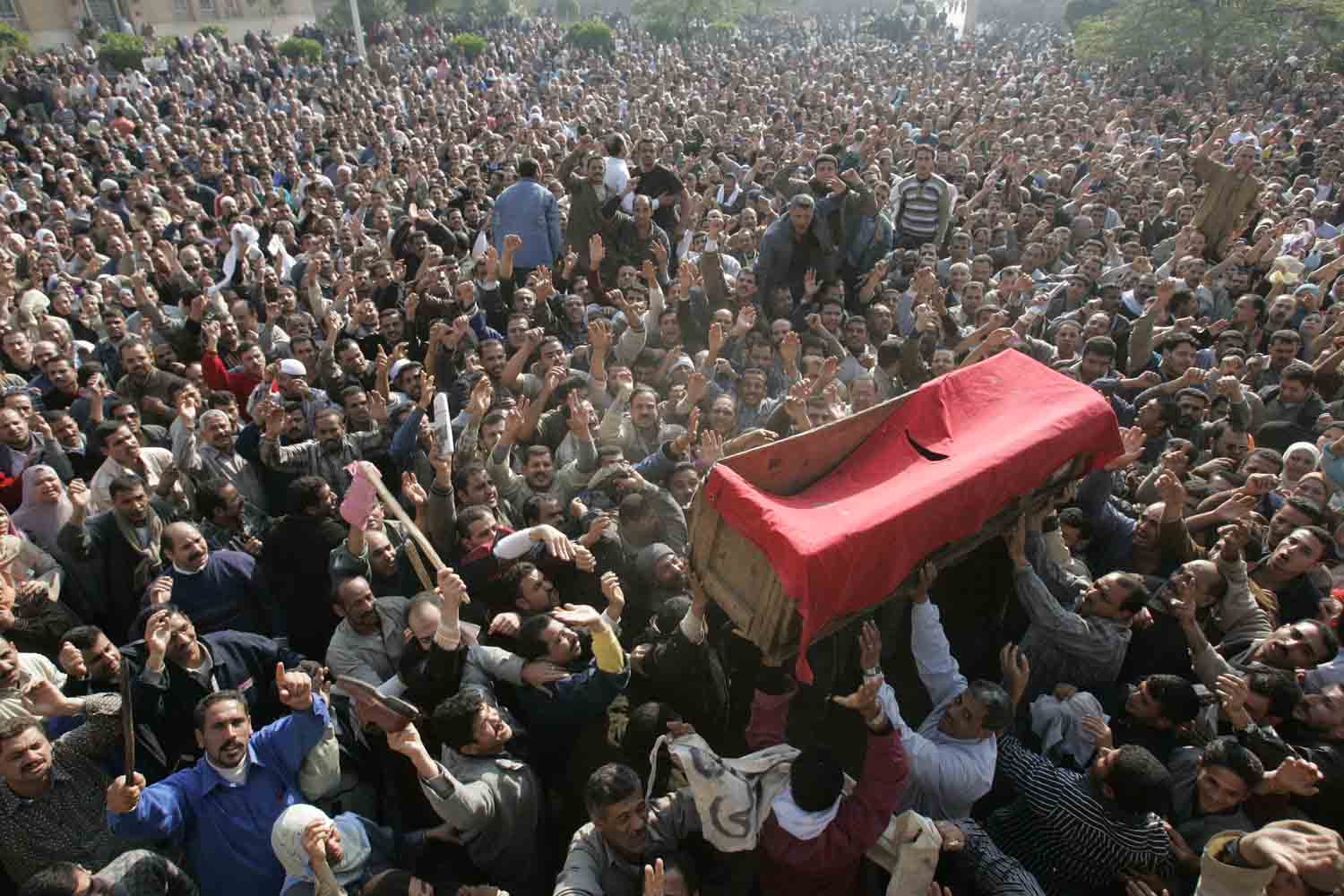
9 December 2006: More than 20,000 workers at the state-owned Ghazl el-Mahalla are striking, demanding two-month bonus and the impeachment of their corrupt management. Photo by Nasser Nouri

[Above: Photo of Ghazl el-Mahalla Textile workers staging mock funeral for their management, during the December strike. Click on the photo to watch a slide-show by Nasser Nouri.]

The campaign to impeach the factory union representatives started shortly after the 27,000-strong labor strike ended in victory, despite the open conspiring from the union bureaucrats against the strike and the factory occupation. According to Law 35/1976 (Egyptian Labor Unions Law), the required percentage is 50% +1 to impeach the union officials. (The workers, according to a Socialist source, have actually managed to collect 19,000 signatures.) This means the General Union is obliged to impeach the Factory Union Committee officials now.

If met with refusal, the Ghazl el-Mahalla Textile workers have clearly stated they are resigning en masse from the General Federation, and will be launching an independent labor union body.

Ghazl El-Mahalla is probably the biggest factory in Egypt, where 27,000 workers work shoulder to shoulder, and enjoy a historical fame for labor militancy. The leadership of the December strike, however, was composed mainly of young workers in their 20s and 30s. More interestingly, women played a central role in the strike, according to a Revolutionary Socialist activist I met tonight who’s connected to the December strike. The young age of the strike leaders can mean they lack the experience, but at the same time this can still be a plus, as they have not seen the catastrophic defeats and brutal crackdowns of the 1980s, when General Zaki Badr’s troops used to open live ammunition on strikers. They are fresh blood, who were thrown into battle last December… and they won… the sweet taste of victory is still in their mouths as they now take on their General Federation.

If Ghazl el-Mahalla workers manage to score a victory against their union bureaucracy, this will encourage other workers to step in. It is no secret there is mass frustration among the ranks of workers in other sectors (like the railways) against their union leaders (who mostly got their seats via vote rigging and security connections).

Whatever the outcome of Monday’s battle, this is just the beginning of a long-awaited fight against the General Federation–the regime’s arm within with the working class. And it couldn’t have come at a more critical time, where the Federation is already in a shaky position.

The General Federation cannot claim anymore it is the “representative of Egypt’s workers.” The Federation’s membership today stands roughly at 3.7 million workers– only 20 to 25% of Egypt’s working class. The vast majority of the workers are outside the govt-controlled union structures at the present time… and they don’t have any representative body.

The General Federation is facing international isolation, after repeated requests to join international labor bodies were refused because of obvious lack of independence and the draconian restrictions the Federation itself imposes on the right to strike.

Shaking the echelons of the General Federation means drastic implications to the regime:

The ongoing constitutional amendments circus will need to be ceremonially endorsed by the Federation to add the necessary facade of legitimacy the regime needs. In other words, Mubarak needs Hussein Megawer (the sec-gen of the Federation) to go out in public and say: “In the name of Egypt’s workers, we support the amendments Mr. President.” If the Federation is shaken now, this can indirectly affect the constitutional amendments process.

The regime depends strongly on the union bureaucracy for mobilization. Those buses that were shipping in the “NDP supporters” to electoral posts during the November 2005 parliamentary elections, to rig the vote in the provinces, were carrying no ones but poor public sector workers, mobilized by the union bureaucrats who are closely affiliated with the NDP.

The “mass demos” that the NDP mobilizes, whether to cheer the president’s visit to some town, or to protest the Iraq war in the Cairo Stadium in February 2003, were also mobilized by the unions.

In the past, the General Federation played a crucial role in mobilizing (together with the Arab Socialist Union, the NDP’s grand daddy) mass pro-Nasser demos following the 1967 defeat, and in countering the January 1977 “Bread Intifada”… providing the successive military regimes with an arm inside the working class, and with a vital tool for pro-government street mobilization.

If there is, as many believe in Egypt, a family power succession scheme in brewing, then our elite cannot afford losing the General Federation, in order to ensure no troubles happen in the factories or the industrial centers.

The Ghazl el-Mahalla Textile workers are asking for your solidarity. If you are in Cairo, please show up on Monday 10 am in front of the General Union for Textile Workers, as they present their petition.

See you there…

  • Previous
  • 1
  • …
  • 5
  • 6
  • 7
  • Next

Search 3arabawy

Follow 3arabawy

  • Facebook
  • Flickr
  • Instagram
  • X
  • YouTube
©2025 3arabawy