Skip to content
3arabawy
3arabawy

Hossam el-Hamalawy

  • Home
  • About
  • Archive
  • Blog
  • Photos
  • Books
3arabawy

Hossam el-Hamalawy

Tag: 6 april 2008

Updates from Mahalla

Posted on 07/04/200805/02/2021 By 3arabawy

I’ve spoken with an activist in Mahalla, where it’s almost 2pm now. The city is under police occupation, but since last night it’s been quiet.

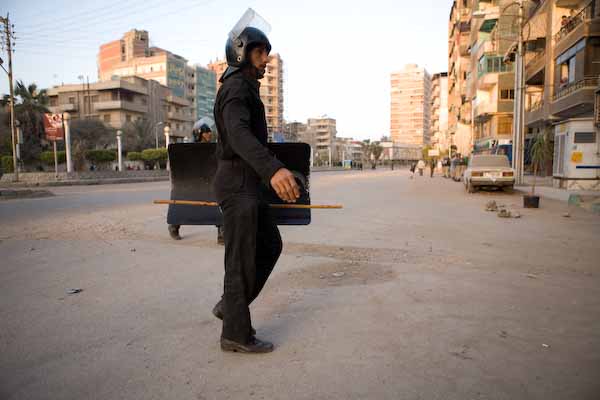
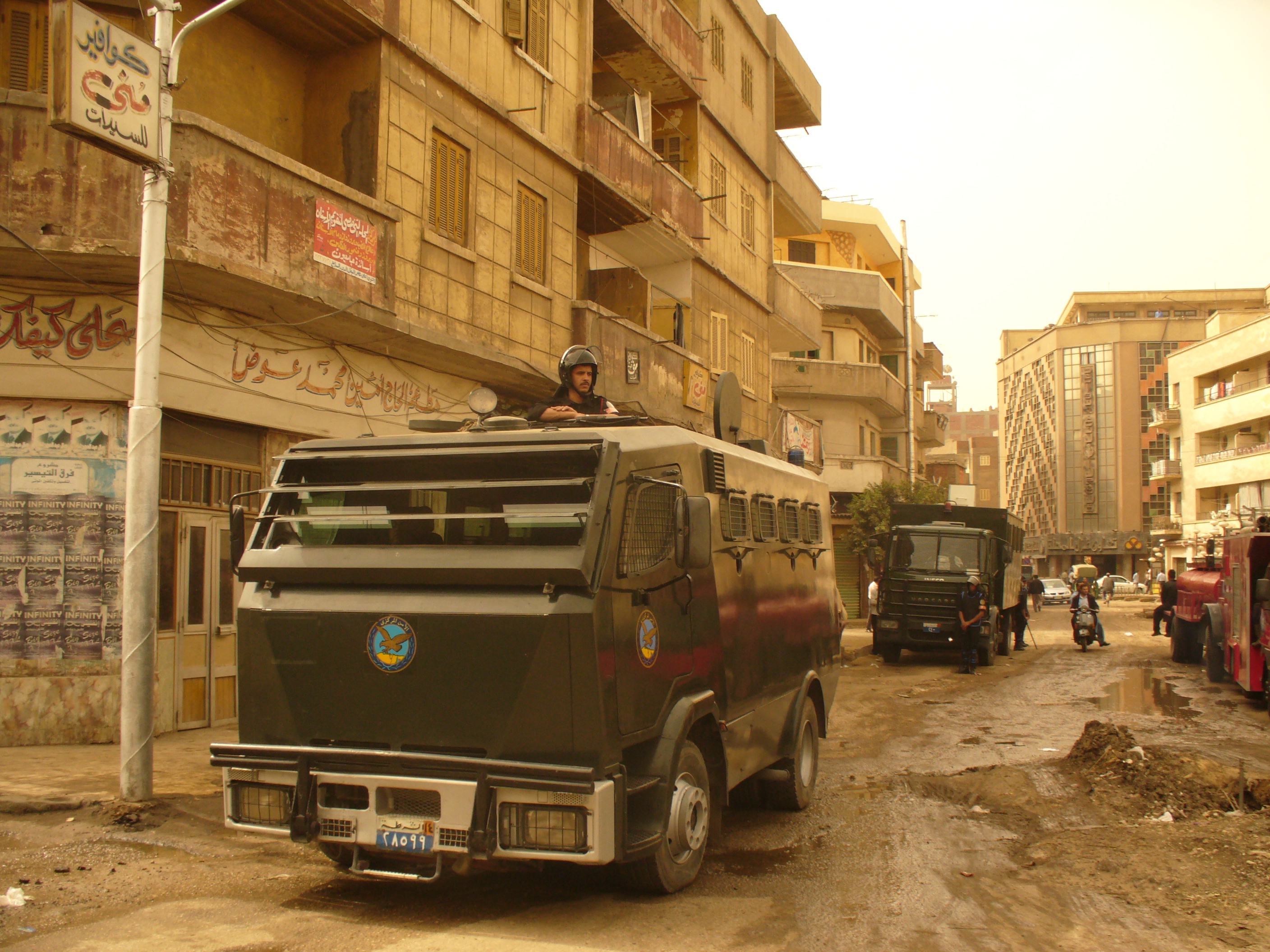
Try to imagine what the pictures you see of Palestinian towns under occupation… Mahalla is similar to that now. Soldiers, armored vehicles, firetrucks.. Since last night the clashes ended. But who knows, everything may change in a second. The morning shift went in by 7:30am. The production in the factory is still on as I’m talking to you now. We will see how things develop.

Families of detainees have assembled in front of the town’s police stations, trying to see them and bring them food, clothes.

There were unconfirmed reports that blogger Kareem el-Beheiri was detained by the police sometime at night, but Nora says that the reports were merely rumors.

In other news, The Egyptian Workers and Trade Unions Watch issued a report on the industrial action in February. Some stats from the report: 42,000 workers took part in either strikes, sit-ins or demonstrations during that month, while 54,000 workers threatened to do the same… The month also witnessed 22 sit-ins, 13 demonstrations and 10 strikes…
More later…

UPDATE: CLASHES started again at 4pm.

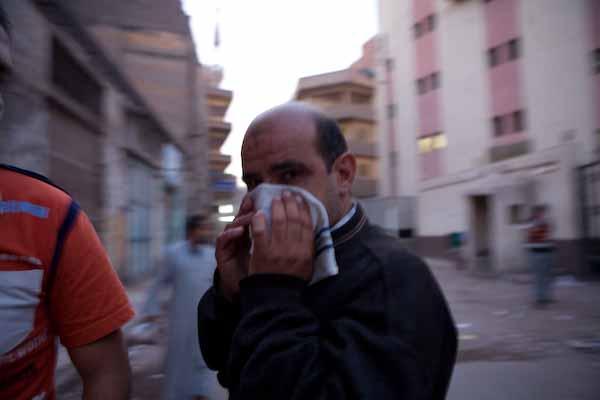
UPDATE: Blogger Ahmad Abdel Fattah called from Mahalla: “This govt wants to kill us and kill everyone here. The demonstrations are strong. Clashes are happening again with the police. I can hardly breath from the teargas. I’ll send you photos soon.”

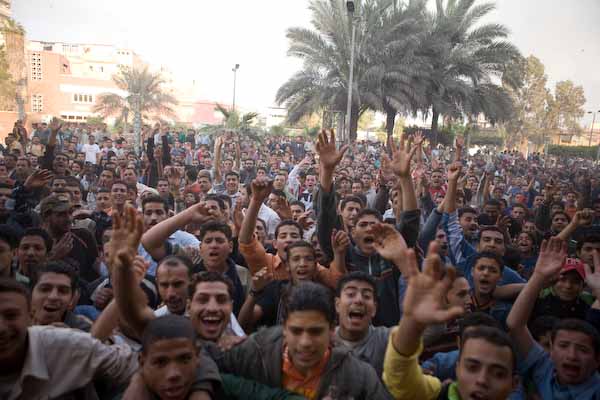
UPDATE: I’ve spoken to a Socialist activist in Mahalla. He says around 4pm a 2000-strong demonstration started in El-Bahr Street in Mahalla. The protesters were chanting against the govt, price increases, police brutality. The troops cracked down on the demonstration, but that hardly made the demonstrators disperse.. Instead, over the course of an hour, the protest grew to something between 40 to 50,000, according to the activist. It’s passed 7pm now in Mahalla. There is not one demonstration, but several.. Most of the demonstrators’ chants are against the govt and calling for the release of those detained yesterday. The police renewed its crackdown, and arrests are being conducted now.

UPDATE: I received an email from activist Ahmad Droubi:

Sharkawy was harassed at 6th of October police station by maba7eth [Police]. He was hit but no injuries reported; except that he’s really pissed off! He is currently at the public prosecutor’s in 6th of October awaiting a decision; he was not questioned again today. Apparently all male detainees were hit overnight.

UPDATE: Listen to the chants of the protesters in Mahalla: “Hey Gamal [Mubarak]! Tell your dad, Mahalla will fuck him…” while in this video, the Mahalla citizens are chanting: “Hosni [Mubarak]! Fuck you!”

UPDATE: I received the following statement from the Center for Socialist Studies:

In light of recent events in Egypt yesterday April 6, 2008, the Center for Socialist Studies calls on supporters of freedom and justice everywhere in the world to show there support for victims of repression in Egypt. Mount pressure on the Egyptian dictatorship to release more than 800 detained yesterday including; more than 150 political activists (socialists, liberals, and Islamists), more than 600 protesters from Mahalla (mainly women and children) and Mahalah strike Committee leaders Kamal El-Faioumy and Tarek Amin- who are facing serious allegations of agitation which can lead to long prison sentences.
On the background of a call for strike on April 6th in Mahalla textile complex by the workers, political forces decided to support the strike through parallel symbolic work stoppage and peaceful protests. However, the Mubarak regime in retaliation decided to occupy El-Mahalla complex with security forces, abduct strike committee leaders Kamal El-Faioumy and Tarek Amin, arrest political activists of every political tendency in Cairo and other cities. Not able to suppress the protests, the Mubarak security forces used rubber-bullets, tear-gas, and live ammunition against Mahalla people who decided to protest on the streets of the city and in different villages, leaving at least two dead and hundreds injured.
As fighters in this struggle, the Center for Socialist Studies, calls on all activists and supporters of freedom and justice everywhere in the world to support us in our fight. The inspirational fight of the Egyptian working class over the past 18 months, which culminated in El-Mahllah events and the mass protests of yesterday –and the terrified reactions of the Mubarak regime- have proved our faith in the centrality of the working class to liberate Egypt from dictatorship and exploitation.
We call upon you circulate the news about the maximum repression and violence of the Mubarak regime, which left at least two killed in Mahalla, including a 9-year old boy. We call upon you to organize rallies and protests in front of the Egyptian embassy where you live and to send protest messages and letters against the Mubarak regime.
Long live the struggle of the working class!

UPDATE: The confirmed deaths in Mahalla go up to 4 martyrs till now. The police continued for the second day cracking down on protesters, who used molotov cocktails and rocks, in scenes reminiscent of the Palestinian intifada… Tadamon reports that the mass demonstrations today was targeting Mahalla’s Police Station where many of the detainees are locked up. Tadamon puts the number of demonstrators at 20,000. However two Socialist activists who took part in the protests insist the numbers were higher and go up to 40 or 50,000.

Here’s also a report from the Daily News Egypt by Sarah Carr:

Public prosecutor Abdel Meguid Mahmoud announced Monday that 157 people involved in the demonstrations which erupted in Mahalla on Sunday have been charged with a range of offenses including riotous assembly and criminal damage.
Violence again erupted in the town on Monday. Protests began in the afternoon at around 4 pm, in a repeat of yesterday’s events when thousands of Mahalla residents and workers in the Ghazl El-Mahalla textile factory took to the streets following the afternoon shift.
Protesters are angry about the collapse of a strike in the Ghazl El-Mahalla factory, planned for Sunday but which was aborted after intimidation by security bodies and internal divisions between workers.
During yesterday’s demonstrations violent clashes occurred between members of security bodies and protesters. According to Mahmoud, the clashes resulted in the injury of 35 demonstrators, 26 policemen and three senior officers.
The public prosecutor denied rumors that fatalities occurred during yesterday’s demonstrations.
Activist websites had published reports that two people had been killed when security bodies used teargas and live ammunition to contain the demonstration.
Mahmoud also said that eleven shops and two schools were damaged during yesterday’s protests.
An eyewitness who was in Mahalla on Monday told Daily News Egypt that the situation remains extremely tense.
“Relatives of people who have been arrested started a procession from the public prosecution office in Mahalla to the Shona Square,” said Ahmad Ghazi, a lawyer with the Egyptian Organization for Human Rights.
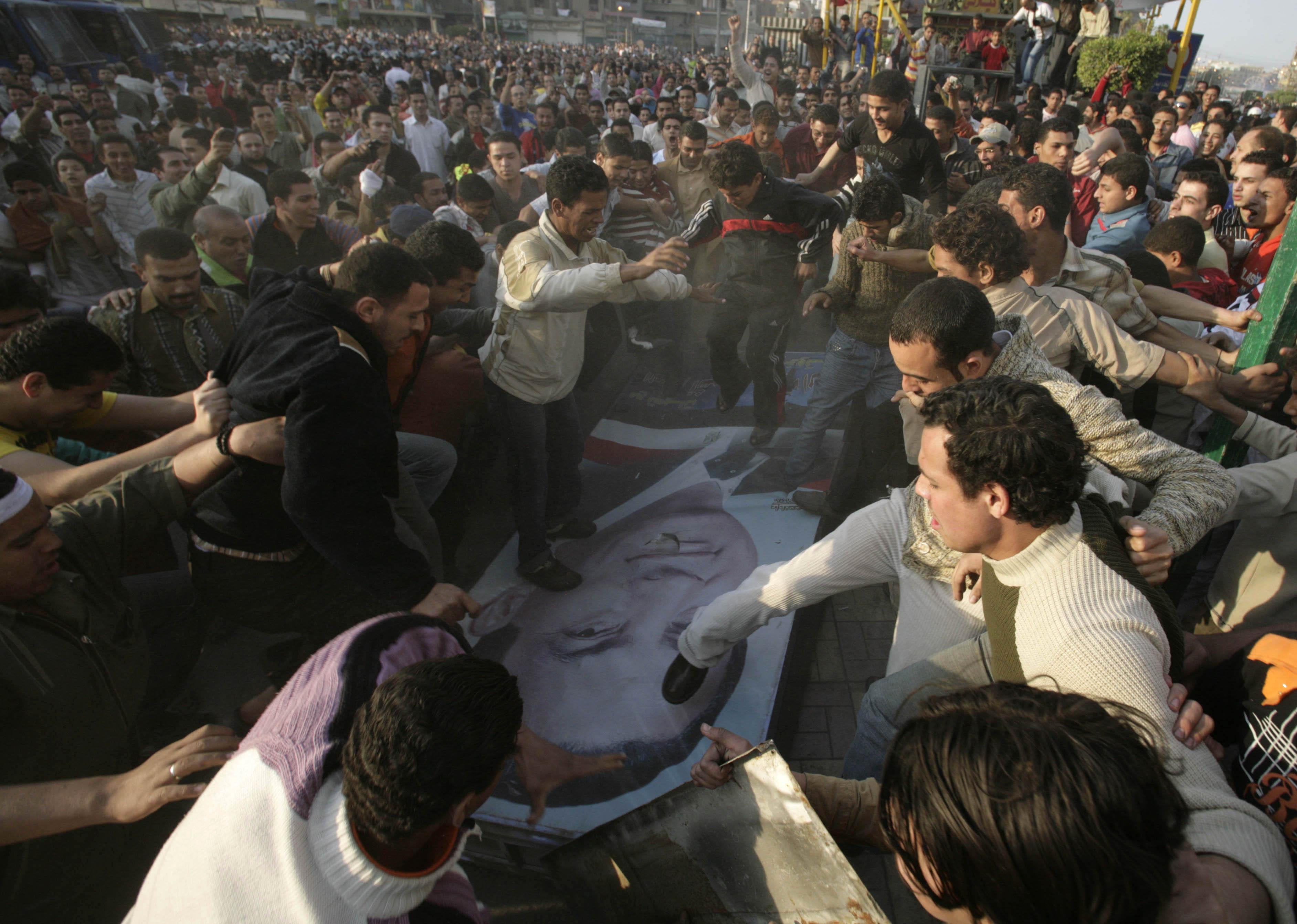
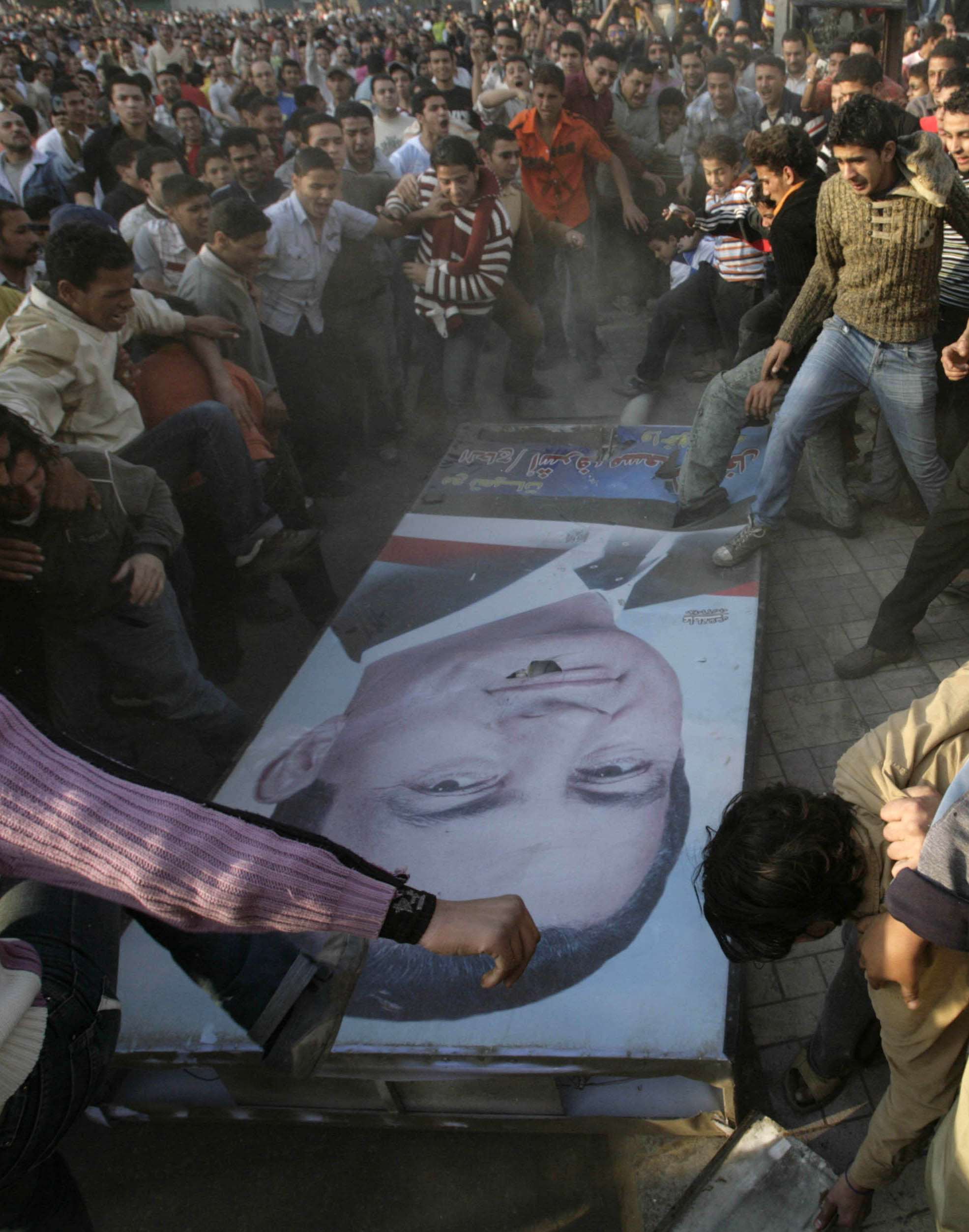
“Young men ripped down a poster of [President] Mubarak in the square and set it alight,” he continued.
“Security bodies are using teargas and firing ammunition at the crowd and both protesters and members of security bodies have been injured,” Ghazi said.

Photographer and friend Nasser Nouri was in Mahalla on Sunday, and was shot in the leg by a rubber bullet. Despite being in so much pain, Nasser continued reporting on Monday, limping his way around the rough streets in Mahalla, taking shots of the riots as well as the police violence. Below are a couple of the photos he took today of the Mahalla heroes smashing Mubarak’s posters.
UPDATE: Prosecutor ordered the detention of blogger Muhammad el-Sharqawi and Kefaya’s Muhammad el-Ashqar for 15 days pending investigation.
Meanwhile, the Textile Workers’ League activists Kamal el-Fayoumi and Tarek el-Senoussi are locked up in the notorious State Security local office in Mahalla, while reports are conflicting whether Ghazl el-Mahalla blogger Kareem el-Beheiri was detained or did he “disappear.” A solidarity committee has been set up to support the detainees. WE NEED DONATIONS FOR THE DETAINEES in Cairo, Mahalla and the other provinces. If you are in Cairo, just go to the Hisham Mubarak Law Center (1 Souq el-Tawfiqiya St) and see how you can help.

UPDATE: Zeinobia continues blogging the protests and monitoring the local press, while Per Björklund is twittering from Mahalla.

UPDATE: The 6th of April Strike Blog reports with photos on a spontaneous protest in front of Cairo’s Abdeen Court, and receives health complaints from Mahalla over the pigs’ showering the city with teargas bombs.

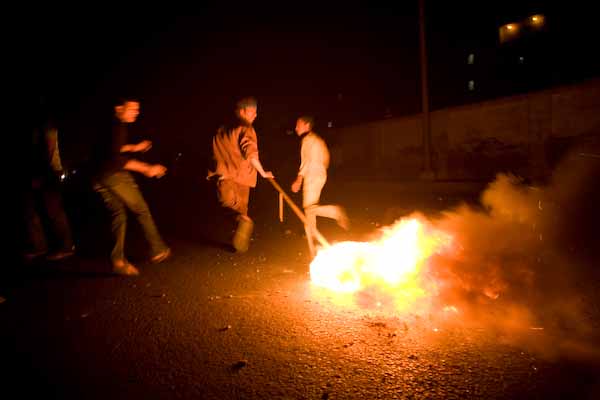
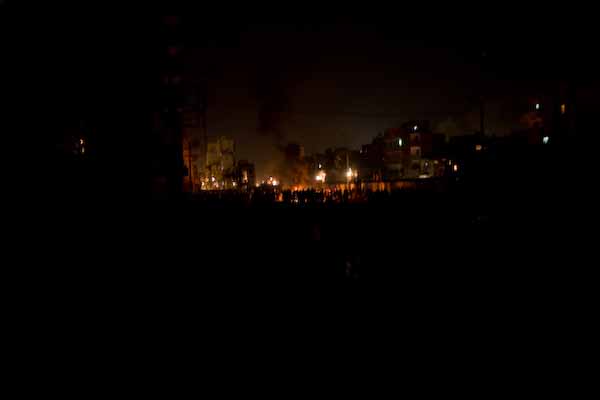
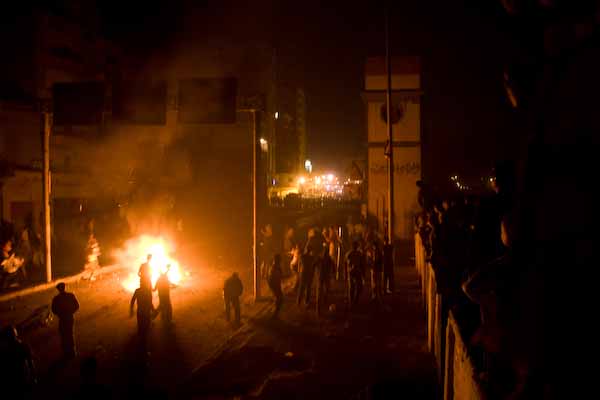
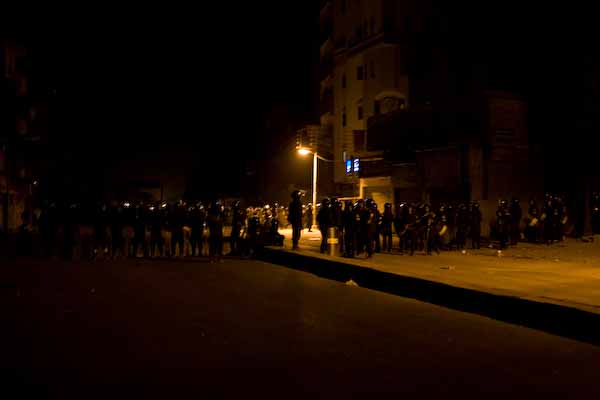
UPDATE: More photos of Day 2 of the Mahalla riots, taken by James Buck…
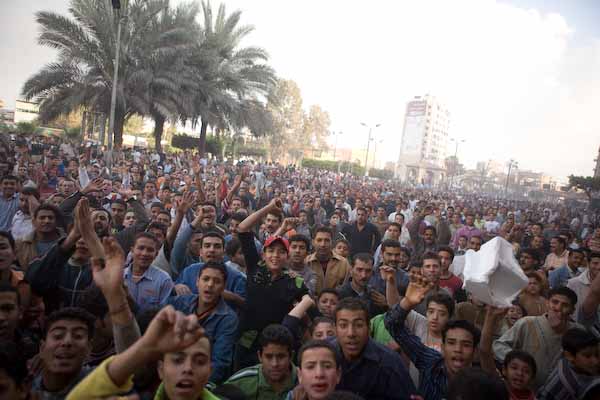
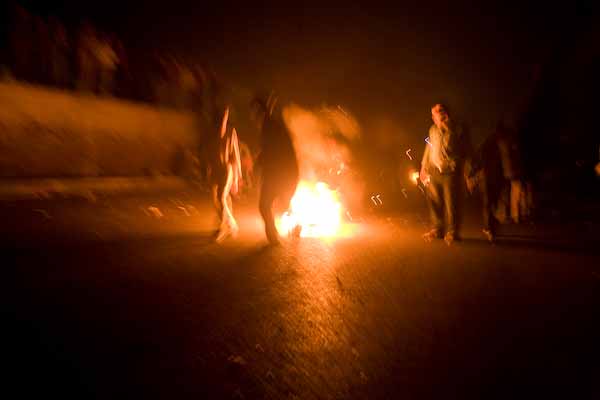
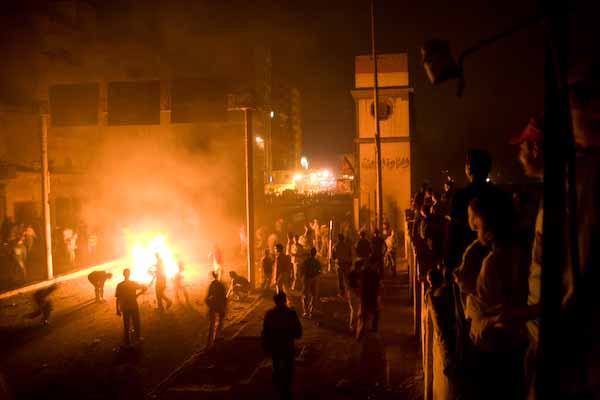
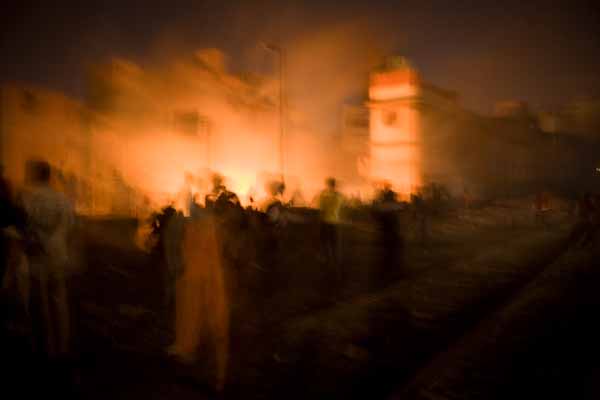
  • ​Mahalla Uprising, 7 April 2008, Photo taken by James Buck​
  • ​Mahalla Uprising, 7 April 2008, Photo taken by James Buck​
  • ​Mahalla Uprising, 7 April 2008, Photo taken by James Buck​
  • ​Mahalla Uprising, 7 April 2008, Photo taken by James Buck​
  • ​Mahalla Uprising, 7 April 2008, Photo taken by James Buck​
  • ​Mahalla Uprising, 7 April 2008, Photo taken by James Buck​
  • ​Mahalla Uprising, 7 April 2008, Photo taken by James Buck​
  • ​Mahalla Uprising, 7 April 2008, Photo taken by James Buck​
  • ​Mahalla Uprising, 7 April 2008, Photo taken by James Buck​
  • ​Mahalla Uprising, 7 April 2008, Photo taken by James Buck​
  • ​Mahalla Uprising, 7 April 2008, Photo taken by James Buck​
  • ​Mahalla Uprising, 7 April 2008, Photo taken by James Buck​
  • ​Mahalla Uprising, 7 April 2008, Photo taken by James Buck​
  • ​Mahalla Uprising, 7 April 2008, Photo taken by James Buck​
  • ​Mahalla Uprising, 7 April 2008, Photo taken by James Buck​
  • ​Mahalla Uprising, 7 April 2008, Photo taken by James Buck​
  • ​Mahalla Uprising, 7 April 2008, Photo taken by James Buck​

“You can feel there were support for the demonstrators among the citizens,” James told me over the phone. “Whenever police attacked the crowds, you always found residents opening up their homes for those who are trying to escape.”

UPDATE: A report by labor journalist Jano Charbel on the second day of rioting in Mahalla:

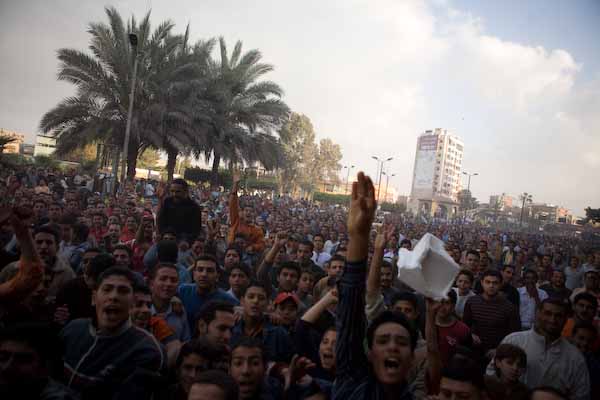
A popular uprising has been taking place in Al Mahalla Al Kobra since April 6. Local residents, in the tens of thousands, took to the streets of this Nile Delta city in protest against price hikes, and in protest against the detention of more than 300 locals. With stone-throwing youth and Central Security Forces engaged in running street battles Al Mahalla has come to resemble the occupied Palestinian territories; and the protests in this city have come to resemble an intifada. Over 100 civilians and members of the security forces have been injured in clashes, and at least one civilian (a 15 year old boy) has been killed.
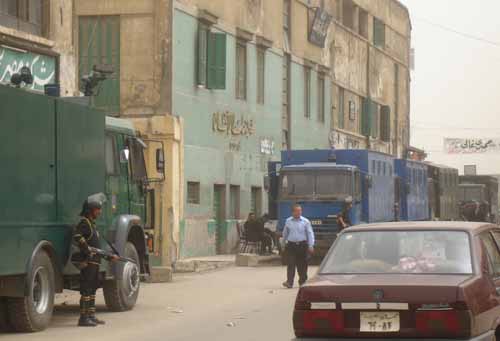
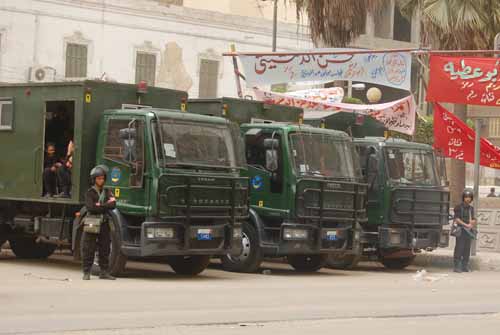
Hundreds of CSF trucks have been deployed around the city and hundreds more within it. Upon approaching the outskirts of Al Mahalla on the night of April 7 one could clearly notice that the security forces were facing stiff resistance on the streets – because tens of these CSF trucks, which were stationed around the city, had their windshields smashed-in (despite the protective metal grids covering them.) Tear gas stings the eyes and irritates the respiratory system upon entering the city itself.
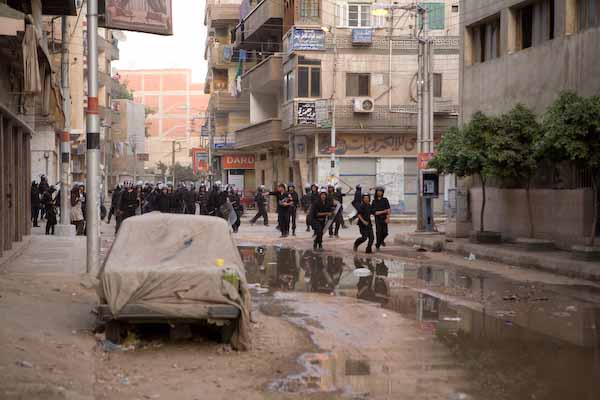
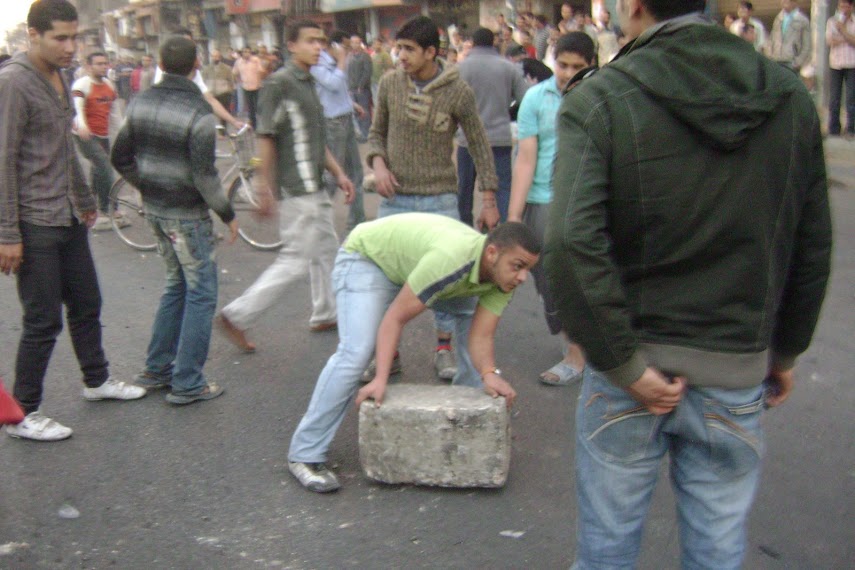
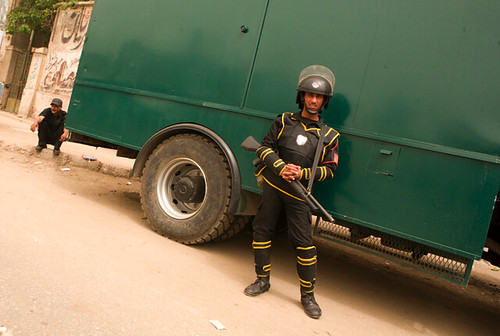
In the neighborhood of Sekket Tanta black clad riot police were firing tear gas canisters at just about anybody on the streets – including women, children, and the elderly; other troops opened fire on protesters using shotgun shells filled with rubber-coated pellets. Yet CSF troops could not disperse the youth protesters on the streets of this neighborhood. Male teenagers, along with (a significant number of unemployed) youths in their early twenties were at the forefront of these clashes with the CSF. Youth rained stones down upon the security forces and hurled Molotov cocktails at them. Clashes in this neighborhood had subsided only after 11pm.
These youths chanted very expressive slogans against Hosni Mubarak, the government, and the interior ministry. Other protesters had destroyed photos and portraits of the Egyptian president that were found on the streets.
Every single resident of Al Mahalla, with whom I spoke, confirmed that the non-violent demonstrations against price increases on April 6 had turned violent only after security forces moved to forcefully disperse demonstrators. Thus a peaceful demonstration quickly turned into a violent expression of popular discontent. Public properties and private enterprises have been the targets of attacks – a microbus was set ablaze, while three schools were torched, and two branches of the local ful & falafel franchise Al-Baghl were partially destroyed. It could’ve been local youth protesters who were behind these acts, or it could very well be the doing of destructive elements deployed by the interior ministry – in order to serve as a pretext for further crackdowns, and/or to tarnish the image of the protesters.
One youth protester said “I don’t know who set fire to the three schools, or why they did so? But I think I understand the motives behind the burning of the microbus and the attack on the Al-Baghl Restaurants. The microbus was a state-owned vehicle, and thus a natural target for attack. As for Al-Baghl, I believe the restaurants were attacked due to popular discontent with rising food prices – only five years ago a ful or falafel sandwich at Al-Baghl cost 35 piasters, it now costs 65 piasters per sandwich.”
Another youth protester on the street asked a member of the riot police “when’s the last time you had a bite to eat? The officers aren’t feeding you poor folks are they?” Looking exhausted and being unable to leave his spot, he quietly replied “we haven’t had anything to eat in nearly 24 hours.”

Some photos taken by Jano:

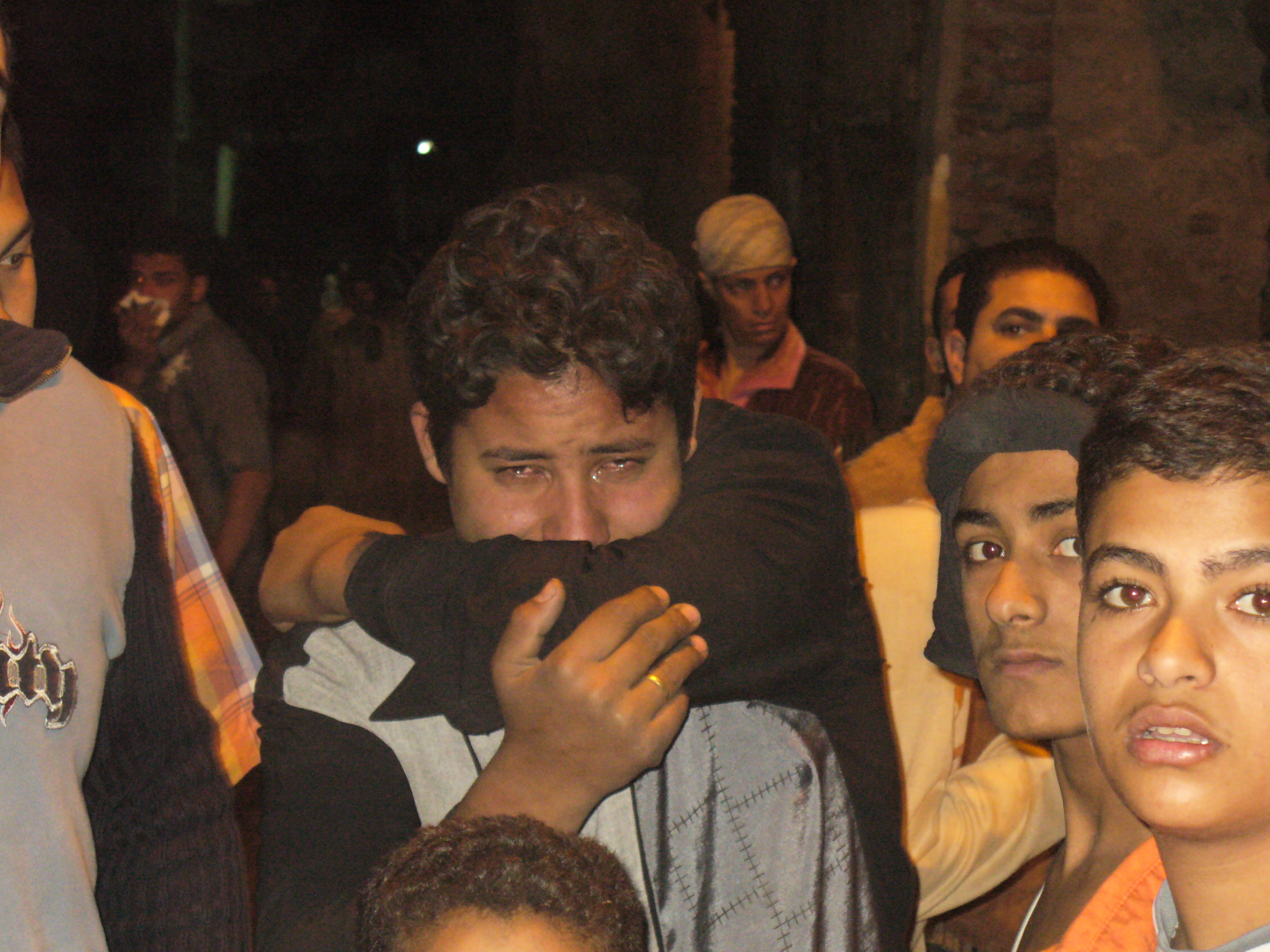
  • Teargassed by the Police (Photo by Jano Charbel)
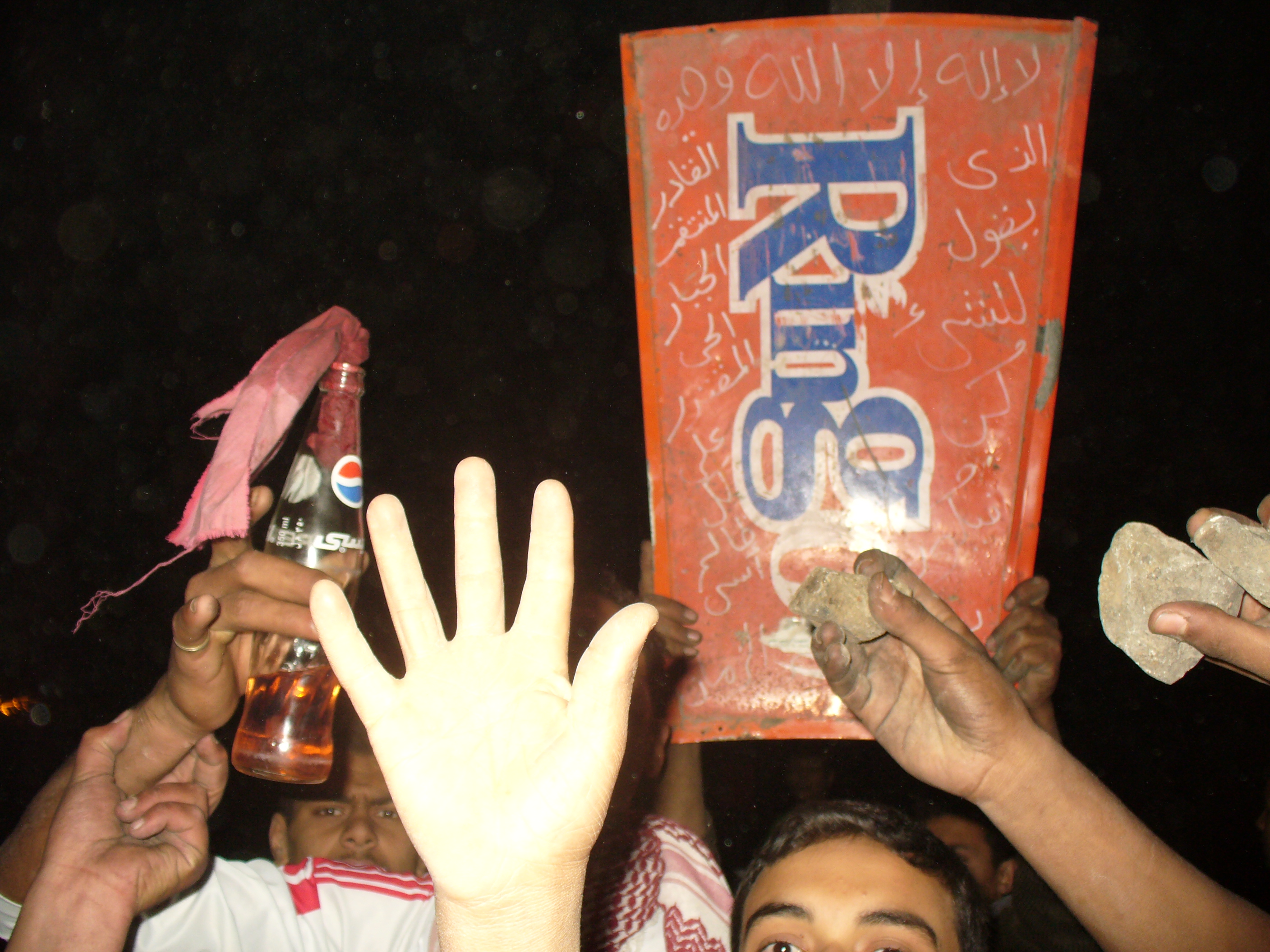
  • Molotov Cocktails (Photo by Jano Charbel)
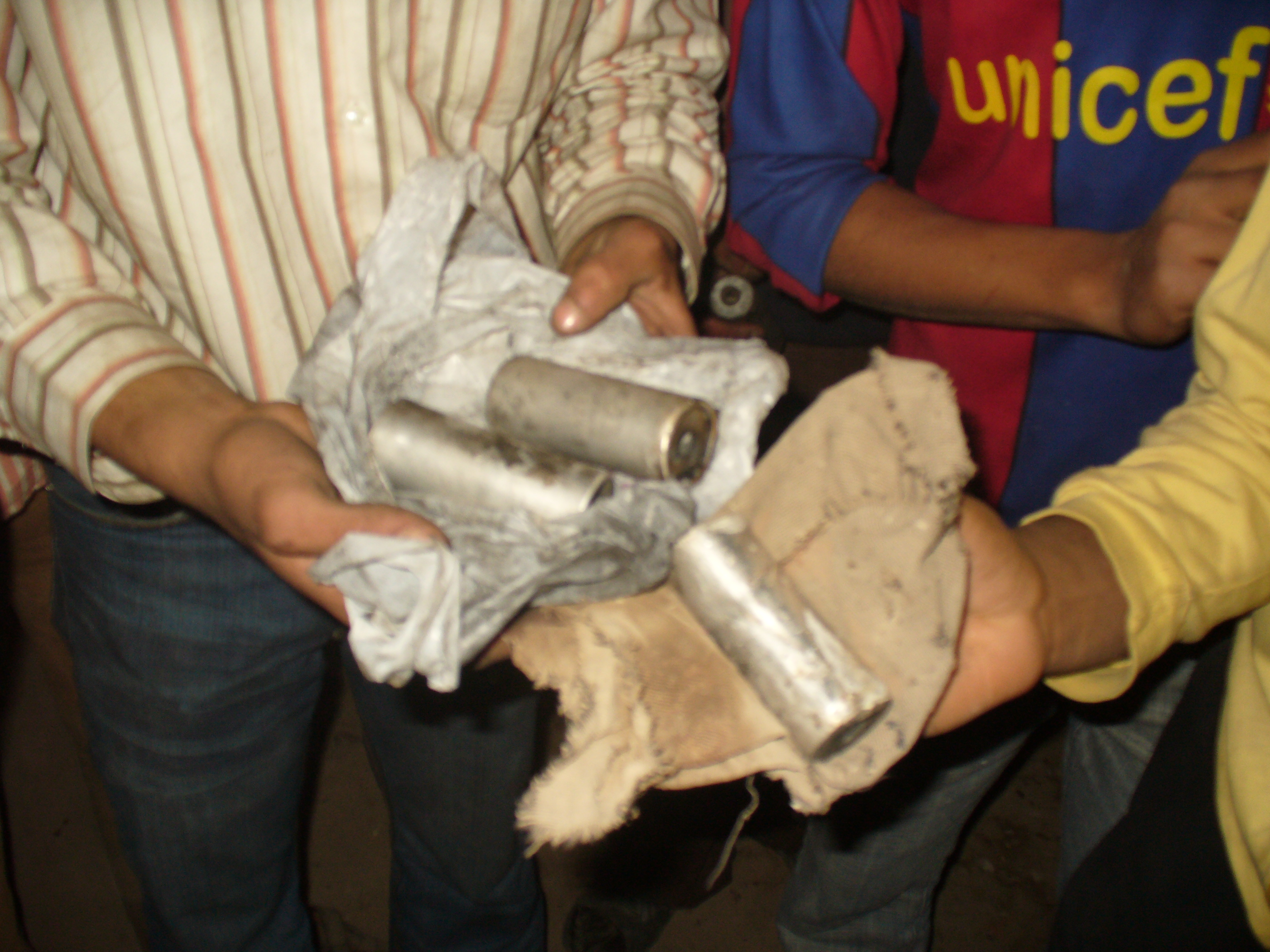
  • Empty Tear Gas Canisters (Photo by Jano Charbel)
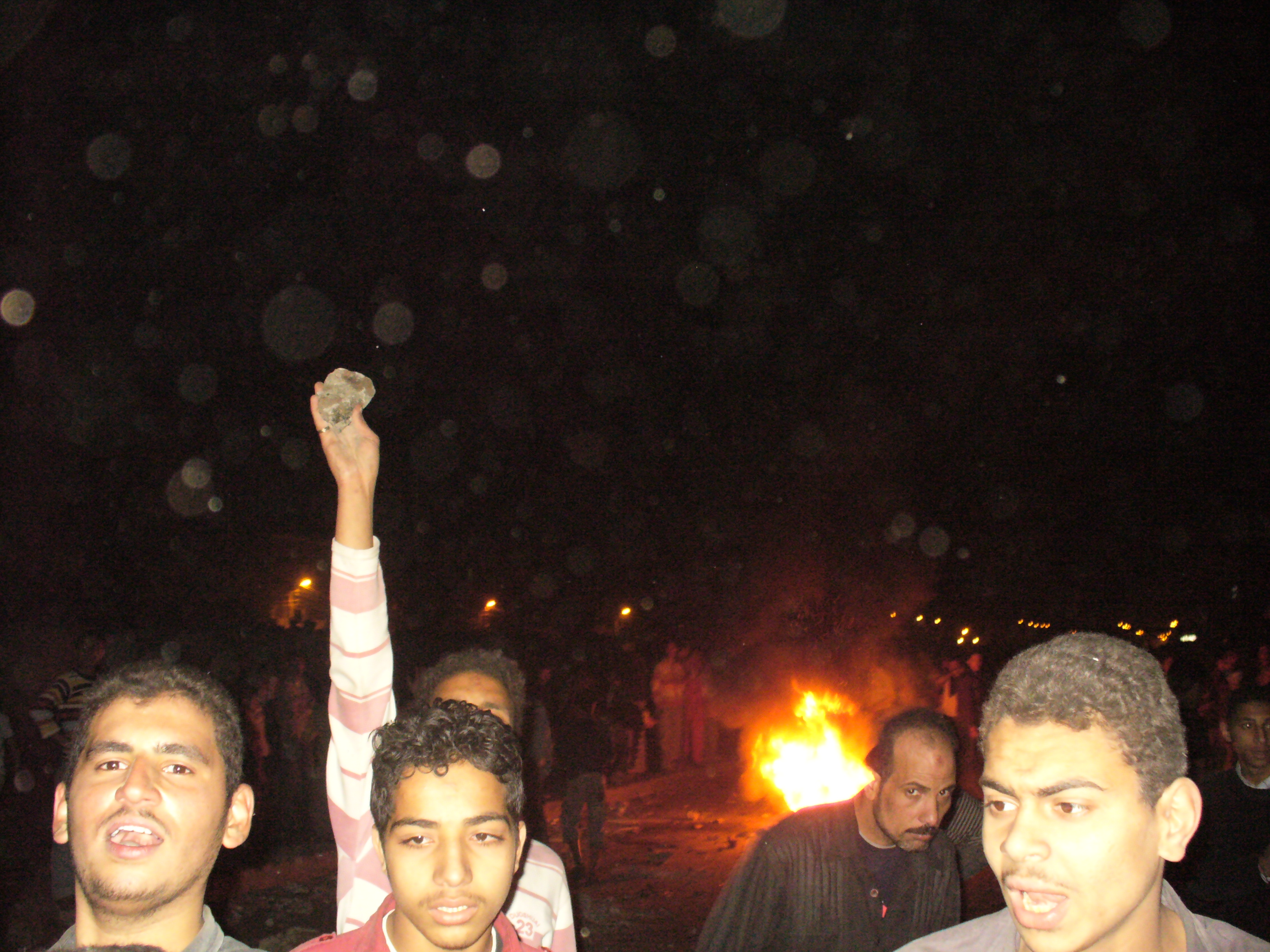
  • Rocks and Fires (Photo by Jano Charbel)
  • Teargassed by the Police (Photo by Jano Charbel)
  • Teargassed by the Police (Photo by Jano Charbel)
  • Burnt school in Mahalla (Photo by Jano Charbel)
  • Burnt state-owned van (Photo by Jano Charbel)
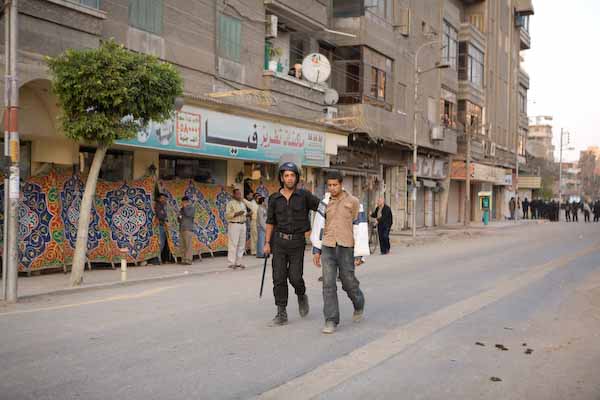
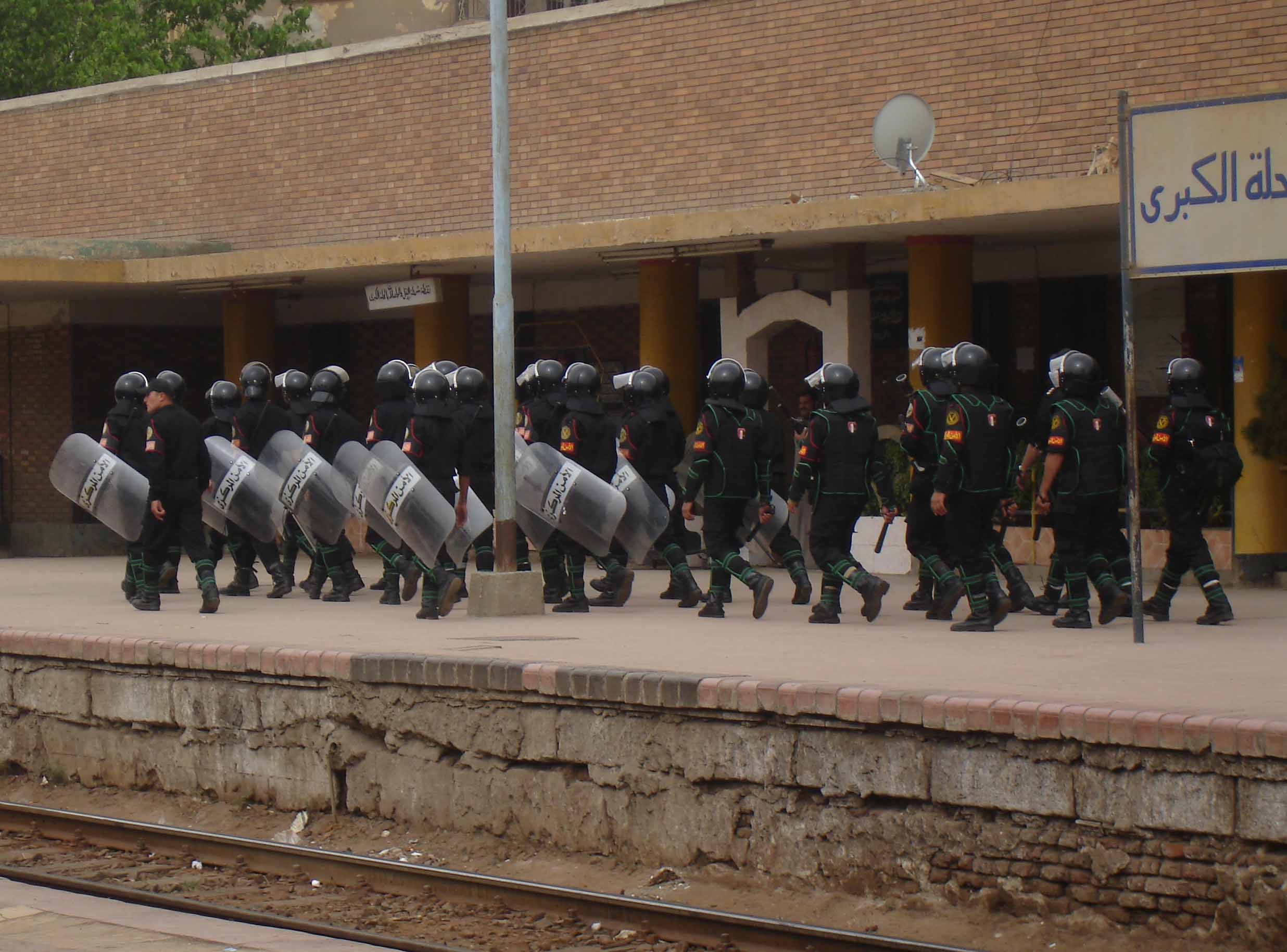
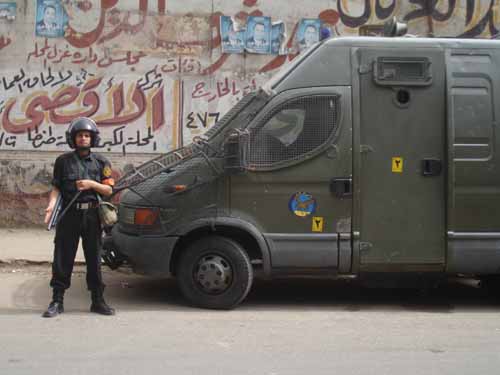
  • Police in Mahalla (Photo by Jano Charbel)
  • Police in Mahalla (Photo by Jano Charbel)
  • Mubarak's poster defaced in Mahalla (Photo by Jano Charbel)
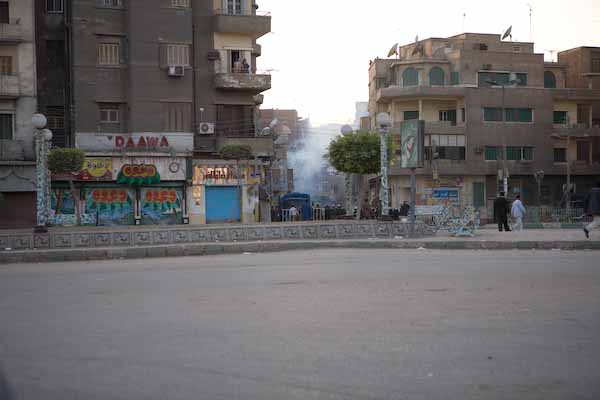
  • Seket Tanta Neighborhood in Mahalla (Photo by Jano Charbel)
  • Seket Tanta Neighborhood in Mahalla (Photo by Jano Charbel)
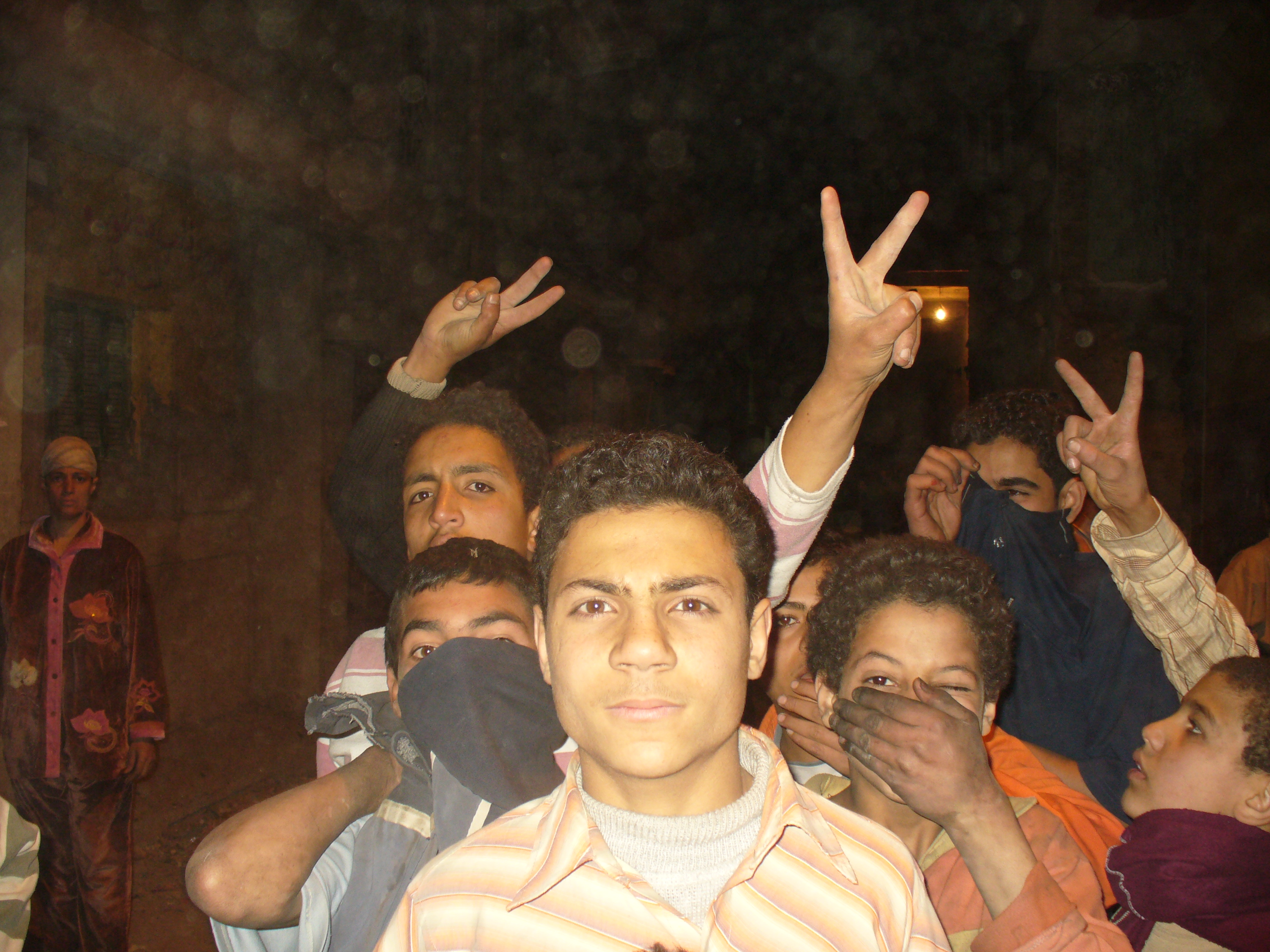
  • Protesters confronting the CSF (Photo by Jano Charbel)
  • Youth Protesters with Rocks in their hand - CSF about to receive another shower (Photo by Jano Charbel)

UPDATE: It’s confirmed Kareem el-Beheiri is in police custody. He was spotted at the Tanta Prosecutor’s office where he’s undergoing interrogation. Below is a portrait I took of Kareem last January.

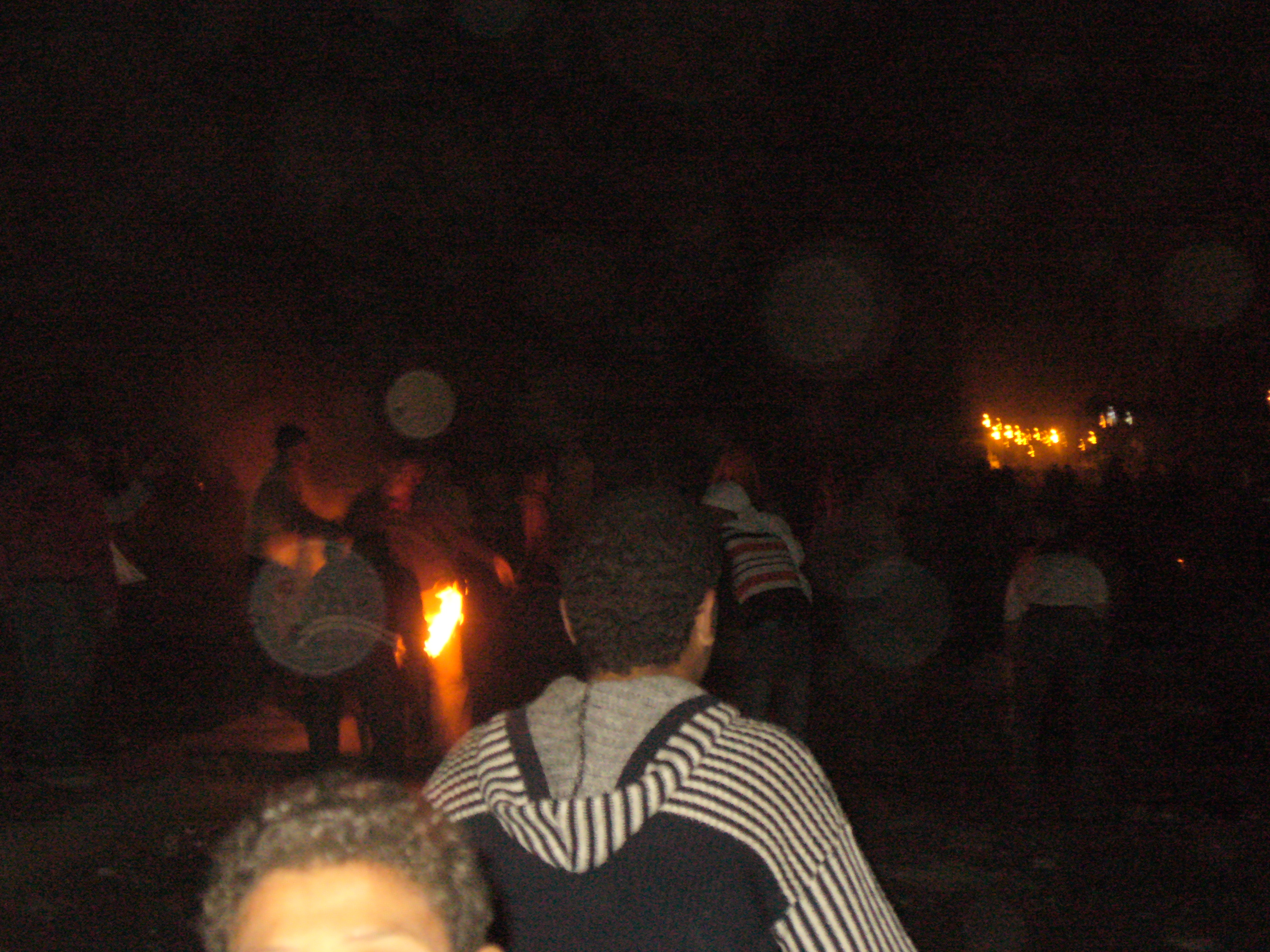
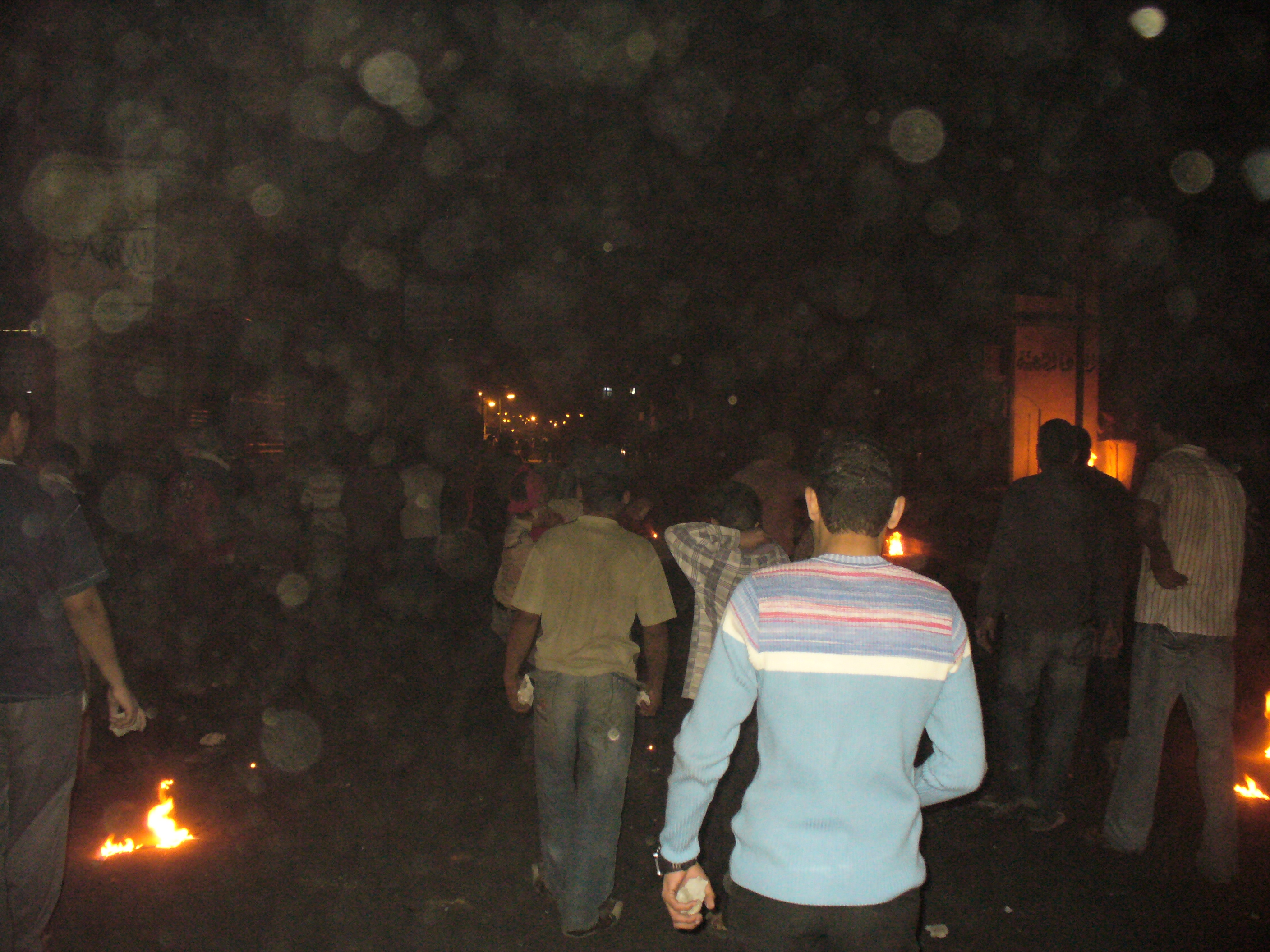
UPDATE: Blogger Ahmad Abdel Fattah sent me some photos and video clips from Mahalla:
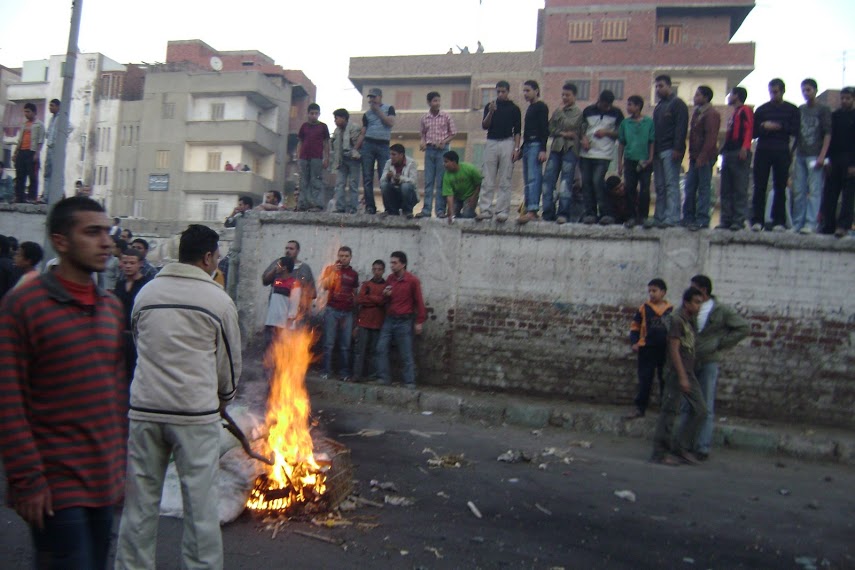
  • انتفاضة ابريل بالمحلة، عدسة أحمد عبد الفتاح
  • انتفاضة ابريل بالمحلة، عدسة أحمد عبد الفتاح
  • انتفاضة ابريل بالمحلة، عدسة أحمد عبد الفتاح

And here’s an AP report by Paul Schemm:

Police fired tear gas and beat protesters Monday, and demonstrators angry over rising prices and low wages tore down a billboard of Egypt’s president in a second day of violence in a northern Egyptian city.
The clahes began when several hundred young men massed in the main square of the Nile Delta city of Mahalla al-Kobra. They threw rocks at a large advertising billboard of President Hosni Mubarak in the center of the square, then slashed the picture with knives, then toppled the billboard.
Riot police then charged the group, firing heavy volleys of tear gas. Police pulled some of the men to the pavement and beat them with batons or fists. In the melee, other protesters threw stones at police or grabbed canisters of tear gas and threw them back at the police.
At least 25 people were arrested, and 15 protesters and five policemen were hurt in the violence, security officials said, speaking on condition of anonymity because they were not authorized to talk to the press.
The clashes followed similar rioting Sunday, when thousands of demonstrators torched buildings, looted shops and hurled bricks at the police in this gritty industrial town. Sunday’s violence erupted after textile factory workers called off a strike planned for the morning to protest low wages.
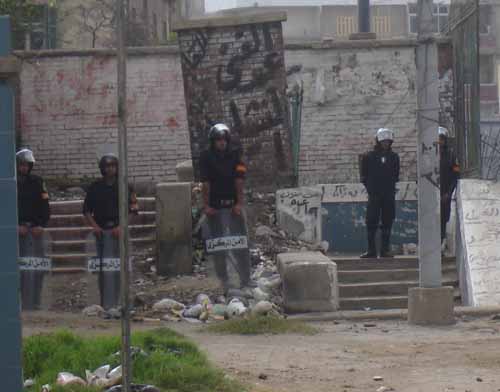
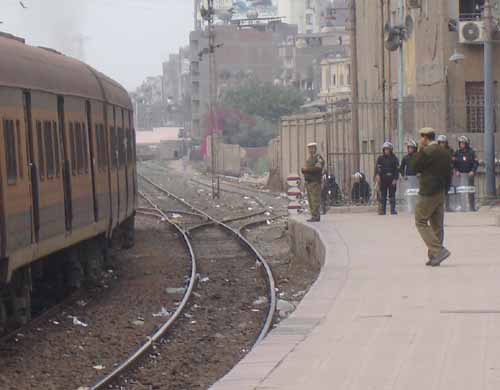
Pigs abort Mahalla strike; HELL BREAKS LOOSE

Posted on 06/04/200805/02/2021 By 3arabawy

The initial news I’m getting from Mahalla is not good. Looks like the strike has been aborted.. The company compound is under police siege. The Central Security Forces are surrounding the factory.

Most gates have been shut down earlier by the police to control the flow of workers in and out of the factory. Inside the compound plainclothes security agents are virtually everywhere and are dispersing any crowd of workers who assemble.

No arrests reported up till now.
More later…

UPDATE: I spoke with an activist inside the factory:
“Plainclothes.. Plainclothes.. No uniformed ones inside.. All agents are in plainclothes. State Security, police, thugs.. There are even people from the Mukhabarat here… All uniformed personnel were withdrawn from the factory and replaced with those plainclothes agents..”

UPDATE: Hell breaks loose in Mahalla!!!! Stay tuned for updates…

UPDATE: Troops fire on protesters in Mahalla. At least two were killed. Other activist sources put the number at seven. Still trying to confirm.

UPDATE: Sometime after 3pm, demonstrations broke out in El-Shoun Sq, chanting against price increases. Mubarak’s police fired on the demonstrators. A man and a child were killed. Police trucks attacked. Buses caught on fire. Mass round ups of activists and citizens… Ghazl el-Mahalla labor organizers Kamal el-Fayoumi and Tarek Amin el-Senoussi are in police custody.

Police gunshots heard throughout the town according to witness.

UPDATE: An eyewitness told me over the phone he saw buses catching fire after they got hit by rounds of police ammunition.

UPDATE: A report by AP:

Security forces clashed with workers in the gritty industrial city of Mahalla al-Kobra in northern Egypt Sunday afternoon after earlier plans for a strike at the nation’s largest industrial complex were foiled, according to eyewitnesses and security officials.
Meanwhile in the capital Cairo many citizens responded to activists’ calls for nationwide action by skipping work or school to protest deteriorating economic conditions, amid a heavy security crackdown that saw massive amounts of riot police occupying public squares.
Police have arrested four workers in Mahalla following the clashes and another 94 people in several provinces across the country, including several prominent activists and trade unionists, reported a security official on condition of anonymity because he was not authorized to talk to the press.
The factory strike over low wages and rising prices was scheduled to begin at 7:30 a.m. when the workers changed shifts, but hundreds of security forces arrived hours earlier and took control of the Mahalla al-Kobra textile plant, said Mustafa Foda, a 25-year veteran of the company.
“From 3 a.m. they took control of the inside of the company with plainclothes security,” said Foda. “Anyone who tried to talk was taken.”
The 55-year-old worker said that security prevented him and many others from entering the factory and arrested some 150 workers ahead of the shift change.
The strike was also hindered by the decision from several worker leaders not to carry out any strike inside the factory due to ongoing negotiations with the government-controlled union and factory management.
“They are working on our demands, so why go on strike?” he told The Associated Press. “We have to give them a chance to see improvements,” he added, suggesting that labor would reconsider the strike in July.
Inside the factory, throughout Sunday, business continued as usual, but after the day shift ended at 3:30 p.m. local time (1330 GMT) locals and workers gathered in the main square where they were confronted by large numbers of riot police, according to eye witnesses.
“A lot of rocks are being thrown and there are indications that people are being beaten,” said Joel Beinin, a professor of Middle East Studies from the American University at Cairo who was at the scene. There were later reports of tear gas fired into the crowd of several hundreds.
Traffic was significantly lighter than usual in Cairo on Sunday and schools were almost completely empty, indicating many of the city’s millions of residents were heeding the activists’ call.
Egyptians are often characterized as being politically apathetic, and many Cairo residents seemed surprised by the enthusiastic response.
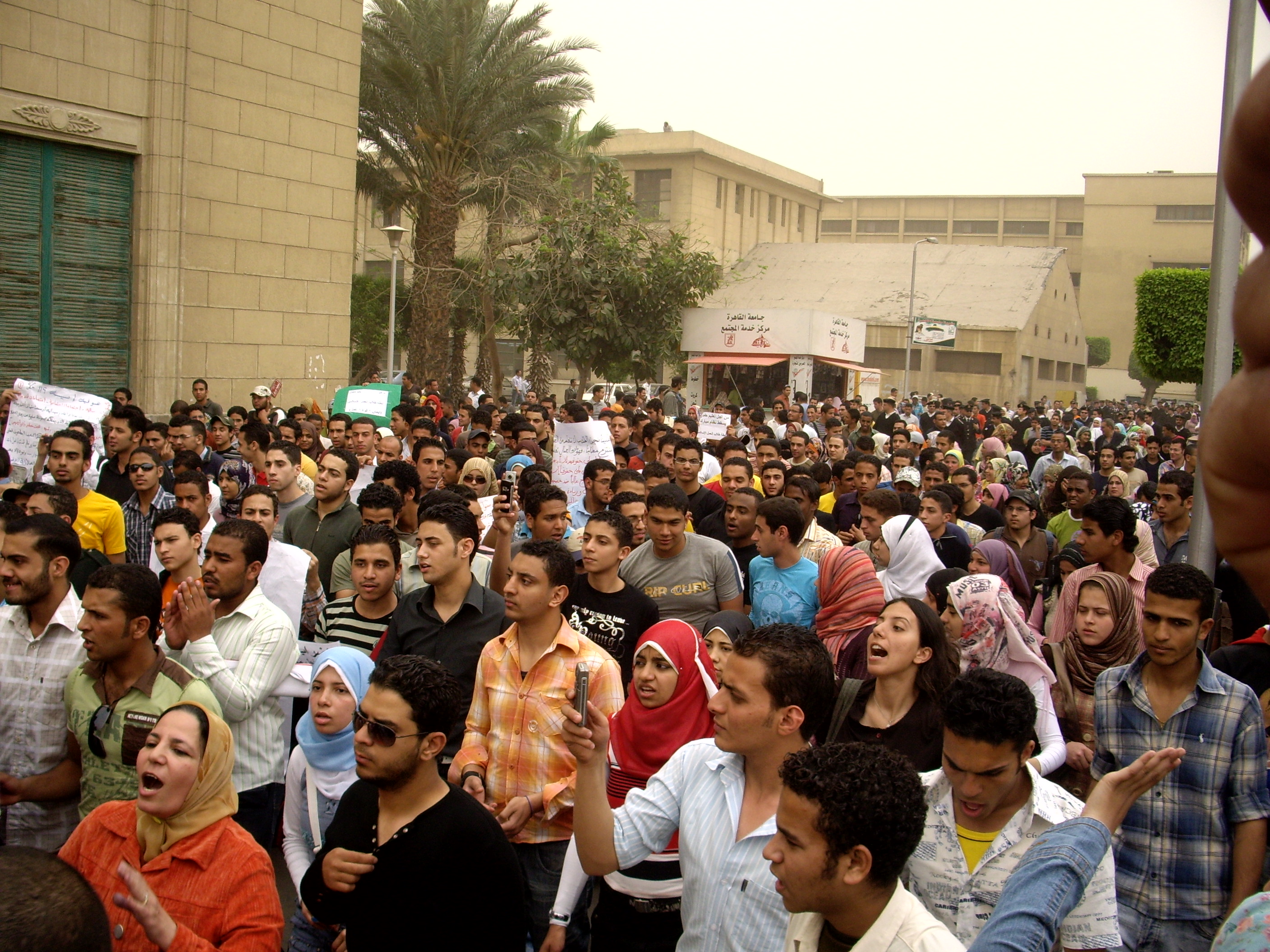
Hundreds of students demonstrated in Helwan and Cairo universities in the capital after previously skipping classes and chanted anti-regime slogans.
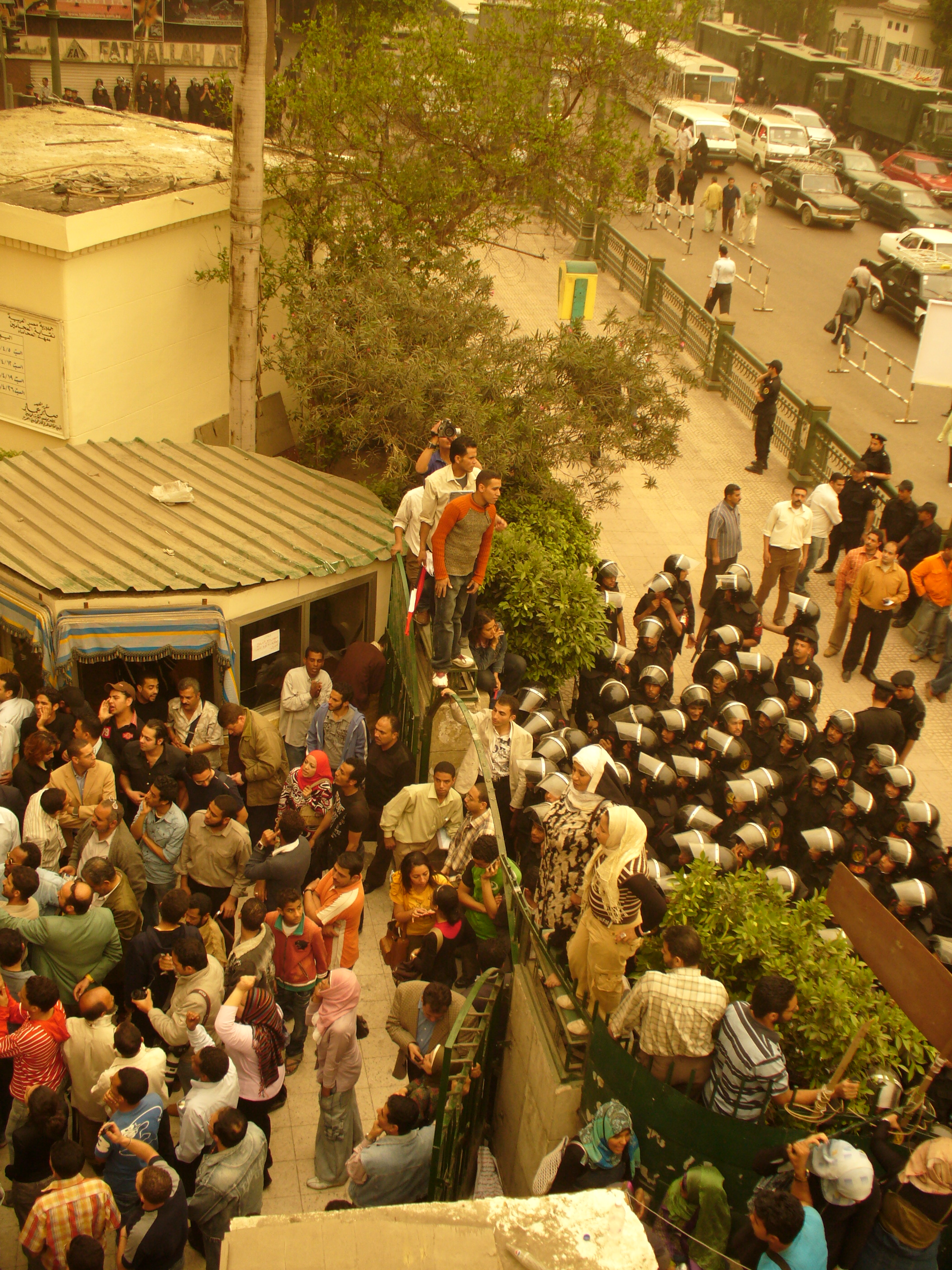
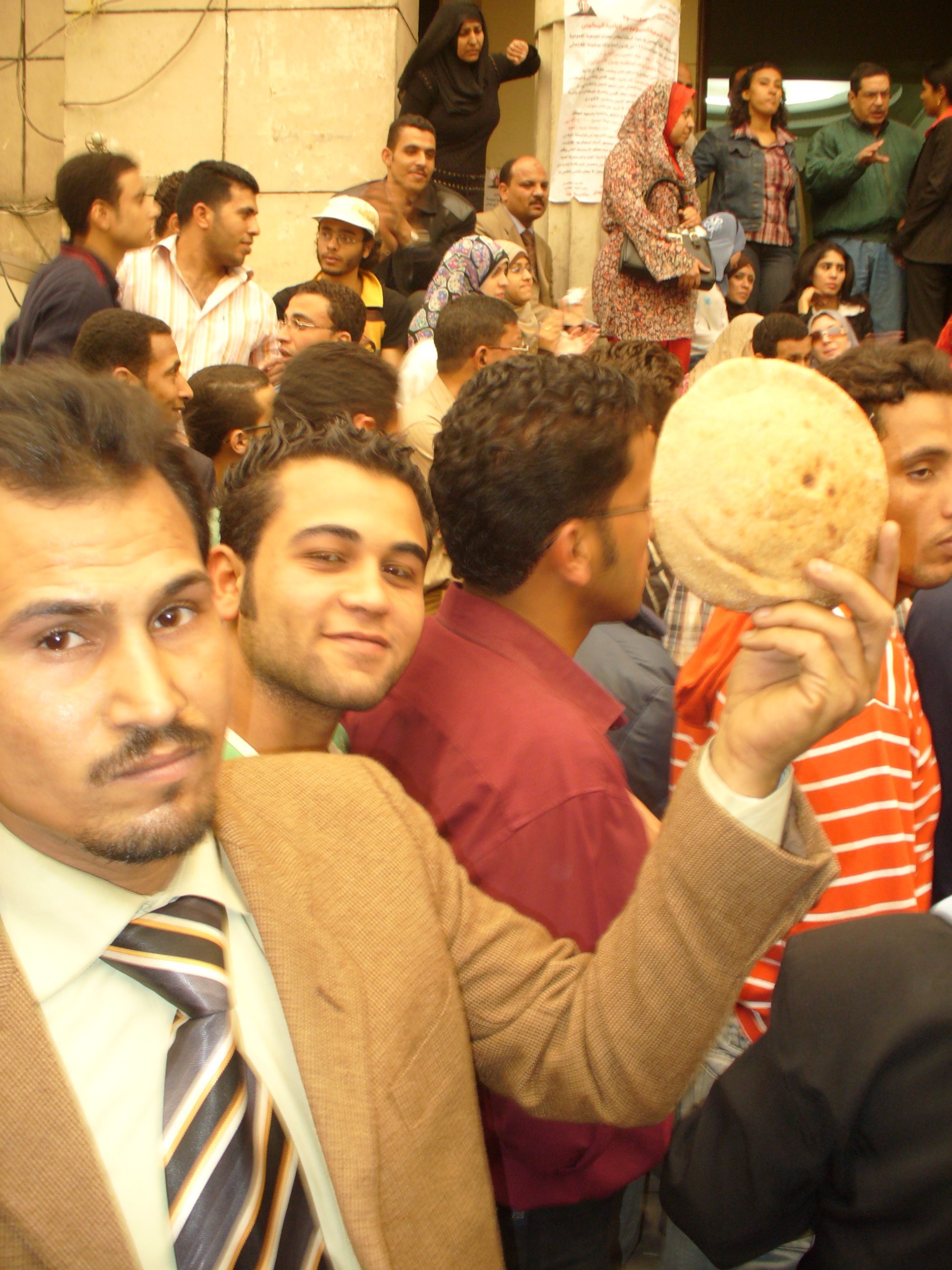
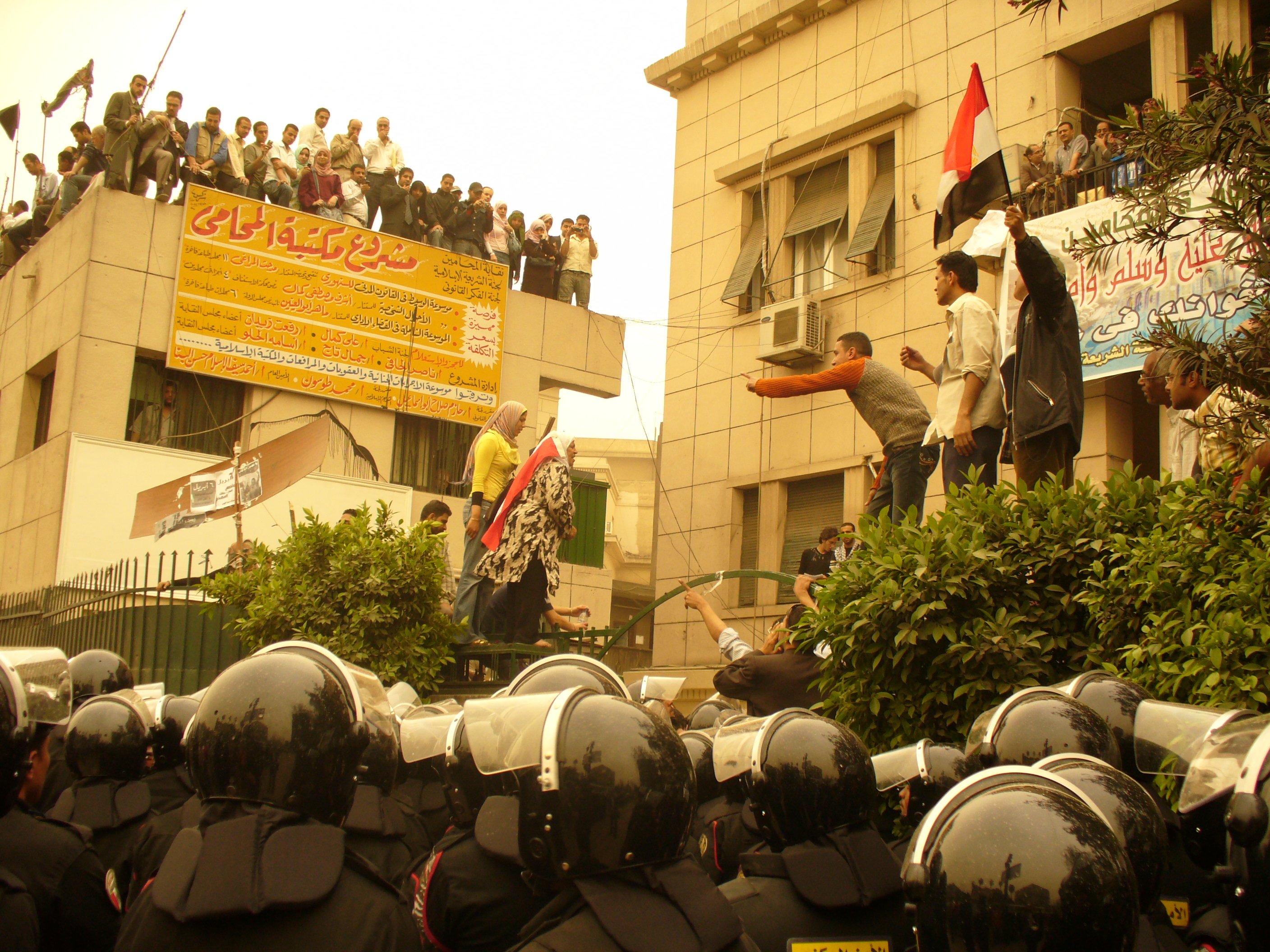
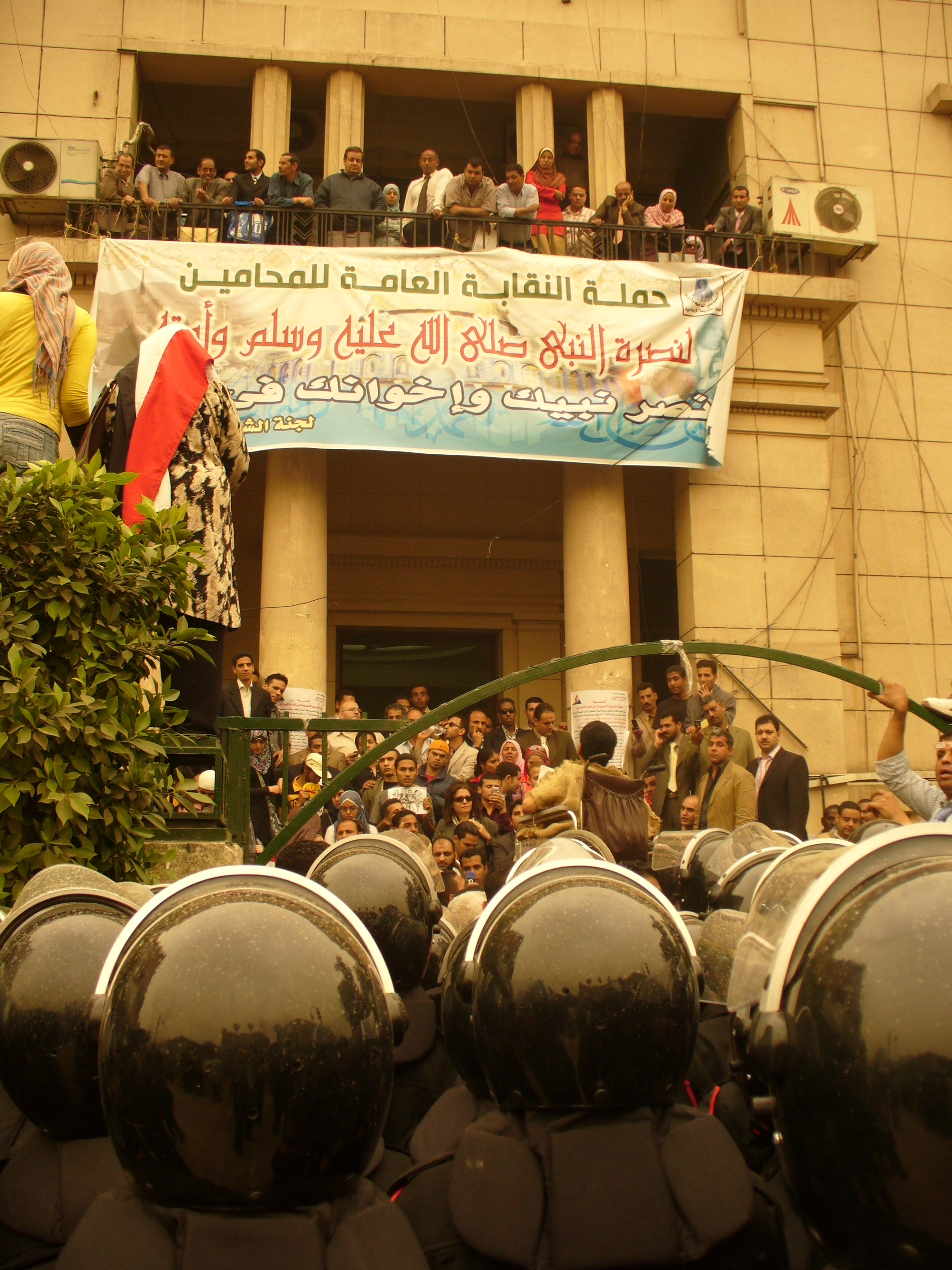
Hundreds of intellectuals and activists also protested inside the grounds of the Bar Association in downtown Cairo, waving banners and chanting slogans demanding economic reform. The protesters congregated despite a warning by Egypt’s Interior Ministry on Saturday against civil disturbances.
“The strike is legitimate against poverty and starvation,” chanted the protesters, who were surrounded by hundreds of riot police personnel. People on the roof later showered security forces with glass bottles and bits of wood.
Other attempts to stage demonstrations in the city’s main squares were swiftly dispersed and dozens of activists were arrested.
The strike calls were the first major attempt by opposition groups to turn the past year’s labor unrest and rising anger over the economy into a wider political protest against the government, only two days before key elections for local councils on Tuesday.
The government had announced a ban on political rallies inside mosques, hoping to blunt the protests. Egyptian President Hosni Mubarak also lifted import duties on some foodstuffs in an effort to soften economic complaints brought on by a near doubling of prices of food stuffs due to international and local influences.
“The regime is terrified and Sunday’s strike is a test for the upcoming popular uprising,” said a headline in the Sunday edition of the Sout El-Umma opposition newspaper.
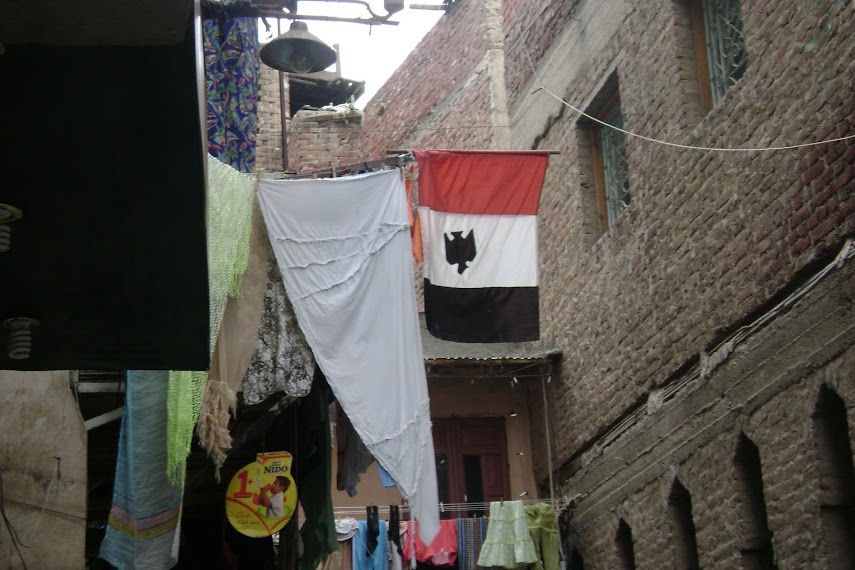
In recent days, anti-government groups have been sending mobile phone messages and e-mails to people around the country to hold protests, stay home from work, avoid shopping, wear black clothes and hang the Egyptian flag from windows and balconies in a show of support for the strikers.
Strikes and demonstrations are illegal in Egypt under the country’s emergency law, and protesters are often silenced by Egyptian security forces.

UPDATE: I’ve just spoken with a Socialist activist:
“From 4pm to 10pm, Mahalla has been witnessing an intifada. It’s an intifada in the true sense of the word. You are talking about a war in the streets everywhere. There were running battles. Things calmed down only half an hour ago.”

UPDATE: I can’t confirm the number of arrests in Mahalla. I’m hearing conflicting figures. Names of activists are also being circulated by the police with threats of arrest on sight in the streets.

UPDATE: Some pix by Per Björklund, who was in Mahalla in the morning, prior to the clashes:

  • Security forces taking control of Mahalla el-Kubra on the dawn of 6 of april, before the announced strike of 27.000 textile workers. (Per Bjorklund, Mahalla 2008-04-06)
  • Security forces taking control of Mahalla el-Kubra on the dawn of 6 of april, before the announced strike of 27.000 textile workers. (Per Bjorklund, Mahalla 2008-04-06)
  • Security forces taking control of Mahalla el-Kubra on the dawn of 6 of april, before the announced strike of 27.000 textile workers. (Per Bjorklund, Mahalla 2008-04-06)
  • Security forces taking control of Mahalla el-Kubra on the dawn of 6 of april, before the announced strike of 27.000 textile workers. (Per Bjorklund, Mahalla 2008-04-06)
  • Security forces taking control of Mahalla el-Kubra on the dawn of 6 of april, before the announced strike of 27.000 textile workers. (Per Bjorklund, Mahalla 2008-04-06)
  • Security forces taking control of Mahalla el-Kubra on the dawn of 6 of april, before the announced strike of 27.000 textile workers. (Per Bjorklund, Mahalla 2008-04-06)

UPDATE: A photo by James Buck, who was also in Mahalla in the morning:

Pigs

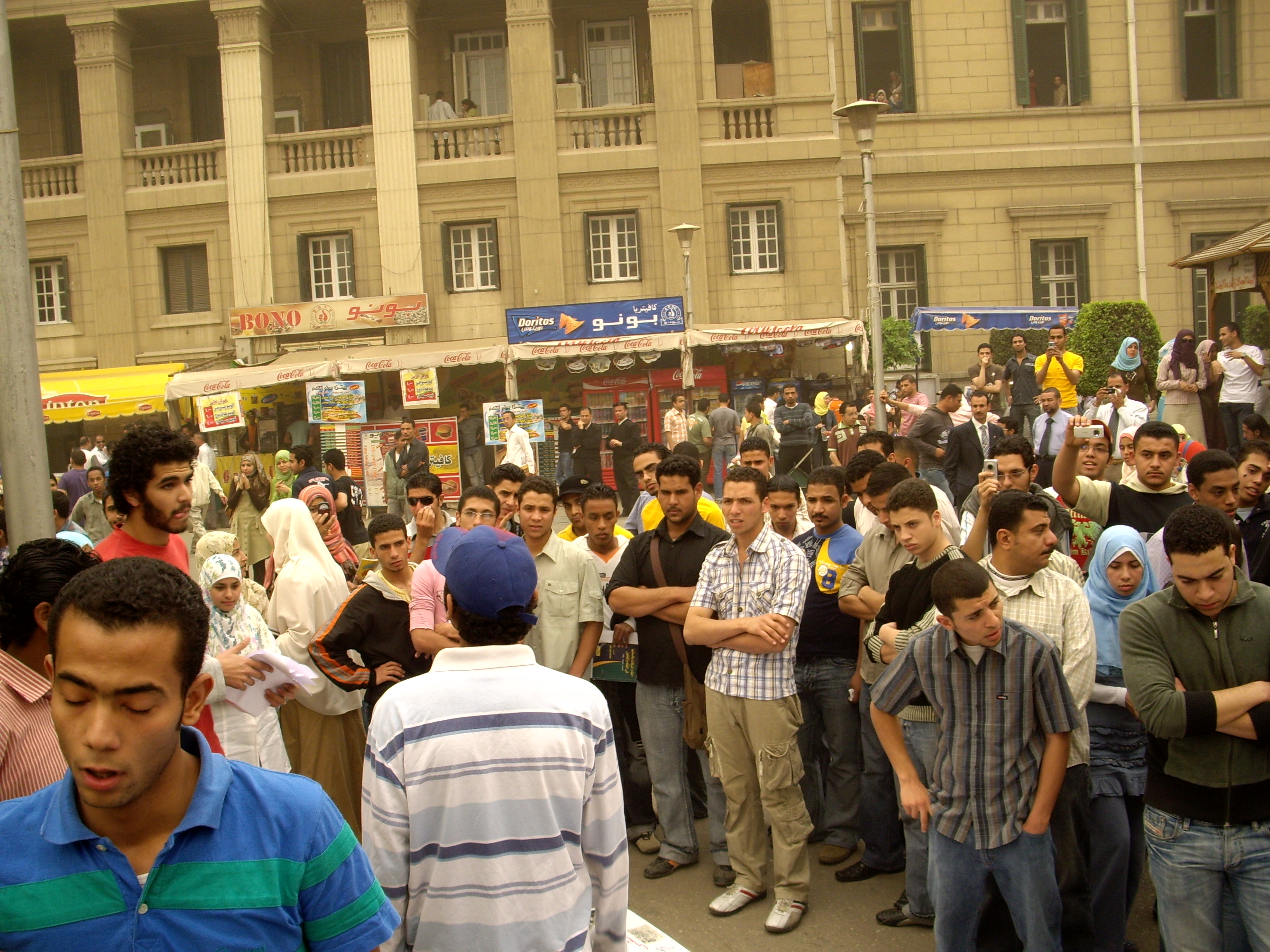
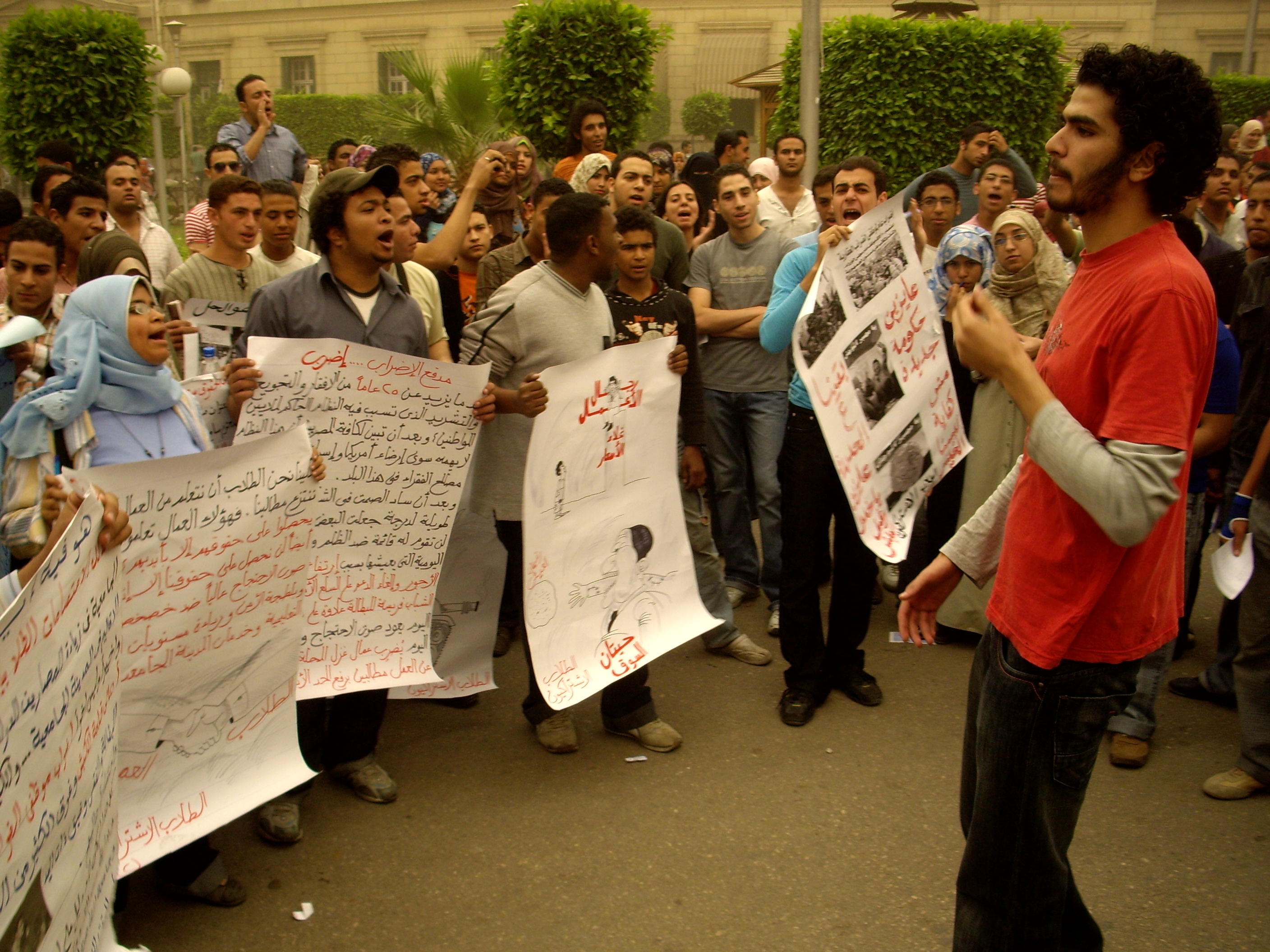
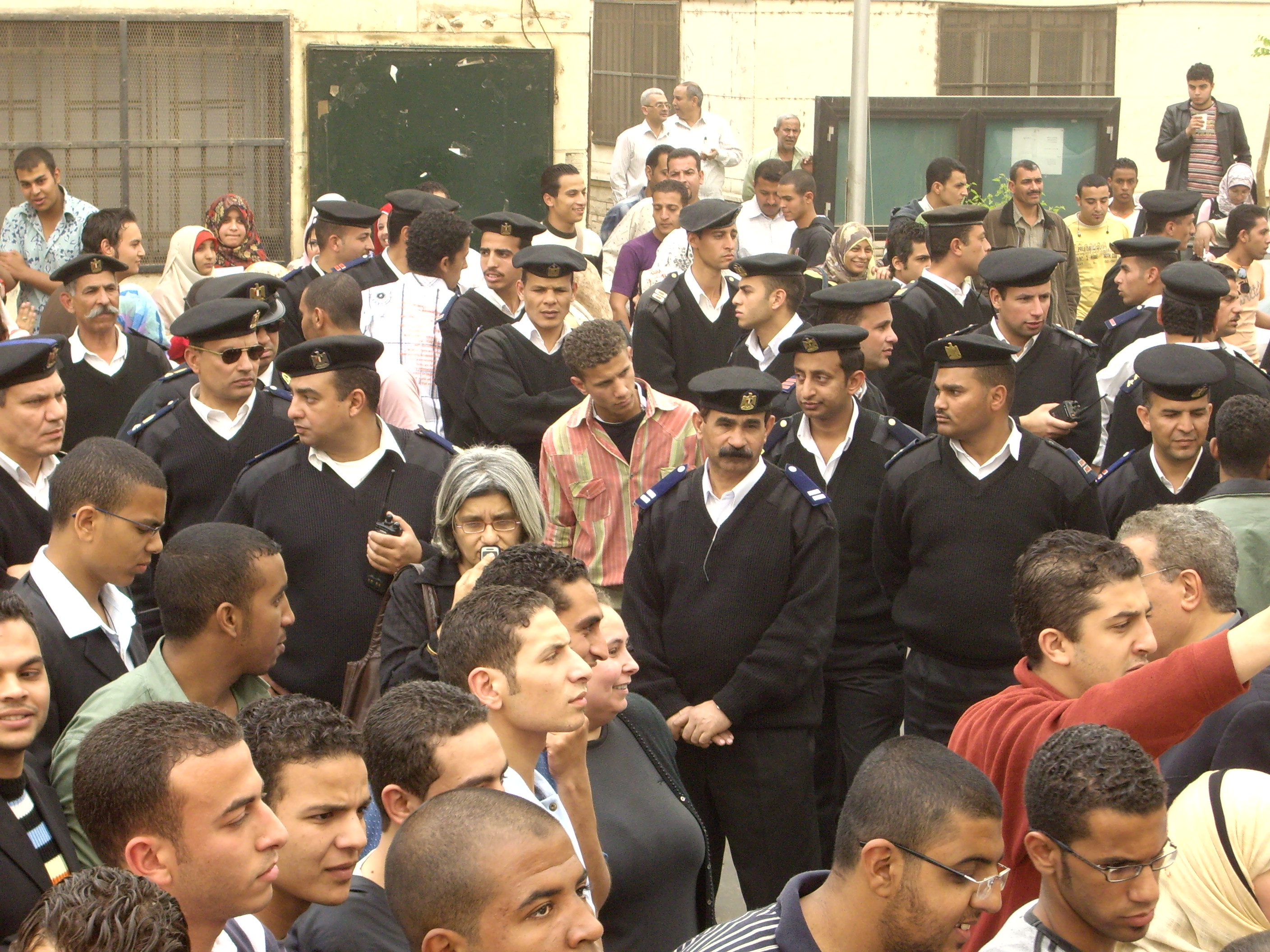
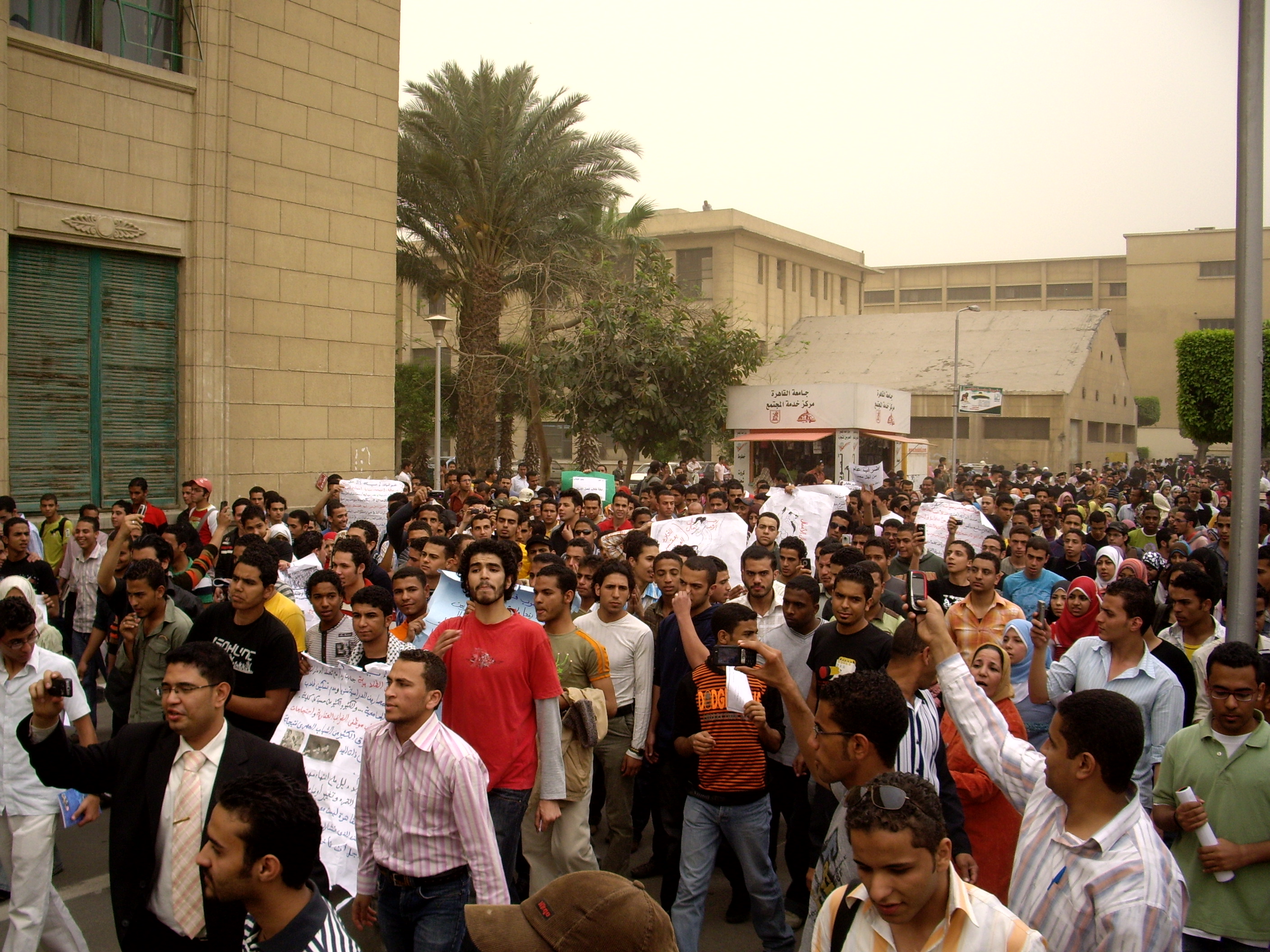
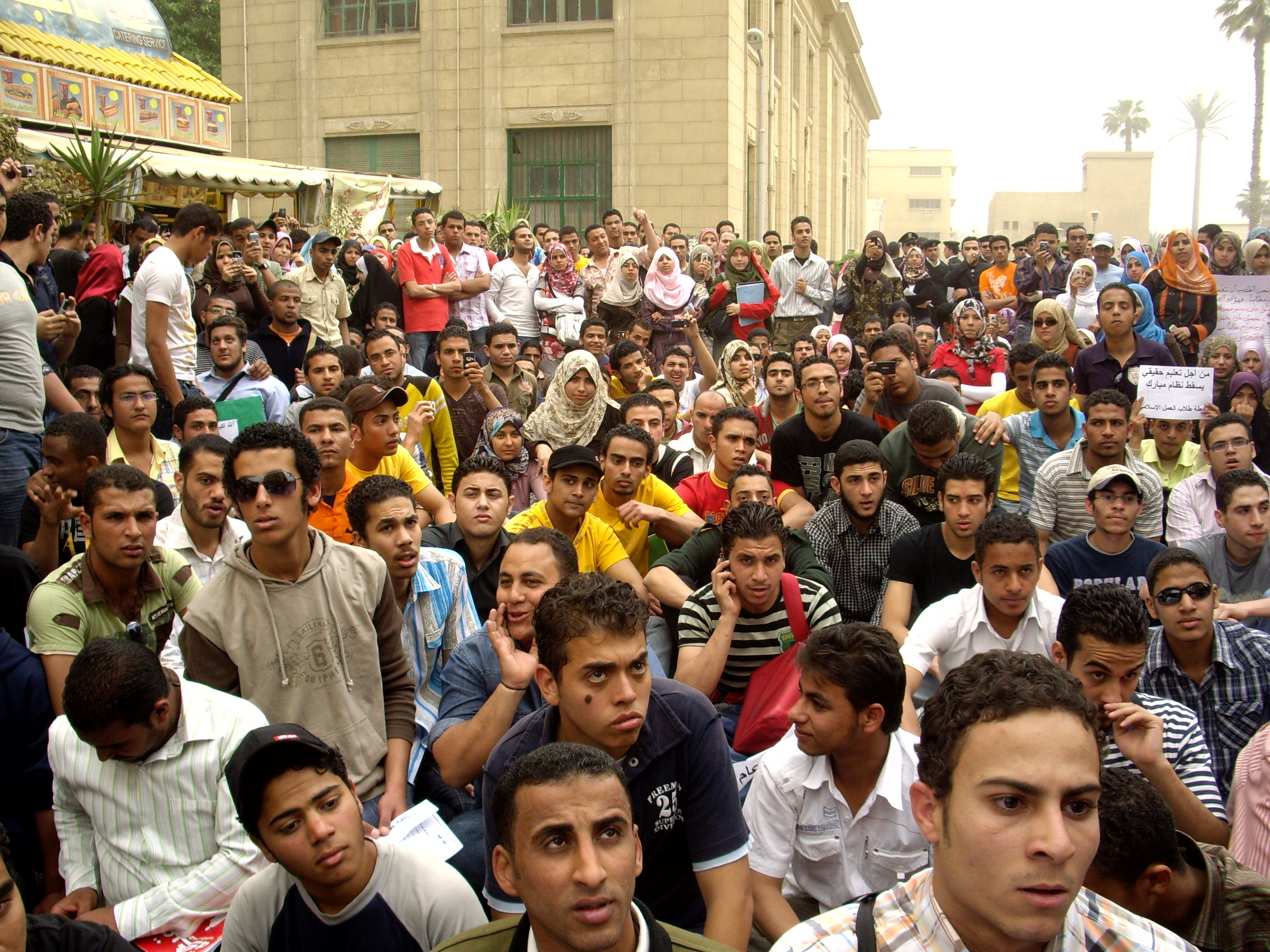
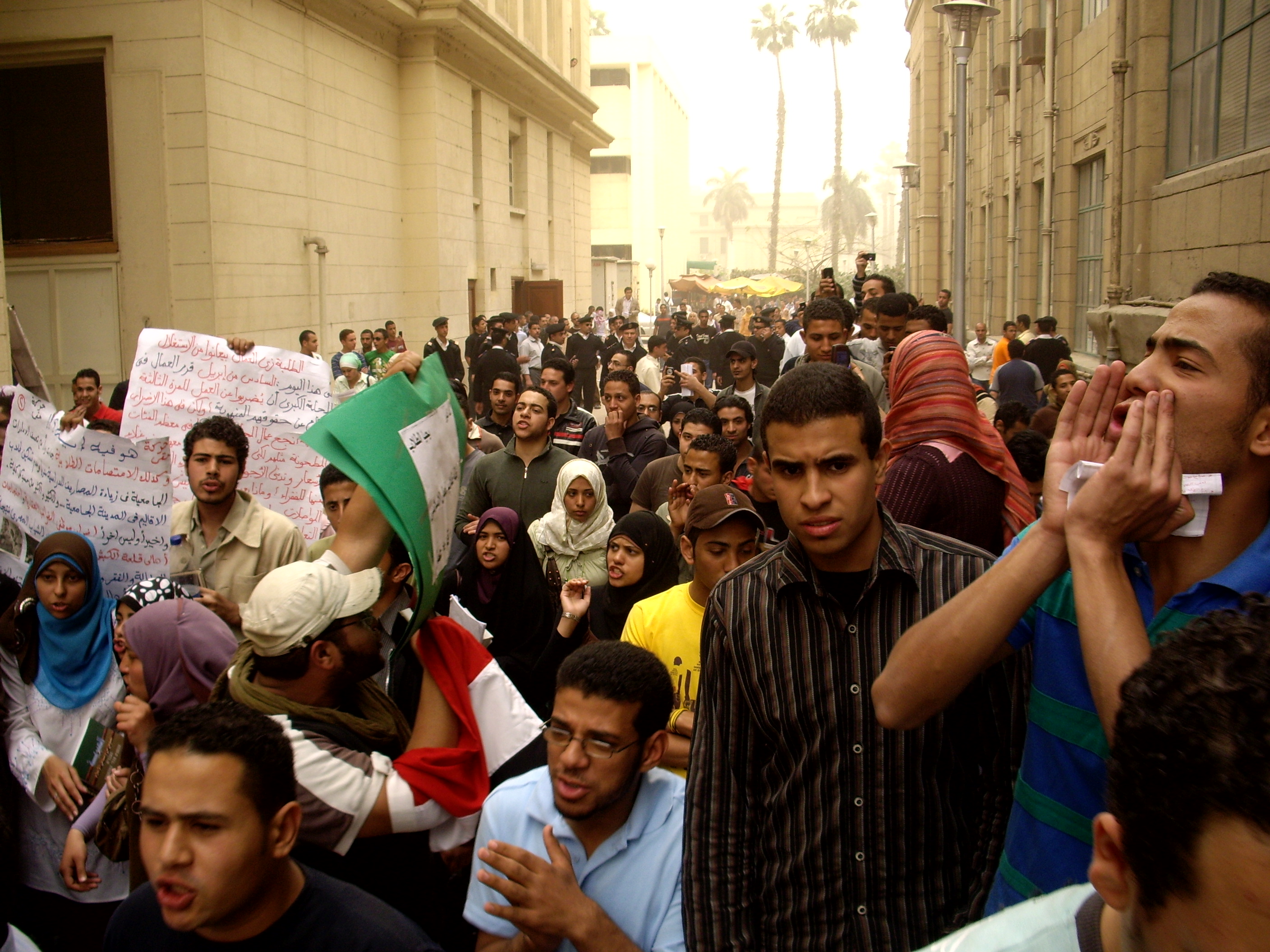
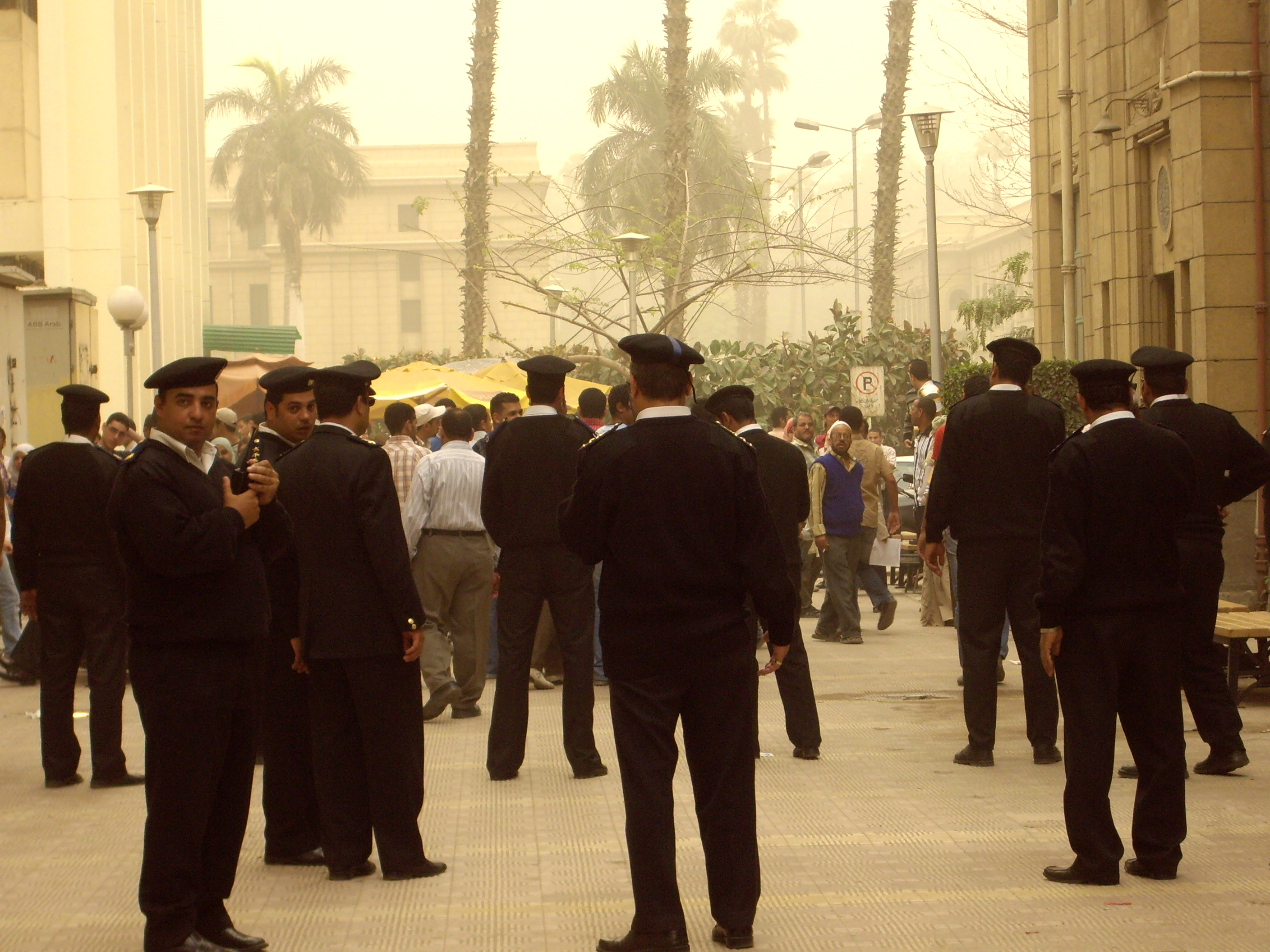
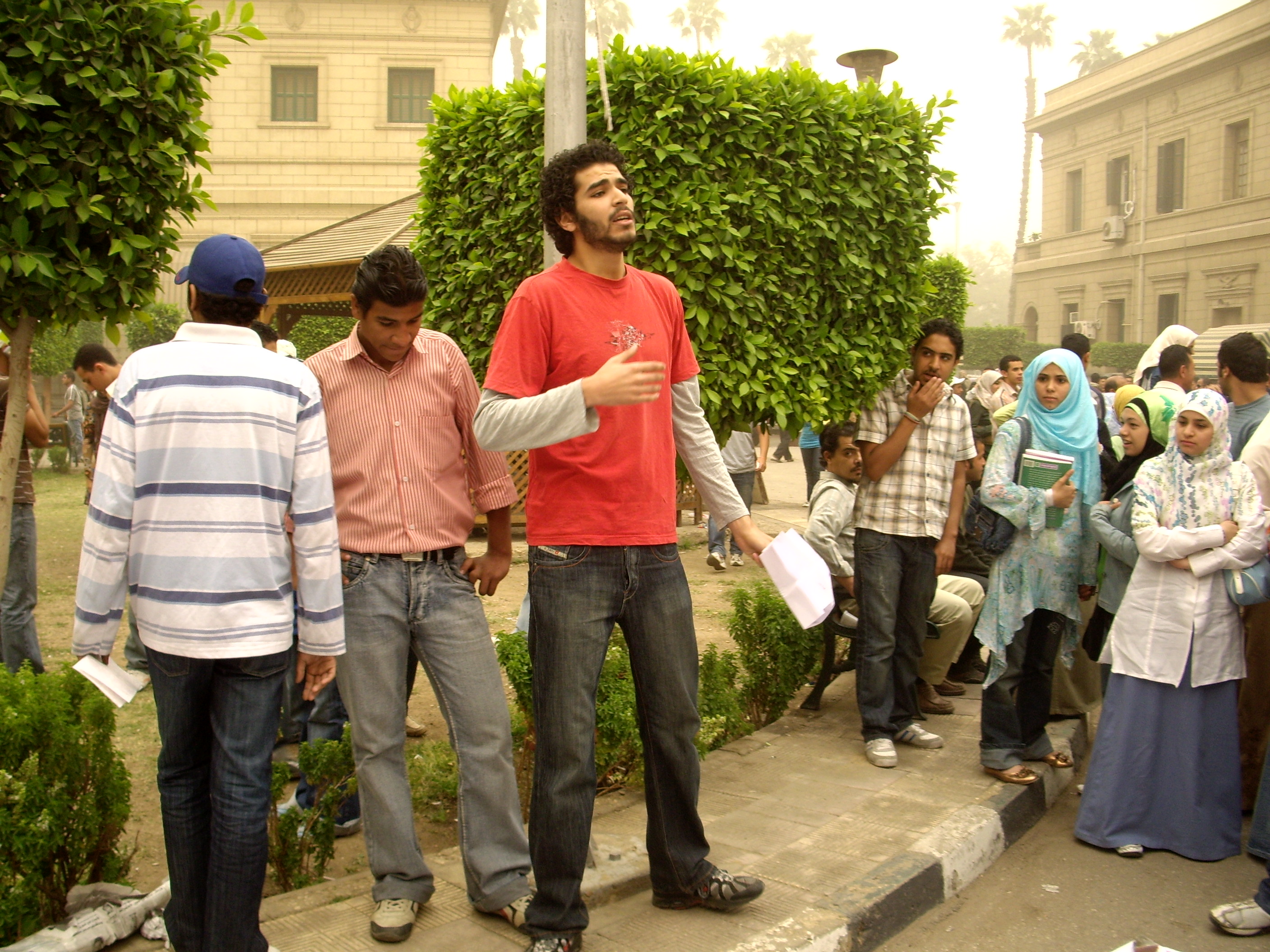
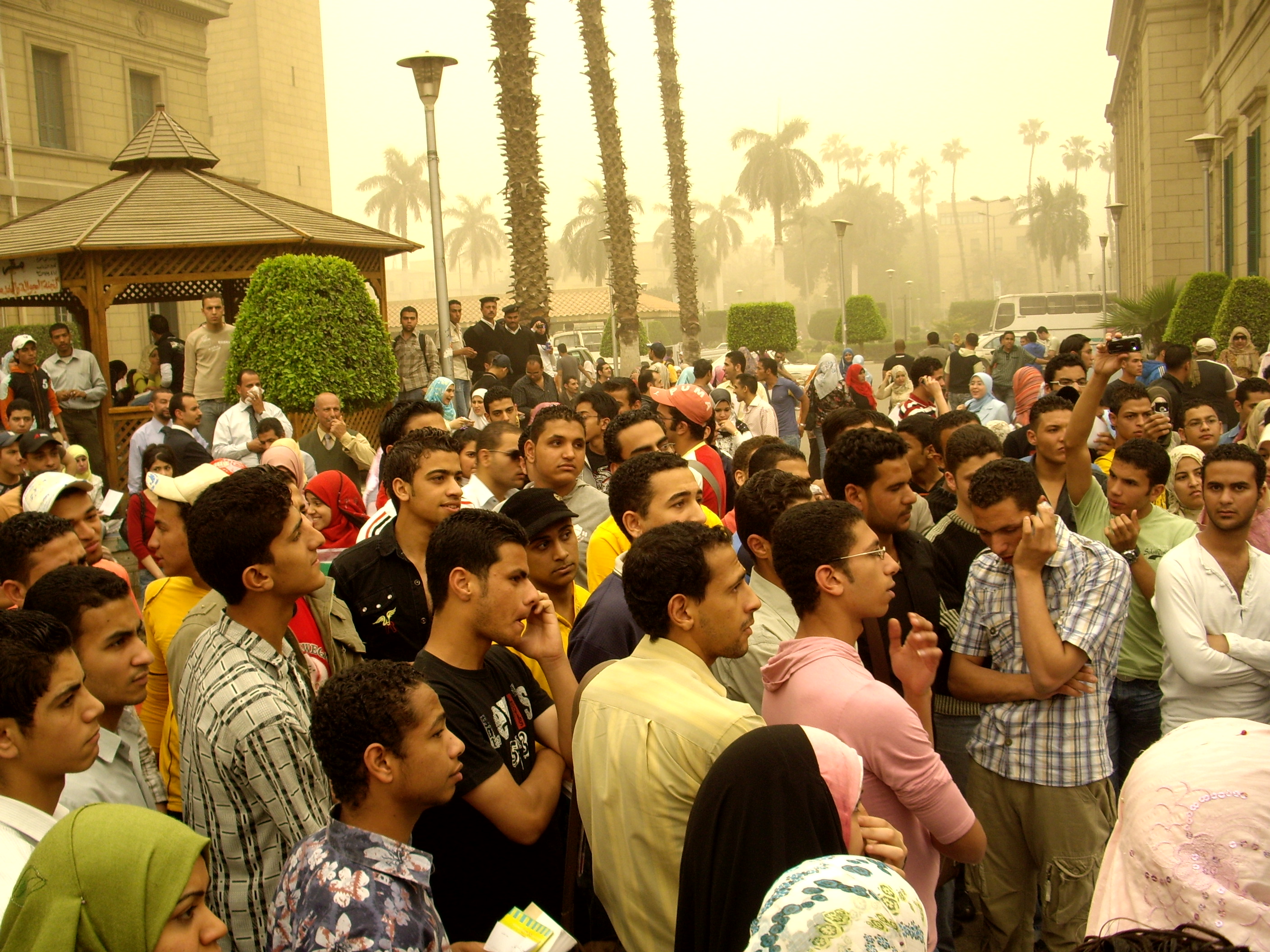
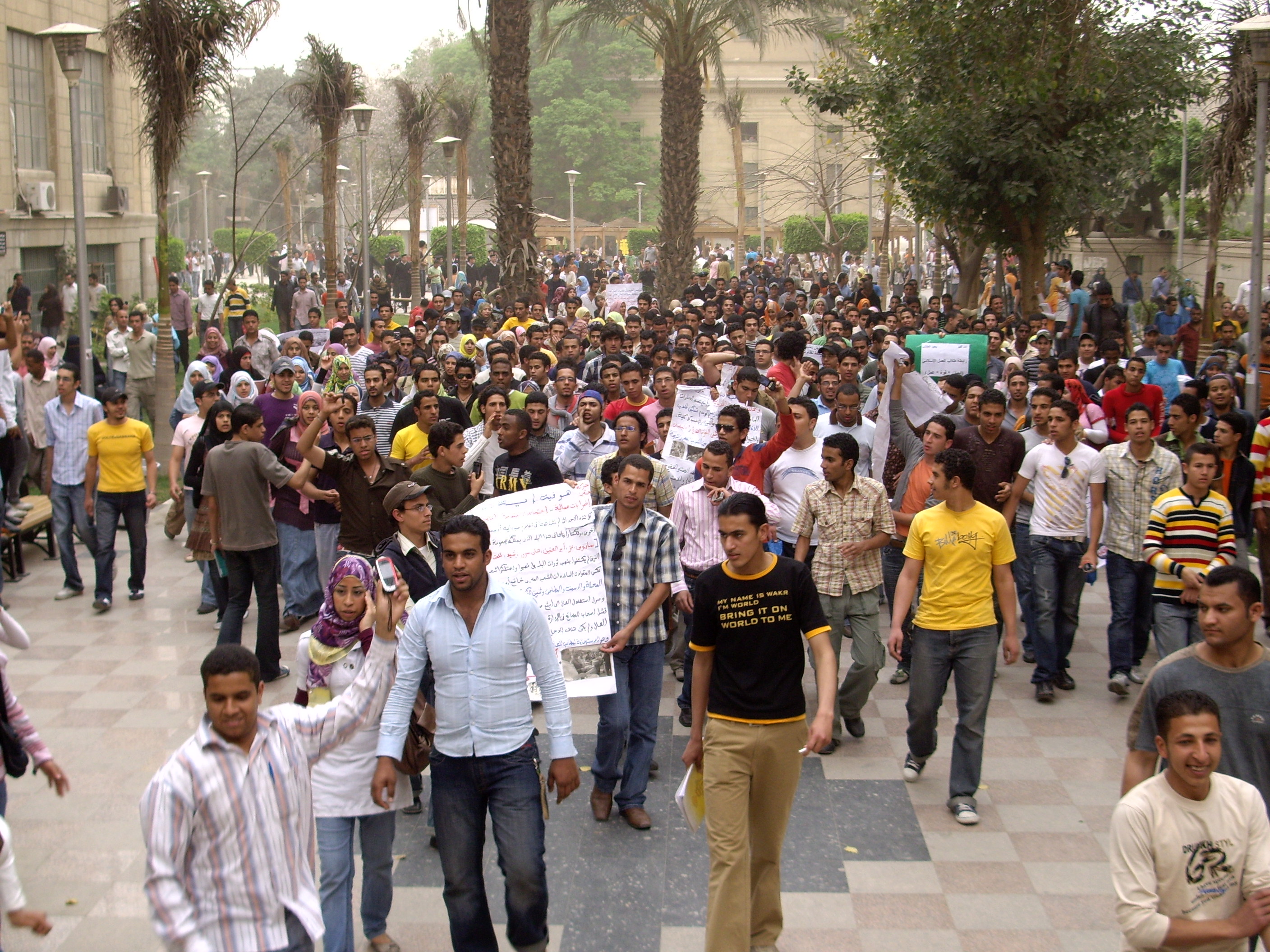
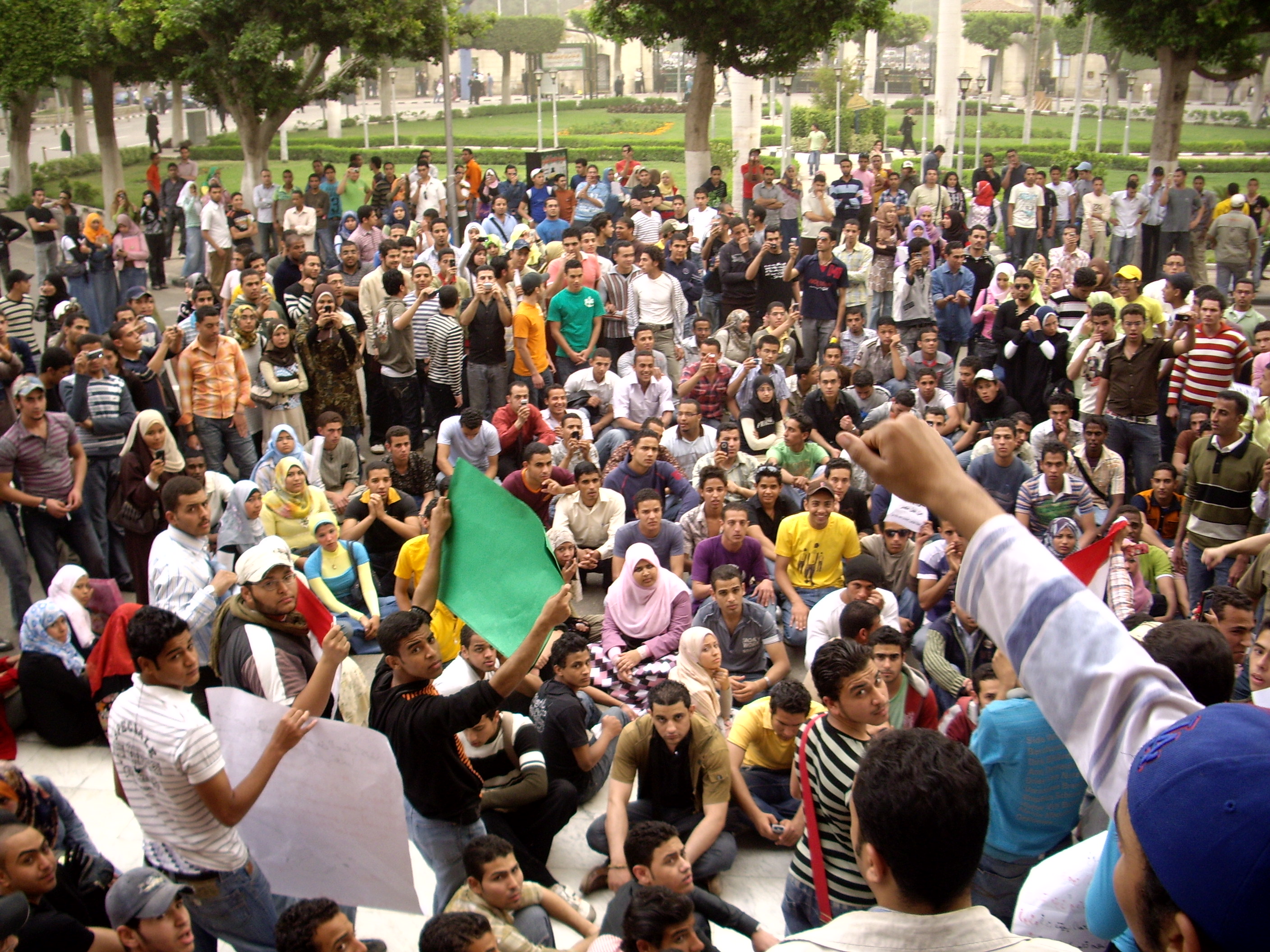
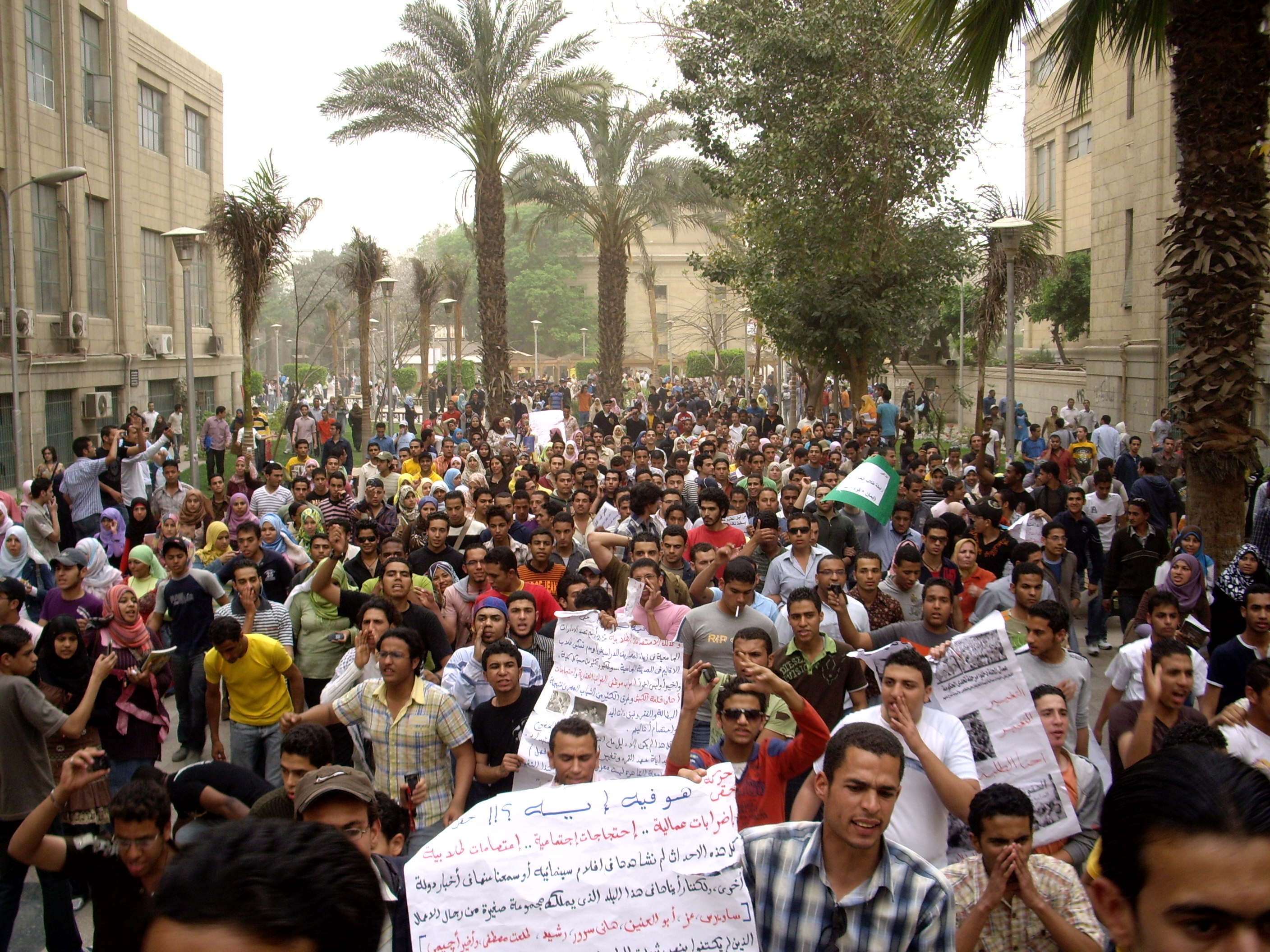
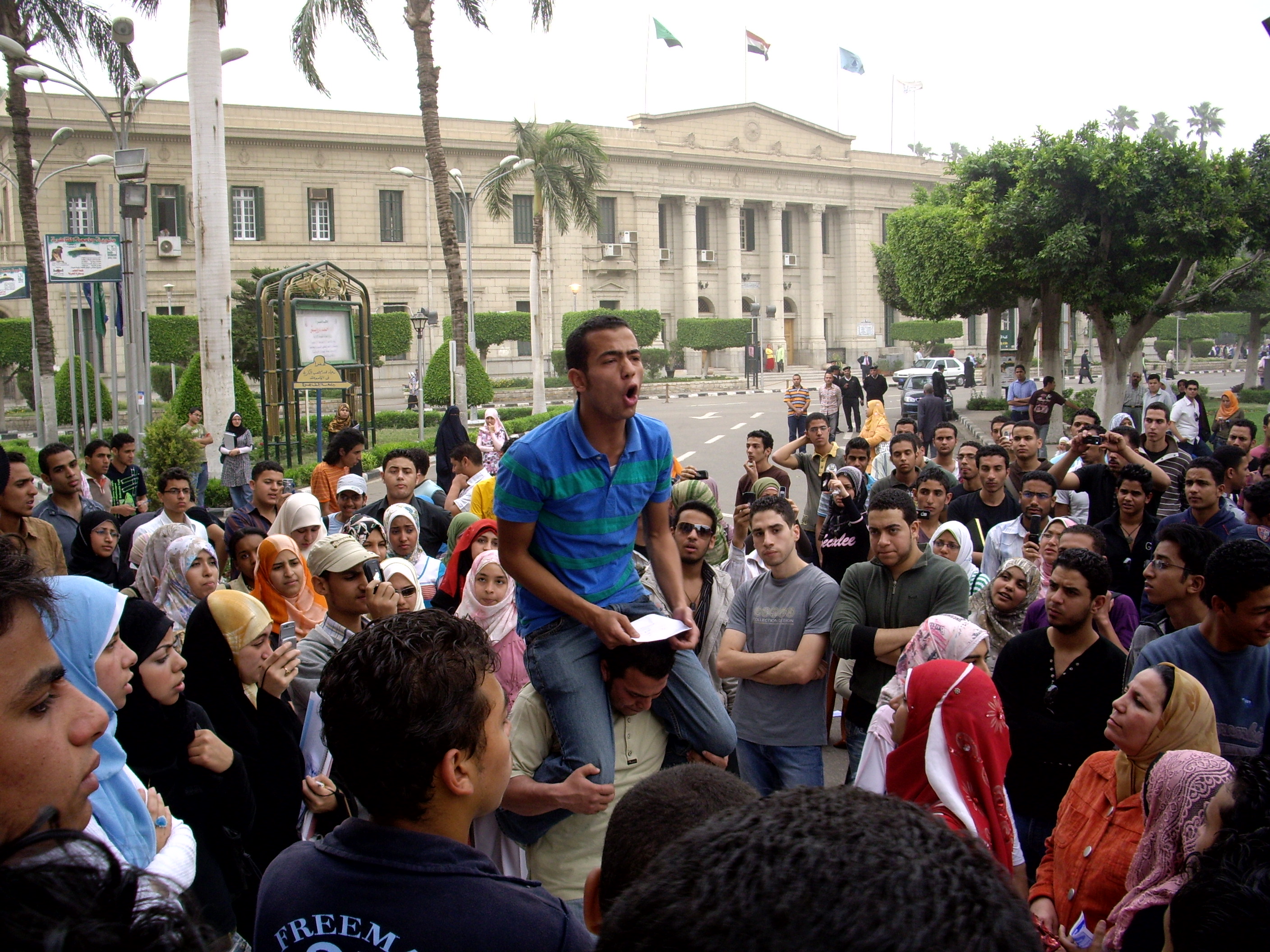
UPDATE: I received photos of the protests on Cairo University campus today, taken by activist Mostafa Mahmoud:

  • طلاب جامعة القاهرة يتظاهرون تأييدا للمحلة ٦ أبريل ٢٠٠٨، تصوير مصطفى محمود
  • طلاب جامعة القاهرة يتظاهرون تأييدا للمحلة ٦ أبريل ٢٠٠٨، تصوير مصطفى محمود
  • طلاب جامعة القاهرة يتظاهرون تأييدا للمحلة ٦ أبريل ٢٠٠٨، تصوير مصطفى محمود
  • طلاب جامعة القاهرة يتظاهرون تأييدا للمحلة ٦ أبريل ٢٠٠٨، تصوير مصطفى محمود
  • طلاب جامعة القاهرة يتظاهرون تأييدا للمحلة ٦ أبريل ٢٠٠٨، تصوير مصطفى محمود
  • طلاب جامعة القاهرة يتظاهرون تأييدا للمحلة ٦ أبريل ٢٠٠٨، تصوير مصطفى محمود
  • طلاب جامعة القاهرة يتظاهرون تأييدا للمحلة ٦ أبريل ٢٠٠٨، تصوير مصطفى محمود
  • طلاب جامعة القاهرة يتظاهرون تأييدا للمحلة ٦ أبريل ٢٠٠٨، تصوير مصطفى محمود
  • طلاب جامعة القاهرة يتظاهرون تأييدا للمحلة ٦ أبريل ٢٠٠٨، تصوير مصطفى محمود
  • طلاب جامعة القاهرة يتظاهرون تأييدا للمحلة ٦ أبريل ٢٠٠٨، تصوير مصطفى محمود
  • طلاب جامعة القاهرة يتظاهرون تأييدا للمحلة ٦ أبريل ٢٠٠٨، تصوير مصطفى محمود
  • طلاب جامعة القاهرة يتظاهرون تأييدا للمحلة ٦ أبريل ٢٠٠٨، تصوير مصطفى محمود
  • طلاب جامعة القاهرة يتظاهرون تأييدا للمحلة ٦ أبريل ٢٠٠٨، تصوير مصطفى محمود
  • طلاب جامعة القاهرة يتظاهرون تأييدا للمحلة ٦ أبريل ٢٠٠٨، تصوير مصطفى محمود
  • طلاب جامعة القاهرة يتظاهرون تأييدا للمحلة ٦ أبريل ٢٠٠٨، تصوير مصطفى محمود
  • طلاب جامعة القاهرة يتظاهرون تأييدا للمحلة ٦ أبريل ٢٠٠٨، تصوير مصطفى محمود
  • طلاب جامعة القاهرة يتظاهرون تأييدا للمحلة ٦ أبريل ٢٠٠٨، تصوير مصطفى محمود
  • طلاب جامعة القاهرة يتظاهرون تأييدا للمحلة ٦ أبريل ٢٠٠٨، تصوير مصطفى محمود

UPDATE: Blogger Muhammad el-Sharqawi was taken from his home by the police to be interrogated at the 6th of October City Prosecution office. Malek is still locked up in Masr el-Qadima Police Station, though police denies any knowledge of his existence.

UPDATE: A message of solidarity from Lebanese and international comrades. The message is available in Arabic here.

UPDATE: Watch some photos of the protest held by the Resistance Students in Helwan University.

More photos here.

UPDATE: Finally the Muslim Brothers are boycotting the Local Council elections to be held on the 8th of April.

UPDATE: A message of solidarity from Sweden:

The Staff at the Swedish Class-struggle oriented paper Motarbetaren, fully supports the demands of the striking weavers. We will with anticipation follow the struggle and do our best to report whatever victories are won and spread the word about whatever, if any, foul play or atrocities that state and capital in Egypt use to hit back against the strikers and sustain inequality.
Stockholm, Sweden.

UPDATE: I’ve spoken with Kareem el-Beheiri, who’s on the run now. Kareem says hundreds were detained today in Mahalla including minors. Anyone nabbed was abused also by the police. Children were beaten up with sticks, sacks full of rocks, punches, kicks. Lawyers who showed up to defend the detainees were chased by sword-wielding plainclothes police thugs. For more information about the mass round ups of activists and demonstrators in Mahalla, Cairo, Mansoura, Kafr el-Sheikh and elsewhere, please check out the Tadamon, April 6th Strike and the HMLC blogs, as well as Nora’s Twitter account.

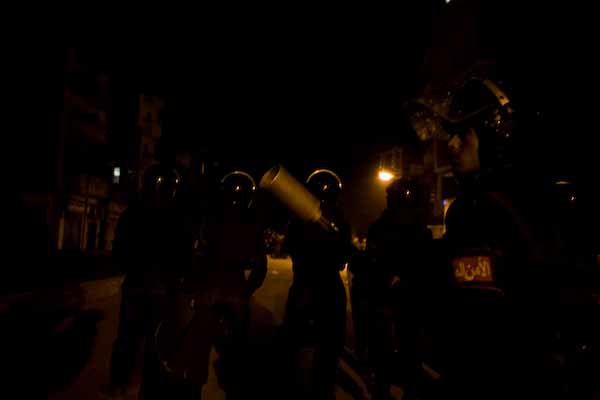
UPDATE: Mahalla is under “unofficial” curfew, according to an activist in the city I’ve just spoken with. The town is occupied entirely by Mubarak’s Central Security Forces who managed to pacify the city by 10pm. Citizens are instructed by microphones to stay in their homes.

UPDATE: Information about Mahalla in Spanish could be found here and in German here.

UPDATE: Malek and the three detained Labor Party activists have been released from Masr el-Qadima Police Station.

UPDATE: The solidarity strike at Kafr el-Dawar was aborted. But I’ve learned, from a Socialist source, that while production was not brought to complete halt, still “hundreds of workers demonstrated twice that day: Before the start of the morning shift, followed by another one that was staged before the afternoon shift started… The strike was called off as labor leaders in the factory came under severe pressure from State Security in the previous days.”
Elsewhere, production was disrupted in Tora Cement, as 60% of the workforce did not show up. Those who turned out for work, however, also took part in an one hour protest from 12 noon to 1pm. The labor leaders in the factory issued a statement denouncing the police violence against the Mahalla protesters and supporting the Mahalla-led demand for raising the national minimum wage to LE1200 a month.
While the planned protest at the South Cairo Grain Mills was aborted, production in its seven mills was brought to a semi-halt, together with two other mills in Sayyed Zeinab, as more than 50% of the labor force did not show up for work.

UPDATE: Zeinobia did a good job, following up on the protests and the solidarity industrial actions.. Check out her postings here, here, here, here, here and here.

UPDATE: Blogger Ahmad Sherif sent me a solidarity video with Mahalla:

UPDATE: A message from my friend Alia in Cairo:

After stifling the Mahalla workers’ strikes this morning, and making movement and mobilization in Cairo and other governorates almost impossible on account of random arrests, government forces have proceeded to stifle news feeds that could indicate the truth of what has been happening today.
The good (and bad) news is that a lot has happened today. Besides a wide-spread striking through-out Cairo, significant mobilization has in fact taken place throughout Mahalla and has been retaliated to with much violence.
If there is anything we owe ourselves it is seeking out the truth and taking stock of the changes that it implies. The growing sense of agency amongst Egyptians; workers, youth and general populace alike, and the growing sense of solidarity (slow yet steady) that we share.
Civilians and activists have spent the day in the streets of Cairo, Mansoura, and other governorates, including Mahalla, to ensure that the real events are communicated and shared. You will only find such news on blogs, and other internet and published sources of alternative media.
Please follow up, publish, or circulate this information as best you can. You may triangulate and verify yourselves, but don’t wait for the truths to reach you, seek them out as they unravel!

UPDATE: Sarah Carr reports from Mahalla:

An aborted strike planned by workers at the Ghazl El-Mahalla textile factory gave way Sunday afternoon to violent clashes between protesters and security forces, eye-witnesses told the administrator of tadamon.blogspot.com, a website monitoring the April 6 movement.
Live ammunition was allegedly used to quell the massive protest, killing a 20-year-old male activist and a nine-year-old boy.
Eye-witnesses in Mahalla also said that the security forces used stun batons to electrocute protesters and paralyze them temporarily.
Other rights groups and activists reported that security bodies used violence and teargas to disperse the demonstration in the Delta town.
Security bodies had been mobilizing outside the factory in the week leading up to the strike. Yesterday evening, plainclothes policemen entered factory premises in order to prevent workers from initiating the strike.
Members of the media were allowed into the factory today under escort by individuals who said that they were members of the company’s industrial safety team.
While machines in sections of the factory Daily News Egypt was allowed to visit were operating, it was clearly apparent that members of the workforce were missing.
This was confirmed by one factory employee, who preferred to remain anonymous.
“About 80 percent of staff showed up for work today, but it’s normal to have a 20 percent or so rate of absence,” he explained.
The employee told Daily News Egypt that news of the industrial action planned for Sunday was merely a rumor.
“We wanted the meal allowance to be increased and it was, to LE 90. There was no plan to strike,” he said.
Divisions among workers had developed in the run-up to the strike.
Representatives of the Center for Trade Union and Workers Services (an NGO which was banned in April 2007) and the government-backed factory union distributed leaflets in an attempt to persuade workers not to strike.
Members of a league of factory workers formed in opposition to the official union agitated for industrial action.
Violence erupted in Mahalla Sunday afternoon when security forces forcibly dispersed some 15,000 residents and workers who had congregated in El-Showan Square, the town’s biggest square.
According to a message sent by activist Hamdy Hussein, the violence began at 4:30 pm.
“Clashes between security bodies and Ghazl El-Mahalla began when the workers refused directives by security bodies — who number some 50,000 — ordering them to return to their homes,” the message reads.
At time of press the number of security forces mobilized in Mahalla could not be confirmed by any other sources.
According to the Hisham Mubarak Law Center, security bodies used batons and teargas to break up the protest when protesters began chanting anti-government slogans, condemning price increases of basic foodstuffs.
According to a message sent by the Center, there are “tens of injuries.”

Here’s also a report by Michaela Singer on the downtown Cairo protests:

Over a thousand social and political activists, as well as unaffiliated citizens, gathered inside the Lawyers’ Syndicate yesterday as part of the April 6 strikes, calling for immediate government intervention to bring down food prices and raise wages.
Protests had originally been designated to take place in certain key points around the city, as well as in every local governorate. According to a detailed map published yesterday in Al-Badil newspaper, demonstrations would take place in Cairo’s state universities (Cairo, Helwan and Ain Shams) as well as Giza and Tahrir Squares.
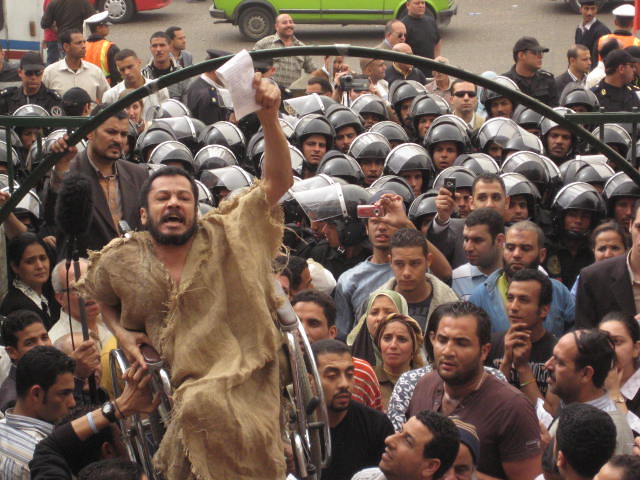
However, after what was described as an “unprecedented campaign of intimidation by the Ministry of Interior, and a vast mobilization of state security,” Cairo, under an eerie yellow sky, was subjected to a strange stillness unseen in recent years.
According to sources, over 80 activists and politicians were arrested from their homes and offices late Saturday evening, including Mohammad Ashqar, a leading figure in the Kefaya movement, and Magdy Hussein of the Labor party.
Early Sunday morning, one female blogger, who did not wish to be named, told Daily News Egypt, “My mother’s generation is staying at home. They are scared of what the police will do, but they also remember scenes of violence from the 1970s, and thought people will be taking violent action such as burning cars. But there is nobody here except masses of security. It’s a good thing though; it means the government is afraid.”
Demonstrations were expected to begin at 2 pm in Tahrir Square, however, many activists and ordinary citizens, fearing arrest, initially refrained from participation. Groups of students and journalists gathering on the pavements outside Tahrir Square were given swift warnings and were moved on by security.
At the universities, the picture was similar, with large numbers of police security guarding not only the main gates but open spaces within the university grounds.
“We have a certain place where we protest outside the faculty of commerce,” May el-Bassiouny, of Socialist Students, told Daily News Egypt. “As you can see, they have turned it into a football pitch. They have also erected television screens to distract would-be demonstrators. What is even stranger is that police security, who are always present in the university in plain clothes, are wearing uniform today.”
According to sources at Helwan University, security forces blocked the main gates and surrounded the university with security vehicles to prevent demonstrators and journalists from entering.
In Downtown Cairo coordinators of the April 6 movement made steps to relocate the demonstration.
“At first we tried the Journalists’ Syndicate, however, since the recent elections, the syndicate committee has been controlled by the government. The head of the syndicate Makram Mohammed Ahmad is a member of the National Democratic Party,” Kefaya member Karima El-Khilfany told Daily News Egypt.
“We immediately took action to move it to the Lawyers’ Syndicate, where we can guarantee freedom of expression. Despite this, there were still violent measures taken when people chanting slogans tried to enter the syndicate. They allowed some people in but kept others out using violence.”
In the Lawyer’s Syndicate forecourt, angry demonstrators chanted slogans expressing their acute discontent with the current regime, and their support for the demands of the workers of Ghazl El-Mahalla.
Amidst calls for the removal of President Hosni Mubarak, protesters raised up a wheelchair bound protester dressed in straw rags. After a series of chants, they attempted to drive the wheelchair through the security wall surrounding the syndicate but were driven back.
“This is peaceful protest with credible demands, there is no need for so much military security,” Lawyer Khaled Mohammed Awad told Daily News Egypt. “Why does President Mubarak not given any statement over the radio and television to at the least acknowledge this protest and show some concern. In Europe they go out and ask people their opinions; here they surround them with police.”
After two hours of furious chanting, led predominantly by barefooted, Egyptian flag clad veteran campaigner Zeinab Al-Hagg, demonstrators went their separate ways.
However, Kefaya campaigners promise that this is only the beginning of what they claim will be an intense period of strikes and demonstrations.
“They said Kefaya was dead” said Karima Khilfany. “But this is only a start of a revolution.”

UPDATE: During Mahalla’s afternoon clashes with the police, Gehan Shaaban, reports that the children were “throwing rocks, in a scene similar to the Palestinian intifada, against Central Security Forces officers and soldiers, while chanting ‘The revolution has come! The revolution has come!'”

UPDATE: A statement by the Mahalla-based Afaq Socialist Center provides some details about the events, and accuses Muhammad el-Attar, Sayyed Habib, Magdi Sharif, Faisal Laqousha and Abdel Qader el-Deeb of touring the Ghazl el-Mahalla Company factories on the previous day trying to persuade the workers not to strike…

UPDATE: I received a message of solidarity from the Manchester Trades Unions Council: [I’m very short of time.. Can anybody translate it into Arabic, please, and post it in the comments section?]

To:
Textile Workers League
Mahalla
7 April 2008
Dear Sisters and Brothers,
Solidarity with the Mahalla textile workers
On behalf of Manchester Trades Union Council, I am writing to express our solidarity with your struggle. As we read the reports of your battles yesterday, 6 April, we are inspired by your courage and determination.
Across the world we are seeing unending attacks on workers as governments and employers try to keep wages down while prices rise. In Britain too we have experience of this and we are also fighting back. On 24 April, hundreds of thousands of teachers and government officials will be on strike against the attempts of the government to hold wage increases below inflation. These attempts to use the so called ‘free market’ follow the neo-liberal policies of the international financial institutions: the IMF, World Bank, WTO and governments around the world. These are anti worker, anti trade union policies which increase the poverty of millions while enriching the few,
In Egypt, where the history of exploitation and oppression has been particularly bitter, the struggle of the Mahalla workers encourages us all to keep fighting.
Please keep us informed and let us know how we can assist you.
In solidarity,
Geoff Brown
Secretary

UPDATE: El-Badeel photographer Muhammad Ali Eddin has pix of the downtown Cairo protests.

The Flag Vs. Helmets

UPDATE: The Mahalla riots caught on a cellular phone camera here.

UPDATE: A message from journalist and friend Jano Charbel who was in Mahalla prior to the outbreak of the riots, and later attended the Lawyers’ Syndicate protest in downtown Cairo:

Egyptian security forces arrested over one hundred opposition activists across the country, seriously injured another eighty protesting residents and workers in the city of Al-Mahalla, and reportedly killed two of these locals while putting down this protest – all this on April 6 – the day on which a general strike and popular protests were planned against the sky-rocketing prices of commodities and services.
Since late January workers at the Mahalla Textile Company had announced their intention to strike on April 6 – if their demands for an adequate minimum wage, along with improved working conditions and living standards were not met during the course of negotiations with state authorities. Several weeks later a group of political activists and opposition party leaders announced that they too would organize nationwide demonstrations, protests, and a general strike on April 6 against continuously increasing living expenses, against the decline of real wages, and in solidarity with the workers at Al-Mahalla.
These events, however, did not materialize as its organizers’ had hoped they would. The cancellation of the strike by workers’ representatives at the Mahalla Textile Company, the interior ministry’s pubic threats and heavy handed crackdowns, a lack of organization on the grassroots level, and schisms amongst these leaderships, all led to a poorly organized expression of discontent – even though this discontent did resound across a significant number of provinces, from Alexandria in the north to Qena in the south.
Khaled Ali, a lawyer and labor affairs analyst at the independent Hisham Mubarak Law Center commented on this “general strike” explaining that: “It was a premature act on behalf of the leaders of ineffective political parties and groupings to announce a general strike. Labor strikes, let alone general strikes, are organized and implemented by the workers themselves, not by isolated political figures from above. There’s a great deal of political opportunism involved in this announcement of a ‘general strike’.”
Regarding the campaigns for the promotion of this “general strike” via text messages, emails, and facebook groups Ali said “this is not the way a general strike is to be planned and organized. Such a strike must be organized, coordinated, and led at the grassroots level by free and independent workers’ organizations, by the laborers themselves – not by outsiders to the labor movement.”
Furthermore, workers and trade unions must have the freedom to exercise their right to strike. The right to strike is stipulated for, de jure, in Egyptian labor laws and trade union legislation. The de facto situation, however, is that it is virtually impossible to receive approval from the state-controlled general unions for the conduct of a strike. In fact not a single strike in Egyptian labor history has been officially authorized. In other words – all labor strikes in Egypt may be considered illegal, and thus security forces have the pretext to forcefully put down any such strike.
Hussein Megawer, President of the unrepresentative and state-controlled Egyptian Trade Union Federation (the only such labor federation allowed for by domestic legislation) denounced this “general strike” as he had denounced all previous labor strikes. On April 5 Megawer announced that “anybody participating in this strike shall be subject to penal measures because this strike is illegitimate in that it has not followed the necessary procedures stipulated for by law, and official requests have not been filed to this effect.”
A strike of the 26,000 workers at the Mahalla Textile Company was intended to be the centerpiece of this “general strike.” Yet the strike did not take place because the workers’ representatives – a group of five leaders responsible for negotiations with the state and the company’s administrative council – backed out at the last minute. None of these representatives were immediately available for questions.
Mustafa Foda, a vocational training instructor and labor activist at the Mahalla Textile Company met with journalists outside the factory walls because security forces had denied him entrance. Foda argued that these five workers’ representatives “backed out of the decision to strike because they had been co-opted by officials in the ministry of labor and/or threatened by security officials.”
He added that “we had a list of thirteen demands, yet these representatives gave up our demands. They settled for merely one scrap, amongst the many scraps, that the officials were willing to offer from their table of negotiations. The only benefit we received from all these months of negotiations was that our monthly food allowance pay has been raised from 43.50 Egyptian pounds (less than US$8 ) to 90 pounds (about US$ 16). These representatives suddenly felt that this was a good enough deal, sufficient enough to call off the strike.” Foda said that “plain clothed security officers were deployed within the factory walls, and worker-activists had either been locked up in their offices, or denied entry into the company.”
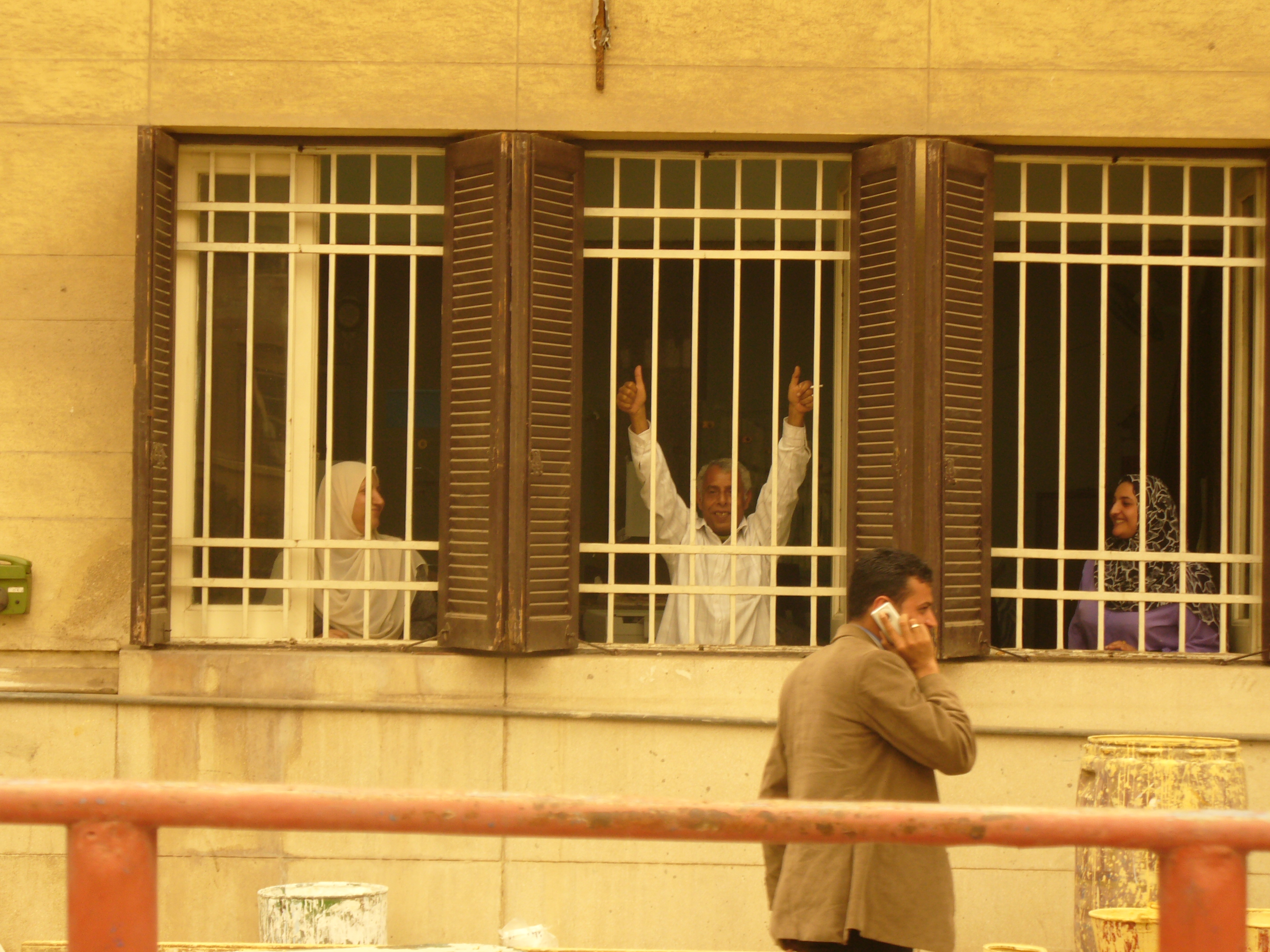
Indeed worker-activist and blogger Karim El-Beheiri, amongst a host of others, was prevented from leaving his office and when asked questions for an interview an administrative official in the same office shouted at him demanding that he step away from the window and remain silent. The police officers responsible for the company’s security agreed to give both local and foreign journalists a guided tour of the factories. Junior security officers accompanied each group of journalists on their tours around the company – and the presence of these officers clearly discouraged the workers from speaking their minds. The aim of these guided tours was to prove to journalists that there was no strike within the company, and that production had not stopped.
Worker-activist Zein El-Abedein Saeed said that “most of the workers wanted to go on strike in order to address our grievances and realize our demands. We feel let down by our worker representatives.”
Regarding the cases of labor unrest on this day, it was reported that nearly 3,000 workers at the Samanoud Felt Fabric Products Factory (Wabariyat Samanoud) halted production and went on strike. News reports indicate that another five hundred river transport workers conducted demonstrations in protest against their working conditions and poor living standards. Around 60% of the workforce at the Tora Cement Factory and the Southern Cairo Mill Complex chose to strike by not showing up for work, while a significant number of employees at the ministry of agriculture chose to stay at home on this day. White collar professionals also participated in the protests – the recently founded grouping “Physicians without Rights” staged a demonstration on the stairs outside the Physicians’ Syndicate in downtown Cairo.
Regarding the student protests which took place across the country, reports indicate that thousands of students at Al-Azhar University chose to stay at home while at Helwan University around 2,000 students conducted demonstrations against the increasing cost of living and educational expenses, thousands of other students at the Cairo and Ain Shams Universities conducted similar protests and demonstrations. In the north of the country around fifty professors went on strike at the University of Kafr El-Sheikh while hundreds of students at the University of Alexandria expressed their discontent by attending their classes dressed in black.
Hundreds of youth activists and lawyers demonstrated at the Lawyers’ Syndicate in downtown Cairo. Slogans at this demonstration pointed to the regime’s fear of popular protests – a verifiable fact given the tremendous number of security forces deployed on Egypt’s streets on this day of popular discontent. A group of youth activists threw rocks, blocks of wood and other scrap at state security officers as they dispersed crowds of onlookers gathering around the syndicate.
An unusually large number of stores had shut down across Egypt – attributable to the fact that many of these stores usually do take the day off on Sundays, others shut down in solidarity with the “general strike,” while many more closed their doors to business out of fear that potential street protests, and possible incidents of violence may affect their enterprises.
On April 6, 2008 Egypt did not in fact witness a general strike. Yet there is always potential for a general strike and there is clearly a great deal of discontent which may fuel such a general strike in the future. Since the massive strike at the Mahalla Textile Company in December 2006 Egypt’s workers and labor unions have become increasingly vocal and active. An increasing number of workers have also been demanding the establishment of freely organized, independent, and representative labor organizations; an increasing number of workers have also been developing their contacts with other groups of workers and coordinating their efforts – these are the elements that are needed for a general strike.

Some pix taken by Jano:

  • قوات الأمن المركزي بالمحلة، عدسة جانو شربل، ٦ أبريل ٢٠٠٨
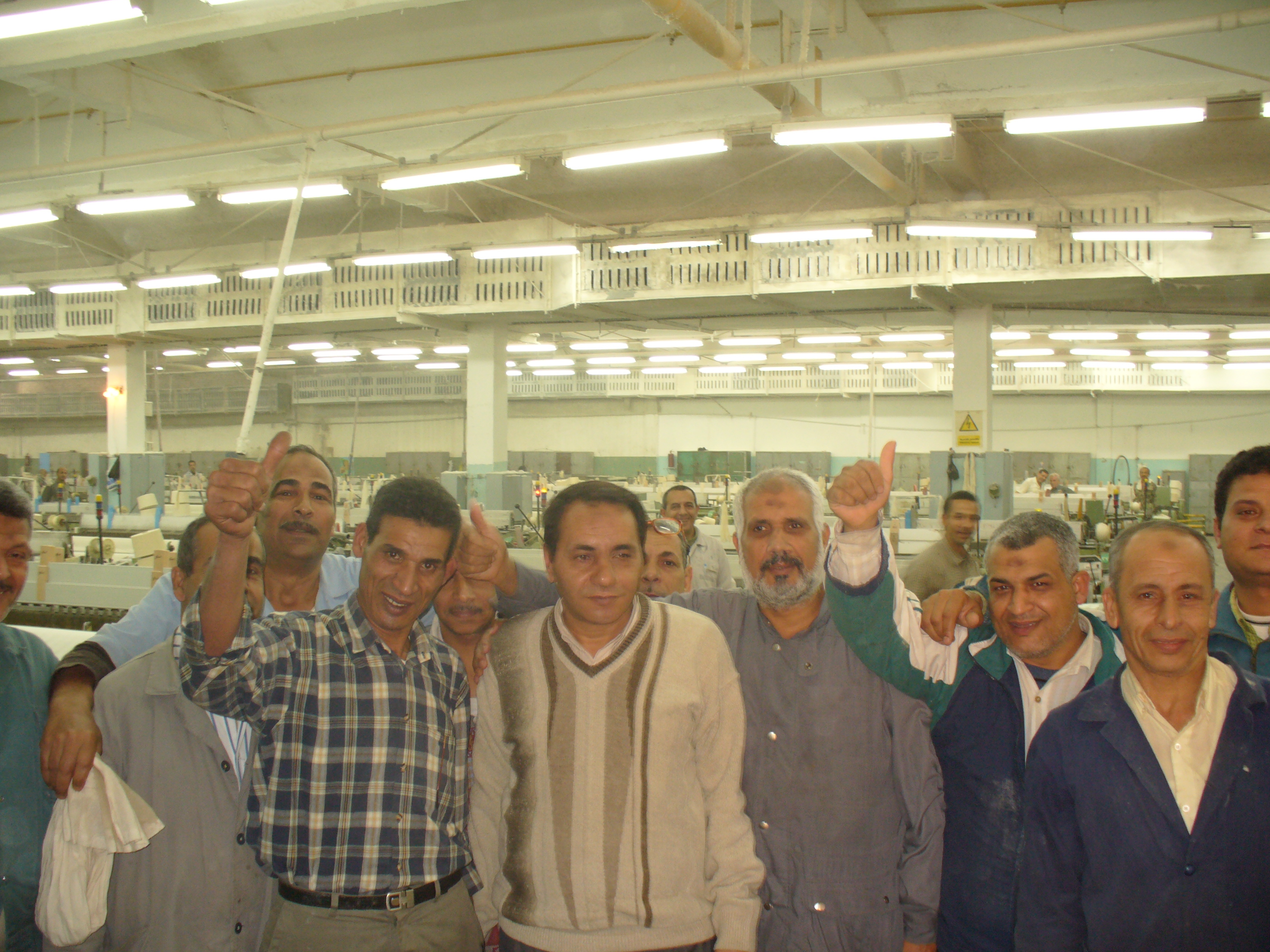
  • "Most of the workers I met at Al Mahalla felt that they were let down by their workers' representatives," writes Jano Charbel, who took this photo inside the Ghazl el-Mahalla company.
  • "Most of the workers I met at Al Mahalla felt that they were let down by their workers' representatives," writes Jano Charbel, who took this photo inside the Ghazl el-Mahalla company.
  • Mubarak's Central Security Forces in Mahalla
  • Hundreds, maybe a thousand lawyers and youth activists demonstrated on the stairs of the lawyers' syndicate, on its rooftop, and balcony (Photo by Jano Charbel)
  • Hundreds, maybe a thousand lawyers and youth activists demonstrated on the stairs of the lawyers' syndicate, on its rooftop, and balcony (Photo by Jano Charbel)
  • Hundreds, maybe a thousand lawyers and youth activists demonstrated on the stairs of the lawyers' syndicate, on its rooftop, and balcony (Photo by Jano Charbel)
  • Hundreds, maybe a thousand lawyers and youth activists demonstrated on the stairs of the lawyers' syndicate, on its rooftop, and balcony (Photo by Jano Charbel)
  • Hundreds, maybe a thousand lawyers and youth activists demonstrated on the stairs of the lawyers' syndicate, on its rooftop, and balcony (Photo by Jano Charbel)
  • Hundreds, maybe a thousand lawyers and youth activists demonstrated on the stairs of the lawyers' syndicate, on its rooftop, and balcony (Photo by Jano Charbel)

UPDATE: A video program by Al-Jazeera International… Here’s part II of the program, and below is a report, also by Al-Jazeera, that includes footage of the riots, as well as an interview with Kamal el-Fayoumi, of the Textile Workers’ League, before he was arrested.

UPDATE: The Egyptian Workers and Trade Unions Watch issued a report on the Mahalla events… and check out this report on the Cairo U protests on the Socialist Students blog.

UPDATE: Scenes from Mahalla:

UPDATE: Photos of the downtown Cairo protest, by Liam Stack:

april 450

Dictatorships for Dummies تعليم الدكتاتورية للبهايم

Posted on 05/04/200805/02/2021 By 3arabawy

  • Previous
  • 1
  • …
  • 50
  • 51
  • 52
  • …
  • 55
  • Next

Search 3arabawy

Follow 3arabawy

  • Facebook
  • Flickr
  • Instagram
  • X
  • YouTube
©2025 3arabawy