Skip to content
3arabawy
3arabawy

Hossam el-Hamalawy

  • Home
  • About
  • Archive
  • Blog
  • Photos
  • Books
3arabawy

Hossam el-Hamalawy

Tag: gamal mubarak

A new ‘reform’ surprise gift from Mubarak

Posted on 30/10/200602/02/2021 By 3arabawy

In a move that marks (for the millionth time) the randomness of this whole “democratic reform,” Mubarak has “surprised” us with a new announcement, stating he’s amending Article 76 of the constitution, that was tailored by his legislators last year. There was absolutely nothing mentioned about such amendment during the last NDP’s congress. Note also that the long-awaited Counterterrorism Law, that is to replace the notorious Emergency Law we’ve been living under since the start of Mubarak’s reign, will not be presented to the parliament in this coming session.

Here’s an AP report by Nadia Abou El-Magd:

Egypt to amend constitution article criticized as opening way for succession of Mubarak’s son
CAIRO _ Egypt will amend its constitution to make it easier for candidates to run as president, the parliament speaker said Monday, stating the reform would include changes to an article criticized as opening the way for President Hosni Mubarak’s son to succeed him.
Changing article 76 of the constitution is one of the political reforms Mubarak plans to undertake next year, Parliament Speaker Fathi Sorour told the official Middle East News Agency.
“Next year will witness the most extensive amendments to the constitution since 1971,” Sorour told MENA. He did not give specific details about the reforms, but said the controversial article would be among those up for change.
Presidential spokesman Suleiman Awad said in a statement that the president “won’t oppose considering an amendment to article 76, in order to increase the chances of (political) parties to participate in presidential elections.”
The article was rewritten last year to allow multi-candidate presidential elections. But opposition contends that instead it deliberately made it impossible for anyone to compete against the ruling party in the next presidential elections.
Article 76 provides that independent candidates must obtain 250 recommendations from members of parliament or city councils before they can enter the race. Because most political offices are held by Mubarak’s NDP, opposition parties fear they won’t be able to field any presidential candidate.
The article also rules that only political parties representing at least five percent of Parliament can put forward a presidential candidate. No political party achieved this in last year’s legislative elections.
The ruling National Democratic Party previously refused to amend the article, and Egypt’s opposition said this demonstrated that Mubarak’s party was planning to clear the path for the president’s son, Gamal Mubarak, to take power.
Gamal Mubarak, 42, has risen rapidly through the ranks of his father’s party in recent years and is now deputy secretary general. Despite his denials, many believe he is being groomed to succeed Mubarak, who is 78 and has been in power for over two decades.
Opposition figures on Monday said they feared the announced reforms were purely cosmetic, and only geared at winning public adherence ahead of the next presidential elections, due in 2011.
“The new proposed amendment is still part of scenario of (Mubarak’s son) inheriting power,” said Hesham el-Bastawisy, a High Court judge and a vocal critic of the earlier constitutional amendment.
The head of the Muslim Brotherhood, Egypt’s main opposition force, said he didn’t expect the constitutional change to make it easier for his group to field a presidential candidate.
Technically illegal as a political party, the Muslim Brotherhood has 88 lawmakers in Parliament, where they sit as independents.
“The real competition is between the independents, who are mainly the Brotherhood, and the NDP, not between authorized political parties and the ruling party,” Mohammed Saad el-Katatny told The Associated Press.
Prime Minister Ahmad Nazif said earlier this year the government was studying measures to ban independents and outlawed groups from running in any election.
House demolitions and detentions in Giza

Posted on 09/10/200602/04/2015 By 3arabawy

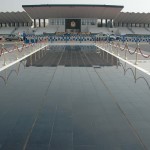
The local council authorities in the Giza neighborhood of Agouza, aided by a police force, demolished buildings in the old quarter the day before yesterday, arrested some youth who tried to resist the government bulldozers, and left the residents in the streets.

The demolition comes as part of the “development efforts” by Gamal Mubarak’s Future Generation Foundation in the area. The residents have not been provided with alternative housing. The detained youth have been taken to Bulaq and Dokki police stations.

More details in this report by Al-Masry Al-Youm journalist Ali Zalat.

25 years after Sadat’s assassination, many call Egypt politically paralyzed

Posted on 06/10/200625/03/2015 By 3arabawy
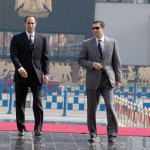
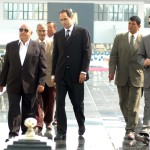
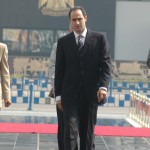
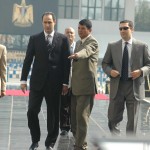
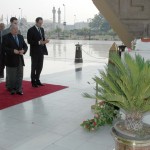
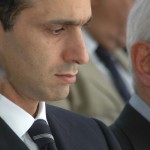
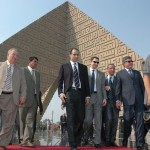
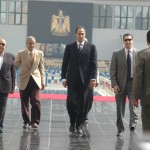
Sadats marking 25th anniversary of the killing of Egypt's former dictator, Photo by Amr Abdallah, 6 October 2006
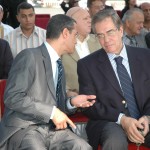
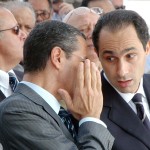
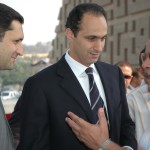
Gamal and Alaa Mubarak, Photo by Amr Abdallah, 6 October 2006
Sadats marking 25th anniversary of the killing of Egypt's former dictator, Photo by Amr Abdallah, 6 October 2006
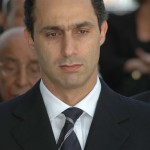
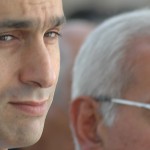
Gamal Mubarak, Photo by Amr Abdallah, 6 October 2006
Sadats marking 25th anniversary of the killing of Egypt's former dictator, Photo by Amr Abdallah, 6 October 2006
Gamal Mubarak, Photo by Amr Abdallah, 6 October 2006
Sadats marking 25th anniversary of the killing of Egypt's former dictator, Photo by Amr Abdallah, 6 October 2006
Gamal Mubarak, Photo by Amr Abdallah, 6 October 2006
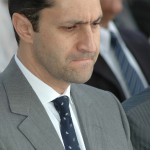
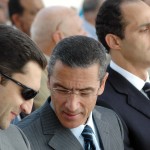
Alaa Mubarak, Photo by Amr Abdallah, 6 October 2006
Sadats marking 25th anniversary of the killing of Egypt's former dictator, Photo by Amr Abdallah, 6 October 2006
Gamal Mubarak, Photo by Amr Abdallah, 6 October 2006
Alaa Mubarak, Photo by Amr Abdallah, 6 October 2006
Sadats marking 25th anniversary of the killing of Egypt's former dictator, Photo by Amr Abdallah, 6 October 2006
Gamal and Alaa Mubarak, Photo by Amr Abdallah, 6 October 2006
Sadats marking 25th anniversary of the killing of Egypt's former dictator, Photo by Amr Abdallah, 6 October 2006

A report by AP journalist Nadia Abou El-Magd, on the country’s political scene, on the 25th anniversary of the assassination of Egypt’s former dictator…

25 years after Sadat’s assassination, many call Egypt politically paralyzed
AP
CAIRO, Egypt On the 25th anniversary of Anwar Sadat’s assassination, Egypt faces an uncertain political future with most democracy reform efforts stalled and the country obsessively focused on the possibility that the current president’s son will succeed him.
President Hosni Mubarak, now 78, was a general and vice president, sitting beside Sadat, when the then-president was gunned down at a military parade in Cairo on Oct. 6, 1981, by militants hoping to impose Islamic rule. Mubarak has been president since.
The leaders of the main group of conspirators that killed Sadat have since renounced violence, and have said killing him was a mistake. Some even consider him a martyr.
“If I could turn back time, we wouldn’t have killed Sadat. We would have appreciated his value,” said Nageh Ibrahim, a leader of the Egyptian Gama’a al-Islamiyya (Islamic Group), who spent 24 years in prison for plotting Sadat’s assassination and was recently released.
But most citizens of this country _ the Arab world’s most populous and a key U.S. ally _ are not focused on Sadat. They instead fret over what they call a stagnant political scene, low quality of life and their growing fear that Mubarak’s son will succeed him.
“Twenty five years without big events _ no imagination and no inspiration,” wrote columnist Wael Abdel Fattah in the independent weekly Al-Fagr. “The only thing that was inflated is the police … a huge, mythical beast to protect the president. … All those around him are partners in the deal _ the ‘Stability Deal.'”
Opposition columnist Magdi Mehna said Egyptians feel their country lacks any clear goal or vision, except what he sarcastically called “the collapse of the infrastructure, train accidents, ferries sinking, people lacking clean water and widespread corruption.”
Mubarak has never appointed a vice president, saying he has not found someone suitable and is not required to by the constitution.
But opposition groups believe the post is deliberately kept vacant so Gamal Mubarak, Mubarak’s youngest son, can succeed him. Such a transfer of power is the talk of Cairo despite father-and-son denials.
Adding to the speculation is the fact that close aides to Gamal Mubarak regularly call him ideal for the job, despite his own protestations that he won’t be a candidate.
“Gamal Mubarak is one of the best, leading figures in the party, and its only natural that when election time comes, each party nominates the best leaders they have,” said Hossam Badrway, a close aide to the president’s son.
Hosni Mubarak is believed to be in generally good health despite past knee and back problems and some hearing deficiency, and was elected last year to a term that does not end until 2011. But some believe he is eager to hand over power.
Gamal Mubarak, who is 42, has risen rapidly through the ranks of his father’s National Democratic Party in the past four years and now is deputy secretary general.
He met secretly with U.S. President George W. Bush and other top White House officials in May, and Bush also recently praised a trade minister close to Gamal Mubarak’s circle _ both events that led normal Egyptians to assume the United States has endorsed him as heir, despite U.S. claims that it has no role in the matter.
Two weeks ago, it also was Gamal Mubarak who called for Egypt to pursue nuclear energy for peaceful ends _ a call that was welcomed by the United States.
The elder Mubarak, meanwhile, on Thursday said during a televised speech that his government “will go on building the pillars of our Egyptian democracy and next year will be the year of constitutional reforms.”
But a flurry of recent democracy efforts has stalled, and the United States is widely viewed as no longer pressing Egypt hard on reform.
Kifaya, a leading secular opposition movement, broke the taboo of criticizing Mubarak and his family and held a series of high-profile protests in recent years. But constitutional reforms have been spotty and parliamentary elections a year ago were marred by widespread violence, much of it by police who tried to prevent opposition supporters from voting.
The government also postponed elections for local councils for two years, apparently to avert a strong showing by the opposition Muslim Brotherhood.
Meanwhile, emergency laws that give the government wide powers to detain suspects have remained in force since Sadat’s assassination.
The Brotherhood _ Egypt’s biggest Islamic opposition group _ has joined the anti-Gamal movement. Mohammed Saad el-Katatni, spokesman for its bloc in Parliament, said recently that his group would “struggle to prevent inheritance of power.”
The group, banned since 1954, won 88 seats in parliament in 2005, after members ran as independents. It renounced violence in the 1970s, but is subject to frequent crackdowns.
Gamal, an investment banker before he entered politics, presents himself as an economic reformer. But the opposition sees him as aloof, surrounding himself with rich businessmen.
Egyptian officials say the country’s economy is growing at a rate of 5 percent but acknowledge the benefits haven’t reached most people. About 20 percent of the country’s 73 million people remain under the poverty line.
As the Oct. 6 anniversary approached, many columnists lamented an Egypt that “has all the qualities of an occupied country,” as one wrote.
“We do nothing except rejecting in the media that the son, Gamal Mubarak, inherits what remains of us,” wrote one, Howeida Taha, in the pan Arab daily Al-Quds Al-Arabi.

  • Previous
  • 1
  • …
  • 18
  • 19
  • 20
  • Next

Search 3arabawy

Follow 3arabawy

  • Facebook
  • Flickr
  • Instagram
  • X
  • YouTube
©2025 3arabawy