Skip to content
3arabawy
3arabawy

Hossam el-Hamalawy

  • Home
  • About
  • Archive
  • Blog
  • Photos
  • Books
3arabawy

Hossam el-Hamalawy

Tag: neoliberalism

Mubarak to increase electricity prices

Posted on 20/11/200730/12/2020 By 3arabawy

From the Daily News Egypt:

The public was shocked Monday with news that the government has decided to increase electricity prices starting December.
The new prices apply to all categories, including domestic, commercial, street lights and agricultural. The only category that was not included in the raise was the first domestic bracket or the “lower-income domestic bracket.”
The government notified the electricity authorities Sunday to start calculating electricity consumption using the new fare starting December. The new electricity bills with the higher prices will reach consumers in January 2008.
The Ministry of Electricity and the Egyptian Electric Utility and Consumer Protection Regulatory Agency (EEUCPRA) refused to comment on the issue.
This price increase contradicts the ministry’s previous statements made during the announcement of the new electricity law.

UPDATE: You can also check out Al-Masry Al-Youm’s report here.
18 & 19 January 1977: The Lost Revolution

Posted on 19/11/200705/02/2021 By 3arabawy

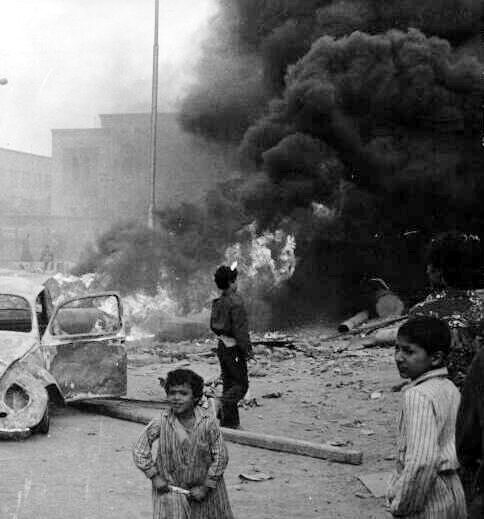
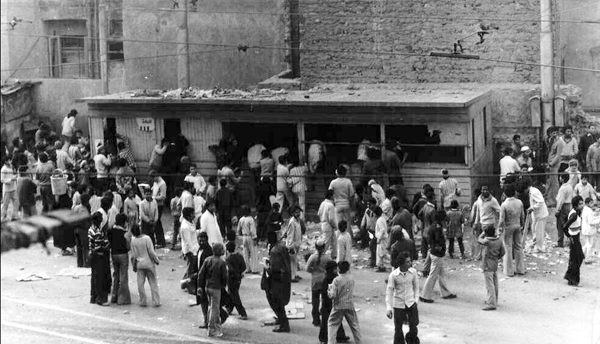
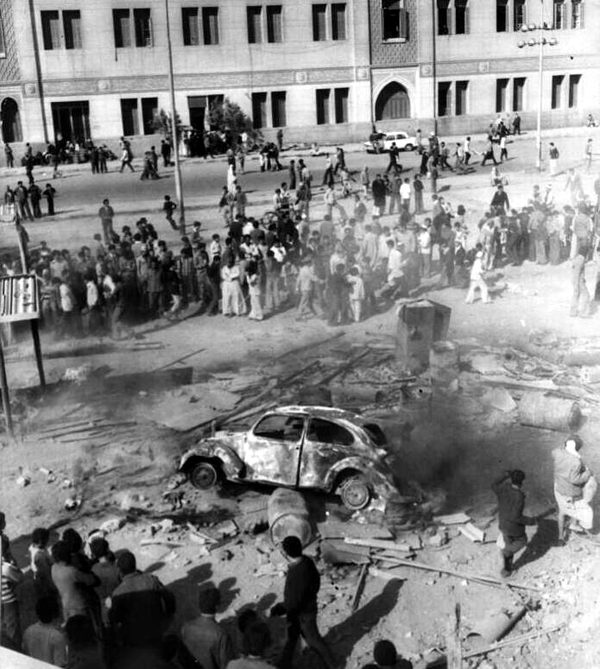
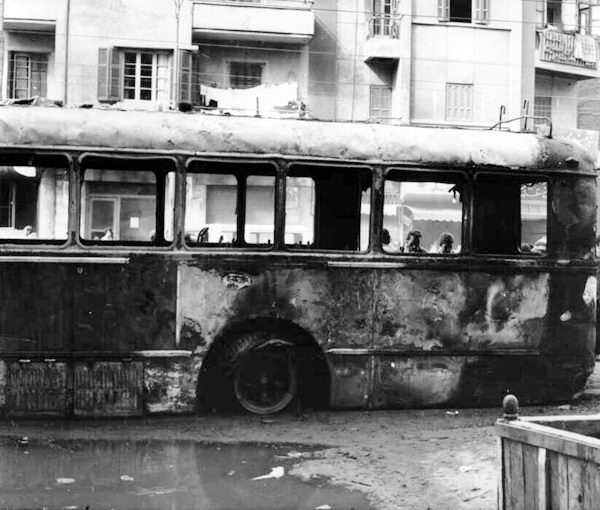
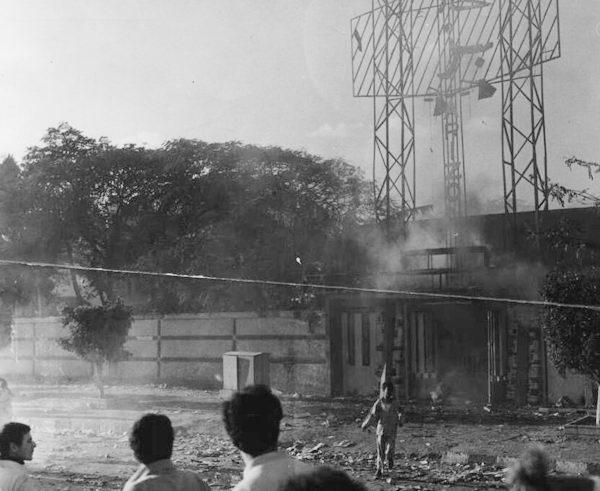
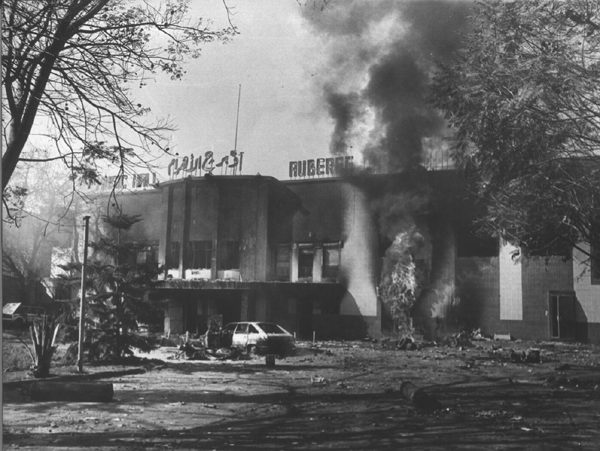
The Bread Uprising that shook Egypt’s urban towns on the 18th and 19th of January, 1977, is always wrongly treated in the mainstream media as an “Uprising of thieves,” quoting President Sadat’s description of the events, with emphasis on the violence and the looting that accompanied the people’s uprising.

After Mahalla triggered the Winter of Labor Discontent, and once more pushed for a Hot Industrial Autumn, some on the Left today cannot help but drawing parallels between the current situation and the time leading to Jan ’77.

The preconditions that preceded Bread Intifada will be the subject of a future posting; the events were the climax of a rising social movement from February 1968, that culminated in the two-day uprising that was to be crushed by Sadat’s army in 1977.

In this posting, however, I’ll focus on 1976 onwards, and the organized working class movement vs. the rioting which was mainly conducted by the urban poor. The resources used are parts of the MA Thesis I wrote eight years ago.

  • January 1977 Bread Uprising (Photo from Al-Ahram Archives)
  • January 1977 Bread Uprising (Photo from Al-Ahram Archives)
  • January 1977 Bread Uprising (Photo from Al-Ahram Archives)
  • January 1977 Bread Uprising (Photo from Al-Ahram Archives)
  • January 1977 Bread Uprising (Photo from Al-Ahram Archives)
  • January 1977 Bread Uprising (Photo from Al-Ahram Archives)
  • January 1977 Bread Uprising (Photo from Al-Ahram Archives)
  • January 1977 Bread Uprising (Photo from Al-Ahram Archives)
  • [19-1-1977] Demonstrators protesting increased food prices regroup on a rubble strewn street in Cairo Wednesday, after battling the Central Security Forces (Photo by AP)

“Mubarak doesn’t care about workers at all anymore”

Posted on 28/10/200729/03/2015 By 3arabawy

From the Los Angeles Times…

EL MAHALLA EL KUBRA, EGYPT — President Hosni Mubarak faces discontent from many quarters, but perhaps the most intense criticism resonates from the banners and shaking fists of militant workers who have broken away from government-controlled unions and staged sporadic strikes across the nation.

The Egyptian government frequently muffles free speech and political dissent, but these ragged and often disorganized picket lines present a widening crisis for a president viewed as detached from the working class and unable to lift wages and stem double-digit inflation.

“Mubarak doesn’t care about workers at all anymore,” said Mohammed Shorbagy, who held a Koran in a plastic bag and stood amid litter and lean-tos during a strike last month at the Misr Spinning and Weaving Factory in this Nile Delta city. “Why is the president asleep? We’ve been here for four days and he’s done nothing.”

Shorbagy was one of thousands of male and female strikers who hanged their company president in effigy and took over the textile mill’s courtyard, banging drums and giving speeches. Riot police and undercover security officers made a passive show of force and gave workers room to vent, appearing not to want to provoke the bloody unrest that characterized strikes in Egypt more than half a century ago.

The weeklong strike last month ended peacefully when the government-owned company made concessions on wages and profit-sharing bonuses that fell short of workers’ demands. But the mill and its 27,000 employees have become a focal point of the labor unrest. Nearly a year ago, the same workers struck for several days, igniting solidarity across Egypt as work stoppages spread to railway, flour and other industries whose salaries and benefits have not kept pace with sharp rises in the cost of living.

“This is the largest, most militant strike wave since the 1940s,” said Sameh Nagib, a labor expert and sociology professor at the American University in Cairo. “Hundreds of thousands of workers are involved and it’s spreading quite rapidly. . . . The question is how this labor movement may play into a larger democratic movement against the government.”

Mubarak’s economic reforms, including privatization and lower corporate tax rates, have led to 7% economic growth in each of the last three years. Those otherwise impressive statistics have not benefited workers whose stagnant salaries have been decimated by wildly surging prices that have recently pushed inflation to monthly rates as high as 15%. This has created resentment among the lower and middle classes, who say Mubarak’s economic liberalization has benefited only those with government connections.

The strikes come as Mubarak’s ruling National Democratic Party, or NDP, has cracked down on political opposition, jailed journalists and editors, closed a human rights organization and imprisoned hundreds of members of the Muslim Brotherhood.

The repression has drawn rebuke from the Bush administration, a close Mubarak ally, which recently blamed Egypt for backtracking on its commitment to democracy; Cairo receives about $2 billion annually in U.S. economic and military aid.

Egyptian officials contend that the Muslim Brotherhood, which adheres to strict Islamic law and has been accused of inspiring militants, and other anti-Mubarak elements, including the secular Kefaya political organization, are attempting to radicalize the nation’s unions.

The textile workers say they are not influenced by outside forces, but by disillusionment over salaries and what they see as corrupt union leaders poorly representing them during Egypt’s opening of its economy.

“Of course we will see more strikes, and the reason is clear to everybody,” said Kamal Abbas, head of an independent worker advocacy group that was shut down by the government this year on charges of inciting labor unrest. “This union is totally subordinate to the state, and all its members are appointed by the state security services. There must be a [genuine] union that represents workers.”

Abdullah Kamal, an NDP member of the upper house of Parliament and editor of a state-owned weekly magazine, mocked what he described as attempts by “failing political groups” to benefit from union turmoil.

“The revolution will not start in Mahalla or at any other place with a concentration of workers,” Kamal wrote in a recent column. “We ask instigators to look for another incendiary game.”

The labor unrest, however, does add an explosive dimension to a country uneasily contemplating the post-Mubarak era. Mubarak has ruled Egypt for the last 26 years and, for weeks, the 79-year-old president has been denying rumors that he is ill; several editors who printed such stories face criminal trials.

Analysts say that regardless of the health questions, the Mubarak government is in its twilight and that there is no clear successor, although the president’s son Gamal is viewed as a favorite among the NDP’s younger, rising power brokers.

The government has moved quickly to resolve many strikes, fearing that an alliance of labor and opposition groups could jeopardize the NDP. The party has been successful in recent years at tainting political enemies, most notably the Muslim Brotherhood, as dangerous radicals. This, along with a historically apathetic public, has fragmented the secular and religious wings of the opposition.

But a national labor movement, which could include up to 300,000 textile employees alone, may undermine that strategy, especially because many Egyptians sympathize with workers.

Nagib, the labor expert, said Mubarak faces a new class of union organizer demanding less government interference, and questions of how much to give in to labor demands to avoid triggering strikes across this country of about 80 million people.

“We are tired of promises that only hypnotize workers,” said Mahmoud Abdel Whab, who last month protested in front of the Mahalla mill. “I make 300 pounds [about $54] a month and have worked here for nine years. I can only buy food. I can’t buy shirts. Next year my oldest daughter will start school. How can I afford those costs?”

Mohammed Attar was arrested during the Mahalla strike and accused of stoking labor disobedience, inciting workers and costing the company $1.8 million a day in lost productivity. He said the state security police questioned him for two days.

“They told me that if I cooperated and went to the workers and told them to settle for only 40 days’ worth of bonus pay, that the police would tell the prosecutor that I committed no crime. But if you don’t cooperate . . . they said, ‘We’ll receive a call asking us to detain you indefinitely.’ “.

  • Previous
  • 1
  • …
  • 45
  • 46
  • 47
  • …
  • 55
  • Next

Search 3arabawy

Follow 3arabawy

  • Facebook
  • Flickr
  • Instagram
  • X
  • YouTube
©2025 3arabawy