Skip to content
3arabawy
3arabawy

Hossam el-Hamalawy

  • Home
  • About
  • Archive
  • Blog
  • Photos
  • Books
3arabawy

Hossam el-Hamalawy

Tag: port said

An evening with strike leaders

Posted on 03/04/200908/01/2021 By 3arabawy

I attended yesterday a meeting of strike leaders from a number of industrial and service sectors and URETA activists, part of the ongoing efforts to push for independent labor unions and learn from the Tax Collectors‘ pioneering experience.

I thought of sharing some miscellaneous notes from the meeting:

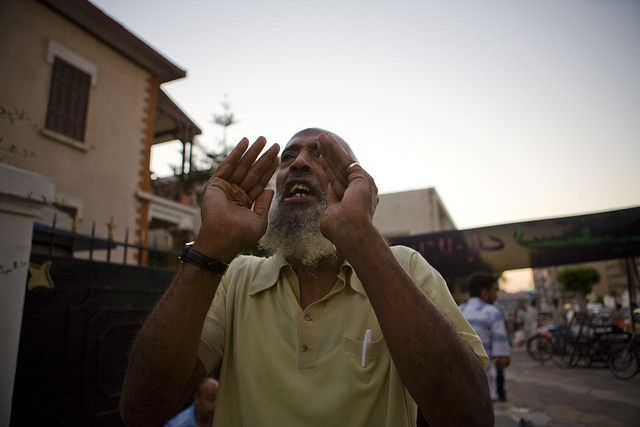
– A worker speaking in a high-pitched voice: “In Port Said we had no strikes, no nothing (few years ago). But we learned from Mahalla. We read about what they did. Everybody did. They were in the newspapers. People talked a lot, and when one speaks about something, the talk spreads around fast….”
The worker went on explaining how Mahalla was a source of inspiration, and started giving examples of strikes and sit-ins in his company (which I won’t mention for now), but I was then intrigued to hear him addressing other strike leaders:
“I’m glad I met all of you today. We do need national coordination. But why don’t we also have a website? We can put information about all our problems on that website, including our statements. Then instead of distributing the statements in the factories, which is very dangerous, we can just distribute the website address among the workers and tell them to check it on the net. If the workers don’t have computers at home, then they can go to cyber-cafe to check it out.”

– A veteran labor organizer from Giza addressing the strike leaders: “You should not be afraid from the police. They make threats all the time to deter you from doing the right thing. You can be immune only if you have the backing of your fellow workers in the factory. If you have support in the factory or in your workplace they won’t be able to touch you. Look at the leaders of the Tax Collectors. Why didn’t they just “disappear” them? Why didn’t they “send them behind the sun” as they always threaten?”
“Mister, we are already behind the sun,” interrupted a Mahalla textile worker. “Don’t worry, we are not afraid. What have we to lose? Please move on to the next subject.”

– “All men of religion work for State Security police,” thundered a Coptic worker from the Steel Mills who had gone on a hunger strike and only suspended it after SS brought priests from his neighborhood to convince him what he was doing was “ungodly” promising to intervene on his behalf. “I suspended my strike. All promises they gave me turned out to be lies. The priests and State Security have lied to me and do not care about me. I am trying to get the support of my colleagues to solve my problems (with the management). I have no one to seek help from except my colleagues, whether they were Christians or Muslims.”
Canal Ropes Company Workers’ Strike

Posted on 12/09/200809/02/2021 By 3arabawy

Canal Ropes Company Workers' Strike اضراب عمال شركة القناة للحبال

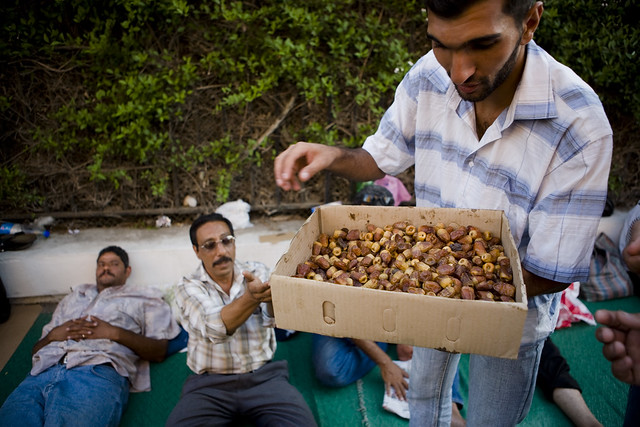
I took the pic above Tuesday in Port Said, as the Canal Ropes Company strikers were about to break their Ramadan fast at sunset. The worker in the ground reaching with his hand to take the dates is a Coptic worker, named Labib Guergiss (Also seen in the pic below).

Canal Ropes Company Workers' Strike اضراب عمال شركة القناة للحبال

Virtually all workers I meet during strikes, including their leaders, tend to be religiously devout. Many of the Muslims have beards, prayer marks on their foreheads (zebiba), and pray regularly.

Canal Ropes Company Workers' Strike اضراب عمال شركة القناة للحبال

The women workers are usually dressed in higab, if not niqab.

Canal Company for Ports and Large Projects Workers' Sit-In اعتصام عمال شركة القناة للموانئ

The Copts have crosses tattooed on their arms, a practice common among middle and working class Christians. The religiosity however does NOT translate itself mechanically into:

1- Sectarian attitude among the workers from two sects: On the contrary, unity is strongly forged among the strikers, and among the newly rising layer of strike leaders there is a significant number of Copts.

2- A political affiliation or sympathy to the Muslim Brotherhood: No, the biggest and most organized opposition force, as the cliche goes, is not active among labor circles. Its base of support lies mainly among the middle class professionals, lower middle classes and the Islamized sections of our elite. Their capitalist economic agenda, and vague oscillating stands towards privatization, weak intervention on behalf of workers in industrial conflicts that erupt in their parliamentarian constituencies and the general retreat the organization is going through since the 2006 crackdown, means an confused stand towards the strike wave. I usually ask strike leaders I interview on their views regarding the MBs. The responses vary from overt hostility to “they are good people. They do charity.” But in almost all cases, the strikers cite no direct help from the group, let alone leadership.

3- Hostility to the left: Being religious, contrary to the stereotype, does not mean a hostility to leftists and secular activists. Unlike the liberal secularists, radical leftists have a different stand towards religion, and do not put religion as the enemy or as the focal point of the current malaise. I found the workers themselves when they are struggling, to be welcoming to any sincere effort to help them, whether it’s coming from a secular, an Islamist or the devil. What matters for them is who does what during the strike to make it successful? Who stands by them, who stands against them? Who puts 110% effort into a solidarity campaign with them, and who doesn’t give a shit? Some of the strike leaders I know in industrial and service sectors are increasingly describing themselves as “socialists” or “Marxists” while carefully observing the prayer timings, fasting Ramadan, and have zebibas on their foreheads. Personally they are religious, but the political program they present and advocate is left-leaning and secular. There is a clear shift in the mood among the workers and public to the left. It’s been a slow, incremental change that started with the outbreak of the Palestinian intifada eight years ago… a change that has been missed by the Western journalists and researchers obsessed with stories on terrorism, the veiled oppressed women, and the Red Sea Rivera.

4- Subordination of women in the industrial action: The participation of the women workers in the strike wave is an amazing story. They triggered the Winter of Labor Discontent, produced strike leaders and trade union activists, and are defying established gender roles. A Westernized feminist who looks at the pix of the strikers and finds the women to be veiled or in niqab and thus draws a negative conclusion about their status, will miss the whole point.

Suez Canal updates

Posted on 12/09/200803/01/2021 By 3arabawy

Muhammad Anwar, the president of the Union Committee at the Canal Company for Portrs and Large Projects, said that Navy Marshall Ahmad Fadel, the head of the Suez Canal Company, will meet with representatives of workers from Ismailia and Port Said on Sunday afternoon to discuss the implementation of the verbal promises the strikers received from the NDP parliamentarians and State Security officers on Wednesday morning.

Trade Unionist Mohamed Anwar النقابي محمد أنور

  • Previous
  • 1
  • …
  • 3
  • 4
  • 5
  • …
  • 7
  • Next

Search 3arabawy

Follow 3arabawy

  • Facebook
  • Flickr
  • Instagram
  • X
  • YouTube
©2025 3arabawy