Skip to content
3arabawy
3arabawy

Hossam el-Hamalawy

  • Home
  • About
  • Archive
  • Blog
  • Photos
  • Books
3arabawy

Hossam el-Hamalawy

Tag: قرصاية

“I was born here and I’ll die here”

Posted on 21/12/200722/12/2020 By 3arabawy

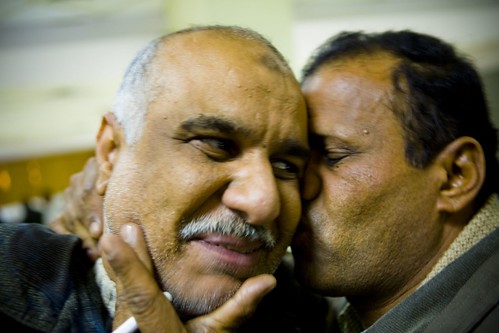
One of the Qursaya Island families attending the solidarity conference at Cairo's Press Syndicate إحدى عائلات جزيرة القرصاية بنقابة الصحافيين

Sarah Carr reports on the solidarity conference with the Qursaya Island residents:

“I was born here, my father was born here and my grandfather was born here. The army came to frighten us when it should be protecting us. We cannot sleep at night, cannot work without worrying that at any second something might happen to us,” said one resident.

“I was born on this land and I’ll die here. We have never asked for anything from the state, and we want nothing from it now — except that it leaves us alone,” one resident said.

“I’m a farmer. If I leave the island what will I do? I don’t know any other trade. Should I sit on a balcony and hunt birds?” he added.

“It’s the only language the government understands”

Posted on 17/12/200722/12/2020 By 3arabawy

It’s been a long day.

I gave a training session in the morning to a group of local and Arab human rights activists on internet campaigns, part of a workshop organized by HRINFO, then had to rush to Abdeen to see the Kafr Elw residents.

مظاهرة سكان كفر علو في ميدان عابدين
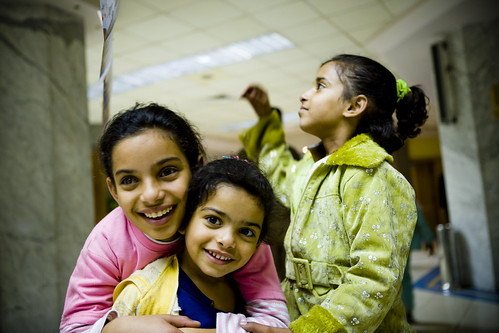
Later I met with the Qursaya Island residents at the Press Syndicate.

Qursaya Island Children at the Press Syndicate أطفال جزيرة القرصاية بنقابة الصحفييين
… and the Real Estate Tax Collectors celebrating their strike victory.

Real Estate Tax Strikers celebrating their victory موظفو الضرائب العقارية يحتفلون بإنتصارهم

I heard horrific tales from the Kafr Elw residents about police assaults, still saw impressive militancy among the women, who basically are leading the fight now against the government while their husbands have taken the back seat for fear of arrest.

I felt frustration and sheer alienation are spread among the Qursaya Island residents vis a vis Mubarak’s central government, but heard the phrase “we will die on our island, rather than give it to the government, army or anyone else” more than once.

I met again with the Real Estate Tax Collectors. But this time it was different. Last time I saw them was in front of the Ministerial Cabinet, where they were camping… they were exhausted, disheveled, yet resilient, as they slept night after night surrounded by the pigs in downtown Cairo… Tonight, they felt like heroes, and they were heroes having achieved victory in a bitter fight, in their first strike since 1919.

“I walk today in the street, with my head up high,” said Amr, one of the strikers. “I wouldn’t have been able to look into the faces of children if I came back home after the strike with nothing. I won. We won. I tell the people in the street I was one of the Real Estate Tax strikers, and they tell me poetry. I feel our victory is a victory to all civil servants and all Egyptians.”

As I was taking the elevator to the Syndicate’s ground floor on my way out, there were two of the building’s staff workers (either waiters or janitors) chatting about the “beto3 el-3aqariya” (the guys from Real Estate):
“They stayed for more than a week in the street,” said one.
“I know,”
“Seems everybody is doing it.”
“What do you mean?”
“The e3tissamat (sit-ins)!”
“Oh, I know. I know.”
“It’s the only language the government understands.”

Press conference: Qursaya island resistance

Posted on 15/12/200714/01/2021 By 3arabawy

Activists, MPs and residents of the Qursaya island are holding a press conference tomorrow Sunday 7pm, at the Cairo Press Syndicate, to familiarize journalists and the public with the latest developments on the island, whose residents are under the threat of eviction by Mubarak’s army.

Here’s a reuters report about the island:

Egyptian army weighs in on disputed Nile island
By Jonathan Wright
QURSAYA ISLAND, Egypt, Dec 12 (Reuters) – The Egyptian flag flaps in the breeze between two army tents, an unwelcome symbol of state power in a confrontation between the government and the independent-minded inhabitants of an island in the Nile.
Under army protection, dredgers are working round the clock to reshape Qursaya island, a low-lying undeveloped expanse of reeds,farmland and country houses just a short ferry ride from the bustling center of the Egyptian capital Cairo.
When a squadron of soldiers armed with assault rifles landed in surgeon Muhammad Moustafa’s garden on the eastern shore late in November, the islanders reacted quickly.
Grabbing clubs and staves, they rushed to the river bank and confronted the landing. Some dug shallow graves while others wrapped themselves in white shrouds and lay in the mud, trying to send the message they would die sooner than leave the land.
They were already on high alert because for the past few months state officials have been refusing to accept rent from the Qursaya families, many of whom have been living there for generations and have converted the land from swamp to farmland.
The islanders say successive governments have tried to intimidate them into leaving and they suspect the authorities will cite rent arrears as grounds for evicting them. They say army contractors have already covered two acres (0.8 hectares) of farmland with rock, destroying a rice crop.
The land nominally belongs to the state, but many of the 5,000 inhabitants have squatter’s rights and ample documentation showing they have paid their bills and fulfilled obligations.
‘RIFLE AND BAYONET’
Now they suspect the government, backed by the army as the only force capable of removing them, intends to make the land available to a large investor with plans for luxury hotels.
The case illustrates popular mistrust of a government often seen as beyond accountability, impervious to dialogue and usually biased towards the interests of big business.
“The government believes the Nile wasn’t created for ordinary people. It was created only for the nobility,” said Muhammad Moustafa,
who has lived on the island for 22 years with his wife Brigitte, a Swiss consular official.
“We speak Arabic. They speak in the language of the rifle, the bayonet and the cattle prod,” he added, speaking of his attempts to obtain an explanation from the army officers who led the landing in his garden last week.
Muhammad Abla, an artist who has been living and working on Qursaya for the past 12 years, said finding someone to listen to their case was one of the hardest aspects of the crisis.
“The authorities don’t speak to us at all. It’s as if we don’t exist. Nobody pays us the slightest attention,” he added. “We just want them to reveal what they are doing and make us feel that we are not just numbers. We are also human beings, and whether they are poor, middling or rich, the people living here should be treated humanely,” said Moustafa.
Cabinet spokesman Magdy Rady did not respond to Reuters’ questions about the government’s intentions. An army spokesman told Reuters the army was responding to encroachments on the Nile but he declined to elaborate further.
CONCERTS AND WORKSHOPS
In the meantime the islanders are living on edge, watching the army closely, starting legal action and trying to mobilize Egyptian public opinion in their favor. A few independent newspapers have covered the conflict but the large state-owned media have largely ignored it.
Muhammad Abla is organising concerts and painting workshops to draw attention to the dispute. Prominent lawyer Amir Salim, who represented imprisoned opposition politician Ayman Nour, told Reuters he had agreed to represent the islanders.
The poorer inhabitants say the threat from the army is not just to their homes but also to their livelihoods, in a country where fertile land is scarce and jobs are hard to find.
Muhammad Hamid Ali, who lives off both fishing and farming, said that when he came to the island in 1970 from southern Egypt the land was waste and he reclaimed the land he now farms.
“Now that we’ve cleaned the island and made it beautiful, if a guest came and sat down and saw how lovely it is, should he be able to throw me out of my house and my land?” he asked.
“If they throw us out where will they put us? Will they build a lake in the mountains for me to fish in? Will they give us some land to live off? I’d have to turn to crime,” he said.
The islanders said they were especially angry that the army had deployed for civilian, possibly commercial, purposes.
“Look at them,” said boatman Ibrahim Mustafa, nodding towards the military encampment. “They’ve planted the Egyptian flag on the island as if they’ve liberated it from Israeli occupation. But really they’re taking it from the people.”

You can find also find some pix of the island taken here.

  • Previous
  • 1
  • 2
  • 3
  • Next

Search 3arabawy

Follow 3arabawy

  • Facebook
  • Flickr
  • Instagram
  • X
  • YouTube
  • Spotify
©2026 3arabawy