Skip to content
3arabawy
3arabawy

Hossam el-Hamalawy

  • Home
  • About
  • Archive
  • Blog
  • Photos
  • Books
3arabawy

Hossam el-Hamalawy

Tag: renditions

Blogger Kareem sentenced to 4 years in prison

Posted on 22/02/200727/12/2020 By 3arabawy

I guess you heard or read the bad news by now. Secular blogger Kareem was sentenced to four years in prison today: three years for “insulting Islam” and another one for “insulting the president.”
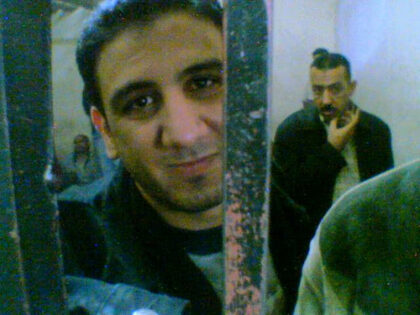
المدون كريم عامر

And in a Kafkaesque development on the side of the trial, the recently released torture victim Abu Omar showed up in court today, using the opportunity there were media presence to expose his ordeal and cry out for help, reports Al-Jazeera:

During the trial, an Egyptian imam allegedly kidnapped by CIA agents in Italy and taken to Egypt, showed up to speak to the media, breaking his release conditions.
Known as Abu Omar, the former Milan-based imam on Thursday told reporters that he was tortured in an Egyptian prison and that he wants to return to Italy.
He showed the cameras scars he said were from torture in Egyptian jails and said he will resort to the Italian government to help him.

Local and international rights watchdogs have blasted the government over the verdict. Four Egyptian human rights groups denounced the trial and said they were filing an appeal. The NYC-based Human Rights Watch issued a statement strongly denouncing Kareem’s imprisonment as “setting a chilling precedent.” Amnesty International also condemned the prison sentence, and called for Kareem’s immediate and unconditional release.

Abu Omar released?

Posted on 11/02/200720/01/2021 By 3arabawy

I’m hearing news that Abu Omar, the cleric who was kidnapped by the CIA and rendered to Cairo where he was tortured, has been finally released, but under orders not to speak to the media.

UPDATE: Here’s a report by Aziz el-Kaissouni:

Egypt frees cleric at center of CIA kidnap case
By Aziz El-Kaissouni
CAIRO, Feb 11 (Reuters) – Egyptian authorities have released a Muslim cleric kidnapped in a suspected CIA operation in Italy and handed to Egypt, the cleric’s lawyer said on Sunday.
Hassan Mustafa Osama Nasr, also known as Abu Omar, was grabbed off a Milan street in 2003 and flown to Egypt, where he said he had been tortured by Egyptian agents using electric shocks, beatings, rape threats and genital abuse.
Lawyer Montasser al-Zayat told Reuters Nasr had been released and was back with his family.
Zayat said a court had ordered Nasr to be freed, and the Ministry of Interior had complied. He added that the release was unsurprising as he saw no obvious reason why Nasr should remain in custody any longer.
“I expected that the justifications for his detention are done with. It’s no longer a secret,” Zayat said.
While Nasr was initially charged with membership of an illegal organization, the charges were ultimately dropped, and Nasr was briefly released in April 2004 before being detained without charge under Egypt’s emergency laws.
His lawyer had said he believed Nasr was re-arrested after ignoring warnings not to speak to anyone about the kidnapping and rendition.
Asked whether Nasr would remain silent as to what had happened to him during his time in detention, Zayat said Nasr had “(chosen) to live, and avoid the painful years he’s lived through … he wants to raise his children.”
Zayat had previously told Reuters state security prosecutors had denied him access to all of the case documents, including forensic reports which could have proven Nasr was tortured in detention. Nasr had also attempted suicide on three occasions, Zayat had said.
International rights groups say torture is systematic in Egyptian jails and police stations. Egypt says it does not condone torture, and that it only occurs in isolated instances.
Nasr’s release comes as an Italian judge was considering whether to indict 32 suspects, including Italy’s former spy chief and a group of Americans believed to be CIA agents, in connection with the kidnap.
If tried, the case would be the first criminal procedure over renditions, one of the most controversial aspects of U.S. President George W. Bush’s global “war on terror”.
Washington acknowledges secret transfers of terrorism suspects to third countries, but denies torturing suspects or handing them to countries that do.

Kidnapped cleric’s saga continues

Posted on 01/02/200720/01/2021 By 3arabawy

The kidnapped, rendered, tortured cleric Abu Omar’s saga continues:

Egypt cleric lawyer says had no access to files
By Aziz El-Kaissouni
CAIRO, Jan 31 (Reuters) – A lawyer for a Muslim cleric kidnapped in a suspected CIA operation in Italy and handed to Egypt said he had been denied access to medical reports that might back his client’s allegations he was tortured in custody.
Hassan Mustafa Osama Nasr, also known as Abu Omar, has complained he was tortured by Egyptian agents using electric shocks, beatings, rape threats and genital abuse after he was grabbed off a Milan street in 2003 and flown to Egypt.
Lawyer Montasser al-Zayat said his client had shown him marks on his back and arms that Nasr said were burn marks.
He also said Nasr, currently held in Tora prison south of Cairo, had attempted suicide three times while in custody.
Zayat’s comments came as an Italian judge was considering whether to indict 32 suspects including Italy’s former spy chief and a group of Americans believed to be CIA agents in connection with the kidnap.
If tried, the case would be the first criminal procedure over renditions, one of the most controversial aspects of U.S. President George W. Bush’s global “war on terror”.
Zayat said officials had informed him that Nasr had been examined by forensic doctors, but state security prosecutors had ignored his requests for access to the medical reports or any other documents.
“His injuries were examined by forensic doctors. As to what the medical report said, that’s in the file at State Security Prosecution, and we’ve not been able to see the files thus far,” Zayat told Reuters.
“Keeping us from seeing (the medical reports) indicates there’s something. His attempting to commit suicide three times indicates he’s suffering abnormal treatment,” he added.
Egyptian prosecutors could not be reached for comment.
TORTURE IN EGYPT
International rights groups say that torture is systematic in Egyptian jails and police stations. Egypt says it does not condone torture, and that it only occurs in isolated instances.
Washington acknowledges secret transfers of terrorism suspects to third countries, but denies torturing suspects or handing them to countries that do.
Zayat said Nasr, upon arrival in Egypt, was charged with membership in an illegal organization — charges Egypt typically uses against members of the banned Muslim Brotherhood.
But Zayat said those charges were ultimately dropped and Nasr was briefly released in April 2004 before being detained without charge under Egypt’s emergency laws.
He said he believes Nasr was released when Egyptian authorities decided he had no connection to militancy, and that he was later re-arrested after ignoring warnings not to speak to anyone about the kidnapping and rendition.
He said Nasr had a heart condition, diabetes and hypertension, and needed urinary tract surgery.

  • Previous
  • 1
  • …
  • 7
  • 8
  • 9
  • …
  • 11
  • Next

Search 3arabawy

Follow 3arabawy

  • Facebook
  • Flickr
  • Instagram
  • X
  • YouTube
  • Spotify
©2026 3arabawy