Skip to content
3arabawy
3arabawy

Hossam el-Hamalawy

  • Home
  • About
  • Archive
  • Blog
  • Photos
  • Books
3arabawy

Hossam el-Hamalawy

Tag: state backed unions

“Mubarak doesn’t care about workers at all anymore”

Posted on 28/10/200729/03/2015 By 3arabawy

From the Los Angeles Times…

EL MAHALLA EL KUBRA, EGYPT — President Hosni Mubarak faces discontent from many quarters, but perhaps the most intense criticism resonates from the banners and shaking fists of militant workers who have broken away from government-controlled unions and staged sporadic strikes across the nation.

The Egyptian government frequently muffles free speech and political dissent, but these ragged and often disorganized picket lines present a widening crisis for a president viewed as detached from the working class and unable to lift wages and stem double-digit inflation.

“Mubarak doesn’t care about workers at all anymore,” said Mohammed Shorbagy, who held a Koran in a plastic bag and stood amid litter and lean-tos during a strike last month at the Misr Spinning and Weaving Factory in this Nile Delta city. “Why is the president asleep? We’ve been here for four days and he’s done nothing.”

Shorbagy was one of thousands of male and female strikers who hanged their company president in effigy and took over the textile mill’s courtyard, banging drums and giving speeches. Riot police and undercover security officers made a passive show of force and gave workers room to vent, appearing not to want to provoke the bloody unrest that characterized strikes in Egypt more than half a century ago.

The weeklong strike last month ended peacefully when the government-owned company made concessions on wages and profit-sharing bonuses that fell short of workers’ demands. But the mill and its 27,000 employees have become a focal point of the labor unrest. Nearly a year ago, the same workers struck for several days, igniting solidarity across Egypt as work stoppages spread to railway, flour and other industries whose salaries and benefits have not kept pace with sharp rises in the cost of living.

“This is the largest, most militant strike wave since the 1940s,” said Sameh Nagib, a labor expert and sociology professor at the American University in Cairo. “Hundreds of thousands of workers are involved and it’s spreading quite rapidly. . . . The question is how this labor movement may play into a larger democratic movement against the government.”

Mubarak’s economic reforms, including privatization and lower corporate tax rates, have led to 7% economic growth in each of the last three years. Those otherwise impressive statistics have not benefited workers whose stagnant salaries have been decimated by wildly surging prices that have recently pushed inflation to monthly rates as high as 15%. This has created resentment among the lower and middle classes, who say Mubarak’s economic liberalization has benefited only those with government connections.

The strikes come as Mubarak’s ruling National Democratic Party, or NDP, has cracked down on political opposition, jailed journalists and editors, closed a human rights organization and imprisoned hundreds of members of the Muslim Brotherhood.

The repression has drawn rebuke from the Bush administration, a close Mubarak ally, which recently blamed Egypt for backtracking on its commitment to democracy; Cairo receives about $2 billion annually in U.S. economic and military aid.

Egyptian officials contend that the Muslim Brotherhood, which adheres to strict Islamic law and has been accused of inspiring militants, and other anti-Mubarak elements, including the secular Kefaya political organization, are attempting to radicalize the nation’s unions.

The textile workers say they are not influenced by outside forces, but by disillusionment over salaries and what they see as corrupt union leaders poorly representing them during Egypt’s opening of its economy.

“Of course we will see more strikes, and the reason is clear to everybody,” said Kamal Abbas, head of an independent worker advocacy group that was shut down by the government this year on charges of inciting labor unrest. “This union is totally subordinate to the state, and all its members are appointed by the state security services. There must be a [genuine] union that represents workers.”

Abdullah Kamal, an NDP member of the upper house of Parliament and editor of a state-owned weekly magazine, mocked what he described as attempts by “failing political groups” to benefit from union turmoil.

“The revolution will not start in Mahalla or at any other place with a concentration of workers,” Kamal wrote in a recent column. “We ask instigators to look for another incendiary game.”

The labor unrest, however, does add an explosive dimension to a country uneasily contemplating the post-Mubarak era. Mubarak has ruled Egypt for the last 26 years and, for weeks, the 79-year-old president has been denying rumors that he is ill; several editors who printed such stories face criminal trials.

Analysts say that regardless of the health questions, the Mubarak government is in its twilight and that there is no clear successor, although the president’s son Gamal is viewed as a favorite among the NDP’s younger, rising power brokers.

The government has moved quickly to resolve many strikes, fearing that an alliance of labor and opposition groups could jeopardize the NDP. The party has been successful in recent years at tainting political enemies, most notably the Muslim Brotherhood, as dangerous radicals. This, along with a historically apathetic public, has fragmented the secular and religious wings of the opposition.

But a national labor movement, which could include up to 300,000 textile employees alone, may undermine that strategy, especially because many Egyptians sympathize with workers.

Nagib, the labor expert, said Mubarak faces a new class of union organizer demanding less government interference, and questions of how much to give in to labor demands to avoid triggering strikes across this country of about 80 million people.

“We are tired of promises that only hypnotize workers,” said Mahmoud Abdel Whab, who last month protested in front of the Mahalla mill. “I make 300 pounds [about $54] a month and have worked here for nine years. I can only buy food. I can’t buy shirts. Next year my oldest daughter will start school. How can I afford those costs?”

Mohammed Attar was arrested during the Mahalla strike and accused of stoking labor disobedience, inciting workers and costing the company $1.8 million a day in lost productivity. He said the state security police questioned him for two days.

“They told me that if I cooperated and went to the workers and told them to settle for only 40 days’ worth of bonus pay, that the police would tell the prosecutor that I committed no crime. But if you don’t cooperate . . . they said, ‘We’ll receive a call asking us to detain you indefinitely.’ “.
Upper House summons ministers over labor strikes

Posted on 21/10/200730/12/2020 By 3arabawy

The Shura Council (Egypt’s Upper House) has summoned Labor Minister Aisha Abdel Hadi, Investments Minister Mahmoud Mohieedin and the head of the govt-sponsored General Federation of Trade Unions Hussein Megawer (who also heads the NDP’s parliamentary bloc) to discuss “the phenomenon of labor strikes and the fallout” next Thursday, reports Al-Masry Al-Youm.

English Translation: Workers’ Coordination Committee statement on the Mahalla victory

Posted on 30/09/200705/02/2021 By 3arabawy

Here is the English translation of the Workers’ Coordination Committee’s statement issued on Saturday, with the news about the Ghazl el-Mahalla strikers’ victory (Thanks Heba):

The Coordinating Committee for the Trade Union and Worker Rights & Liberties
Spinning & Weaving in El Mahalla News Release #7 on 29 September 2007
Summary:
• After the increase in Local, Arab and International Solidarity Actions with El Mahalla Spinning & Weaving Workers – the workers succeeded in the negotiations and received the following:
• 90 days of the annual profit shares, bonus and achieving the company production implementation plan under the holding of the oversight General Committee meeting; no decrease by the General Committee than 130 days in the minimum wage; creation of a negotiations committee to work on increasing the “nature of work” bonus (i.e. hardship pay) and meal allowances at the Ministry for Investment on Sunday
• The acceptance that the days the workers were on strike are considered paid holidays with full pay
• Tying the basic bonus with the 7% annual increase
• Promise to dissolve the Company’s General Management committee and the firing of El Gebaly, the corrupt company board chairman
After the General Federation of Trade Unions in South Africa sent the first Solidarity letter with El Mahalla workers three days ago; the continued messages of support and solidarity kept pouring in to the workers. Then the release of the International Confederation of Arab Trade Unions’ (ICATU’s) solidarity press release with El Mahalla workers which criticized the means by which the Egyptian government was dealing with the strike. This press release was considered a slap in the face of the Egyptian Trade Union Federation (ETUF) and the Minister of Manpower herself whereas this press release truly showed ICATU’s true place and size on the Arab trade union level (arena). In addition, the National Trade Union of Education Workers and the United Workers in South Africa also sent a solidarity statement to El Mahalla workers and they are one of the largest trade unions in South Africa with a membership of 190,000 workers. The statement included the following; “ our dear brothers … we not only support your champion worker struggle, but we lament fully conscious of the reality of political oppression and the difficulties that Egyptian workers live with — on the road to their carrying out their democratic rights to organize, to associate and to strike.”
In addition, the Italian unions sent a solidarity message steadfast with El Mahalla workers where they expressed in it their support of the workers’ demands and their refusal of the oppressive/dictatorial procedures that are being conducted against the workers.
In addition, the International Textile, Garment and Leather Workers’ Federation (ITGWLF) sent a letter to President Mubarak dated 27 September where they announced their support of the striking El Mahalla workers and their refusal of the steps that being taken to move some of the workers to the General Prosecutor and they announced their worry/anxiety by these steps where then Neil Kearney, the General Secretary of the International Textile, Garment and Leather Workers’ Federation (ITGWLF) stated in his letter to Mubarak, “We have noted and fully agree with the statement of the General Board of the International Confederation of Arab Trade Unions (ICATU) endorsing these demands, calling for a halt to retaliatory action against the workers including those at the forefront of the strike, condemning the uncaring stance of the company towards the plight of the workers and demanding that the Egyptian government ensure that workers rights are fully respected and that the fair, just and legal demands of the workers at the Misr Spinning and Weaving Company in El Mahalla el Kubra are met, thus contributing to the economic and social stability of Egypt”.
“We believe it is vital that the government of Egypt act immediately to protect the rights of all textile workers in El Mahalla el Kubra and agree and to enforce their demands”. It is important to note that The International Textile, Garment and Leather Workers’ Federation is a global union federation bringing together 220 affiliated organizations in 110 countries with a combined membership of 10 million workers.
In addition, the International Trade Union Confederation (ITUC) sent a protest letter to President Mubarak on 28 September 2007 where they stated: “The International Trade Union Confederation (ITUC), which represents 168 million workers through its 305 national affiliated trade union centers in 153 countries and territories, strongly protests at the arrest and detention of five workers at the Misr Helwan Spinning and Weaving Company’s factory in Mahalla el Kubra.
The ITUC fully supports the demands of the workers of El Mahalla el Kubra and the legitimate exercise of their internationally recognized rights. Egypt has ratified ILO Conventions 87 and 98 on the freedom of association, the right to organize and collective bargaining, and is bound to uphold the principles contained in them. We therefore urge your government to drop all charges against the five workers, ensure the protection of the rights of the textile workers, and take measures to guarantee that their just and legal demands are met as soon as possible.”
The Coordinating Committee for the Trade Union and Worker Rights & Liberties thanks all the trade unions, International and Arab federations that have announced their solidarity with El Mahalla workers and those who have sent messages and letters of support for them and for the protests against the actions taken against the workers. The Committee sends with joy the news of the workers’ success in the negotiations whereas a delegation composed of the President of the Egyptian Trade Union Federation (ETUF), President of the General Union of Garment & Textile Workers, President of Holding Company for the Textile Industry went to El Mahalla El Kubra. They met with 20 worker representatives in the headquarters of the Municipality of the city and they began to negotiate at 11:30 pm on 28 September and the negotiations were concluded at 3:15 am in the morning of 29 September 2007 and they agreed on the following items:
1- Ninety days of the annual profit shares, implementing plan and bonuses will be paid immediately (as an advance) to the workers. The rest will be determined by the General Assembly of the company, on condition that it will be no less than 130 days, and no ceiling was agreed up on. The workers had already received 20 days, so another 70 will be decreed (so from the initial 40 days offered by the management, the strikers raised it to 90 days instead.)
2-The strike days will be considered paid holidays, whose costs will be incurred by the Holding Company
3- Instead of giving the management the right to determine the incentives, the latter will be a function of the basic monthly salary, with an annual increase of 7% of the basic salary.
4- A cooperative society is to be established, funded by the Holding Company, to provide for the transportation of workers. Labor leader Mostafa Fouda has been assigned to direct it
5-No striker will be victimized for taking part in the industrial action. A committee from the strike leaders has been formed to continue negotiating with the Holding Company over increasing the allowances for food and industrial safety.
6-The strike leaders were promised that Mahmoud el-Gebaly, the corrupt company board chairman will be impeached, together with his assistants
7-Work is to resume on Sunday.

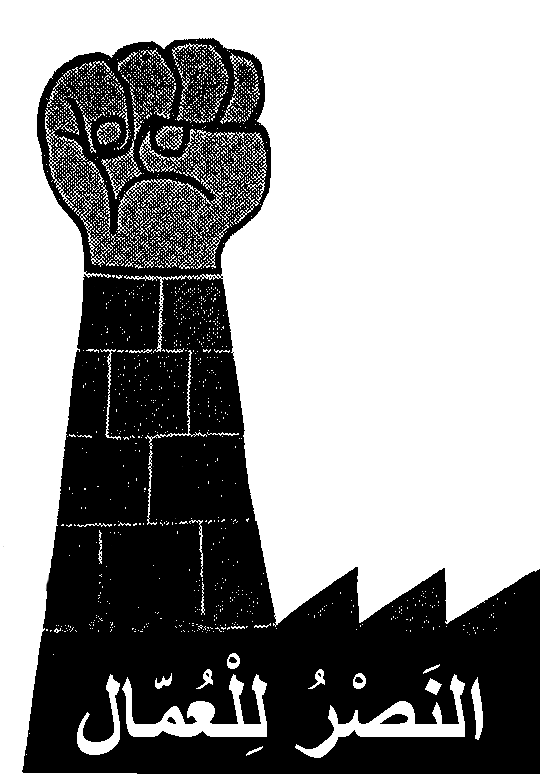
Power to the Workers

  • Previous
  • 1
  • …
  • 29
  • 30
  • 31
  • …
  • 42
  • Next

Search 3arabawy

Follow 3arabawy

  • Facebook
  • Flickr
  • Instagram
  • X
  • YouTube
  • Spotify
©2026 3arabawy