Skip to content
3arabawy
3arabawy

Hossam el-Hamalawy

  • Home
  • About
  • Archive
  • Blog
  • Photos
  • Books
3arabawy

Hossam el-Hamalawy

Tag: workers

Nasr City gardeners resume work; threaten new strike if their demands not met

Posted on 27/02/200717/01/2021 By 3arabawy

Journalist and friend Jano Charbel sent me the following update on the Nasr City gardeners’ strike that started yesterday:

Cairo Garden Workers to Expand Scope of Strikes if their Demands are not Met

Following yesterday’s strike, workers and employees at Nasr City’s International Garden resumed work on Tuesday, February 27; yet announced that they would expand the scope and duration of their strikes if their fiscal demands are not met.
Around 600-800 workers from seventeen other gardens, affiliated to the International Garden, joined their (nearly) 300 fellow workers in a solidarity strike staged in Nasr City – in an impressive mobilization of non-unionized workers who are, nonetheless, united.
There are a total of twenty-six public/specialized gardens, in & around Cairo, that are affiliated to Nasr City’s International Garden – the workers of all these gardens share similar grievances and demands.
There are a total of nearly 3,000 workers employed in the public/specialized gardens of Nasr City, Helwan, Shobra, the Sixth of October City, and other districts. These workers have raised three demands to the gardens’ central administration – which is headquartered in the International Garden, on Nasr City’s Abbas El-Akkad St.
Dozens of workers at the International Garden unanimously agreed that their demands, and those of their fellow workers employed in affiliated gardens, are:
1. That, in accordance with national labor legislation and ministerial decrees, all workers who have been employed (at any of these gardens) for over three years should be granted full-time employment contracts – with all associated socio-economic rights & benefits.
2. The payment, in full, of five annual pay raises – which the administration has failed to provide (despite the fact that these gardens generate untold profits.)
3. The payment of 50% of each worker’s basic wage – for the compensation of work-related injuries, illnesses, and health hazards.
The average total wages (including all incentive pay) of a worker employed in the International Garden amounts to between LE 250-300 per month (approximately US$ 48/month)
International Garden Worker, Abdel Maqsoud Mohammad, said “I live in Munuf, in the Munifiya Governorate, I wake up at 4am every morning in order to commute to Cairo. I have been working at this garden for 14 years now. Yet I still have not signed a contract of full-time employment. I have six children and I make only LE 250 per month. Our administration is simply inhuman.”
“Our administration keeps us in the dark regarding how much money this garden generates annually. What we all know is that the administration, and the Governorate of Cairo, rent out garden land on which the Wonderland Amusement Park operates – to the tune of LE 2 million in rent per year” said another worker named Hamdi.
“The large profits that this garden generates are funneled from our administration to the administrative personnel employed at the Governorate of Cairo. We are deprived of our fair share.” added Hamdi.
Another garden worker shouted out “what we are subjected to is blatant fraud and exploitation.”
Dozens of workers spoke of resuming, and even expanding, their strike within this coming week if their administration continues to disregard their three demands – which the workers listed in a group petition filed to their administration.

UPDATE: Here’s a photo, taken by Jano, of some of the workers at Nasr City’s International Garden:
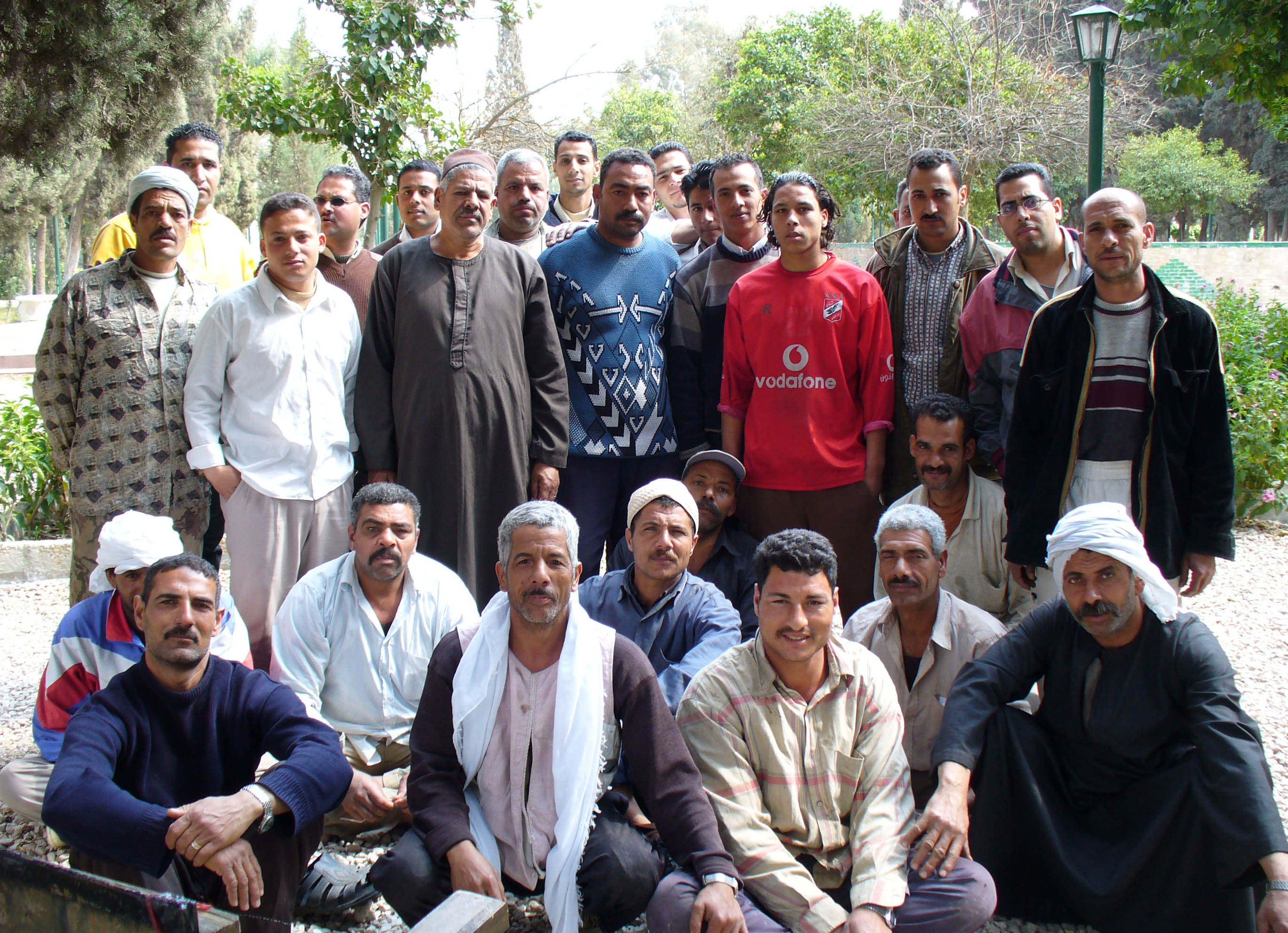
Gardeners on striker

Egypt under Ramses III, c1155BC: First recorded workers strike

Posted on 27/02/200726/03/2015 By 3arabawy

This is one other thing they don’t teach us in history classes at school. The first recorded workers’ strike in history happened in Ancient Egypt…

A contemporary document recounting the first ever recorded labor strike, which occurred in Deir el Medina, Ancient Egypt during the reign of Ramses III when workers did not receive their rations.
The stoppage occurred in the 12th century BC, on the 21st day of the second month in the 29th year of the reign of the pharaoh Ramses III, while Ramses was fighting a series of wars and engaging in an extensive building campaign.
The strikers were hereditary craftsmen who worked on the tombs of the pharaohs, the vast complexes that to this day draw visitors from all over the world to the Valley of the Kings.
This papyrus was written by the scribe Amennakhte at Deir el Medina. It describes the workers’ struggle, and the corruption which had spread throughout the administration.

1000 gardeners on strike in Nasr City

Posted on 27/02/200716/01/2021 By 3arabawy

One thousand gardeners went on strike today in my neighborhood, few blocks away from my house. Unfortunately, I was in Helwan then, so I missed it. But luckily, journalist (and neighbor) Jano Charbel managed to go and check out the scene. Here’s the report he sent me:

Around 1,000 Public Garden Workers on Strike at Nasr City’s International Garden
Around 300 garden workers employed at Nasr City’s International Garden (Al-Hadeeqa El-Dawliya, on Abbas El-Akkad St.) went on strike today, February 26. Forces from the interior ministry were hastily deployed in and around the garden.
Over 800 other garden workers, from seventeen other public/state-owned gardens, joined the strike in solidarity with the workers at the International Garden. The strike lasted from 9am until 1:30pm; “these strikes are expected to continue again from tomorrow and beyond until we start receiving our rights,” said a group of workers employed at the Nasr City garden.
Many of the workers employed at Cairo’s twenty-six public/state-owned gardens (the operations of which are all directed by the Governorate of Cairo) have expressed their dissatisfaction with these public gardens’ administrations.
Ali Saleh, a worker at the International Garden said “we are on strike due to a number of reasons – this garden makes very substantial profits, most of which go directly to the administrative personnel at the Governorate of Cairo. We are excluded from profit sharing. The wages that we receive are, by any standards, insufficient. A primary factor behind this strike is the fact that the majority of workers employed in Cairo’s state-run gardens are employed on temporary work contracts. Numerous workers have been on these temporary work contracts for over fifteen years!”
Saleh continued “our administration is unjust in its policies; it exploits us and treats us poorly.”
Another worker employed at the International Garden, who wished to remain anonymous “for security reasons,” said “there is no such thing as promotions in this garden. We are neither promoted in rank nor are our wages or incentives increased. Our work generates untold profits for this garden, yet we don’t receive our shares.”
None of the workers employed at the International Garden are unionized, they said.

The workers told Jano they were resuming their sit in tomorrow Tuesday at 10am.

  • Previous
  • 1
  • …
  • 469
  • 470
  • 471
  • …
  • 485
  • Next

Search 3arabawy

Follow 3arabawy

  • Facebook
  • Flickr
  • Instagram
  • Bluesky
  • X
  • YouTube
  • Spotify
©2026 3arabawy