Skip to content
3arabawy
3arabawy

Hossam el-Hamalawy

  • Home
  • About
  • Archive
  • Blog
  • Photos
  • Books
3arabawy

Hossam el-Hamalawy

Tag: workers

Explosion of strikes rocks Egyptian firms

Posted on 22/02/200703/02/2021 By 3arabawy
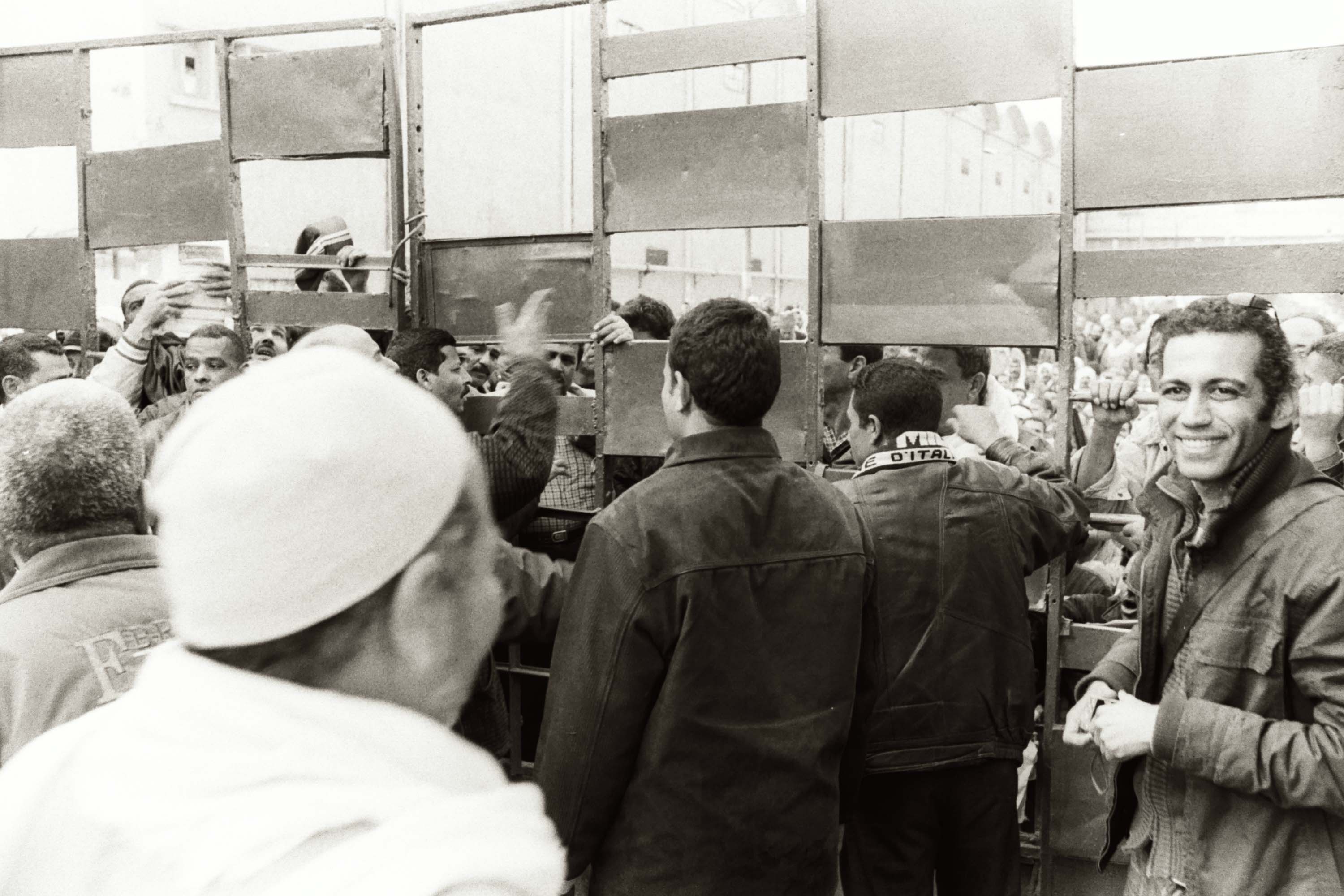
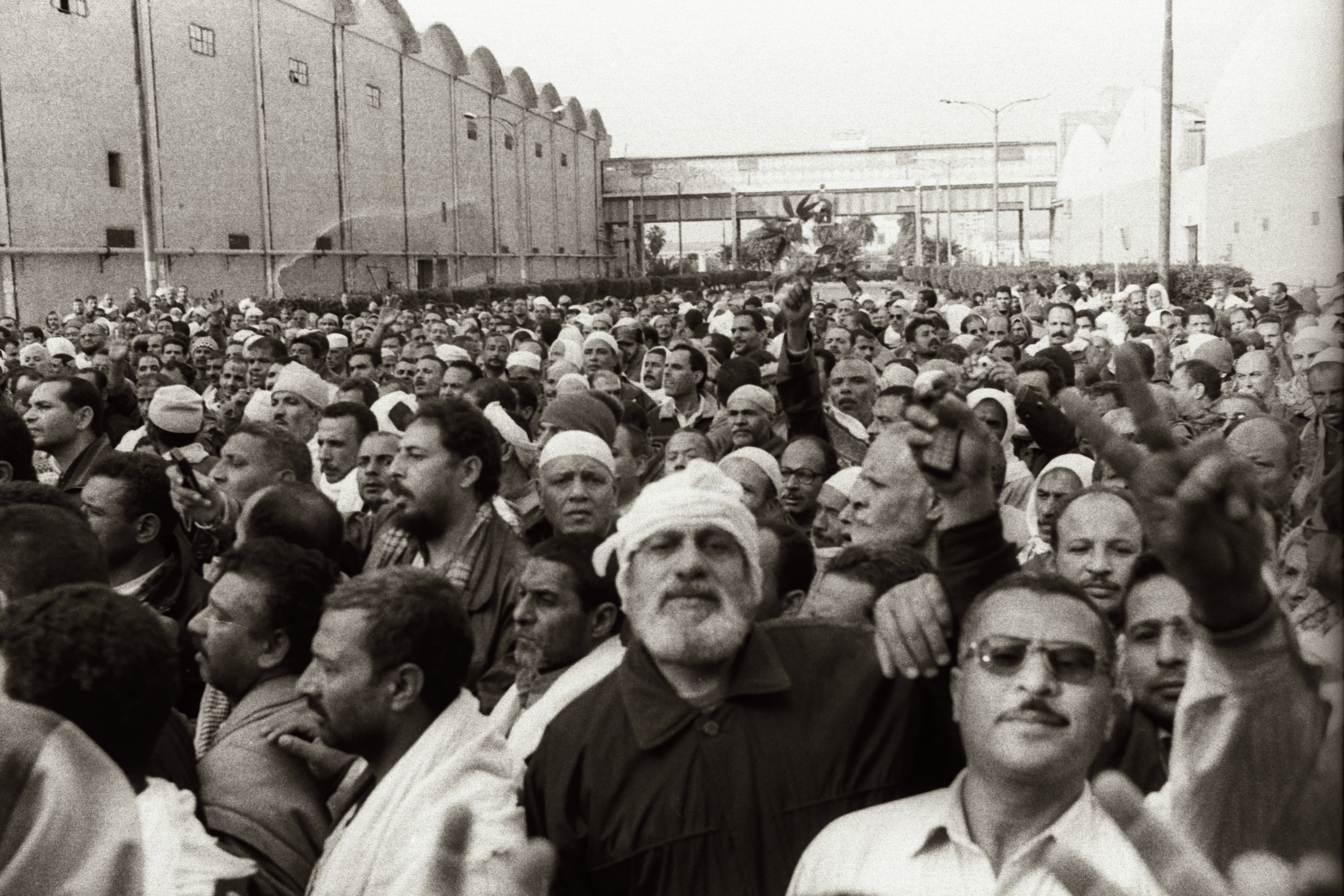
  • انتصار اضراب غزل كفر الدوار، فبراير ٢٠٠٧، عدسة دان موريسون
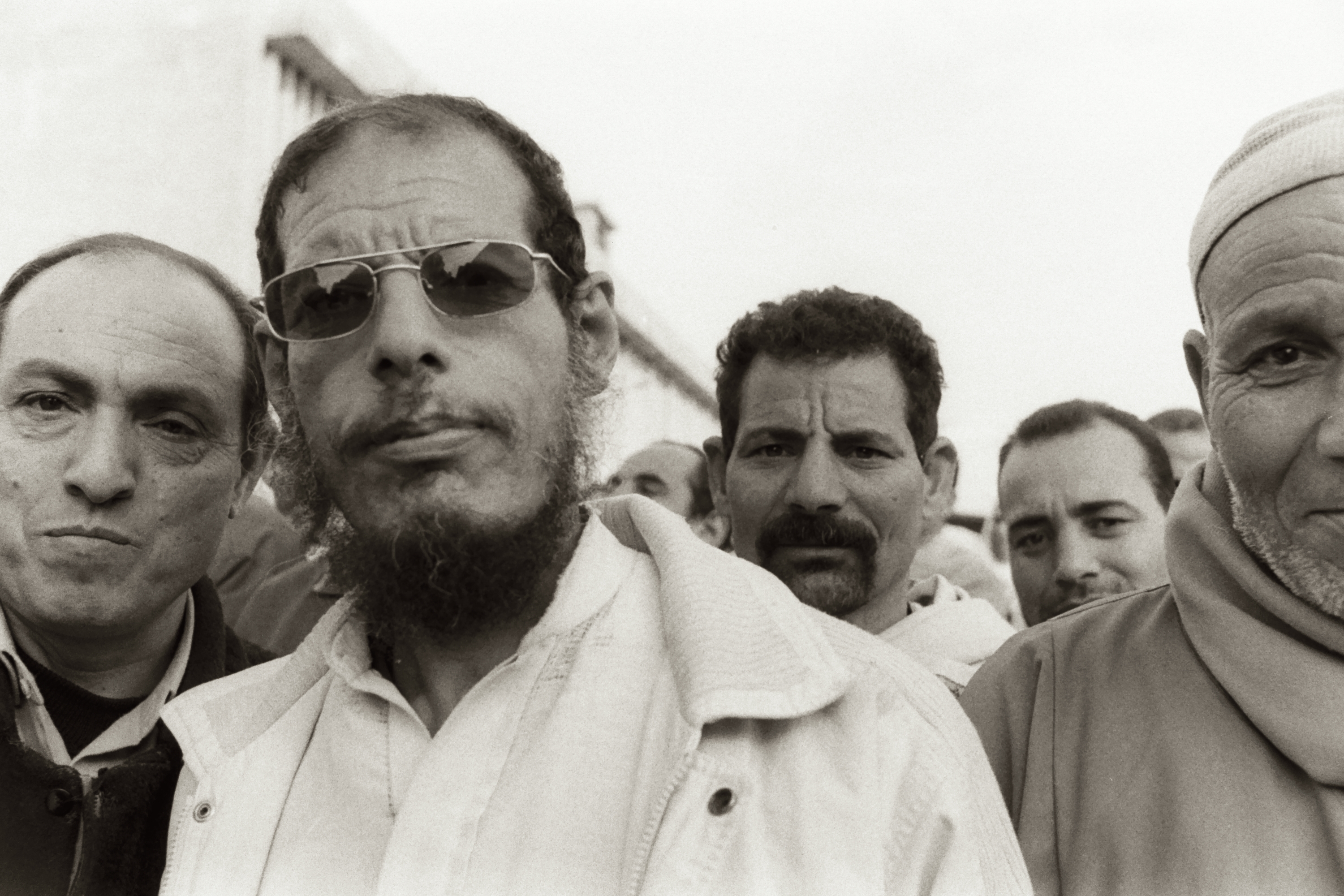
  • انتصار اضراب غزل كفر الدوار، فبراير ٢٠٠٧، عدسة دان موريسون
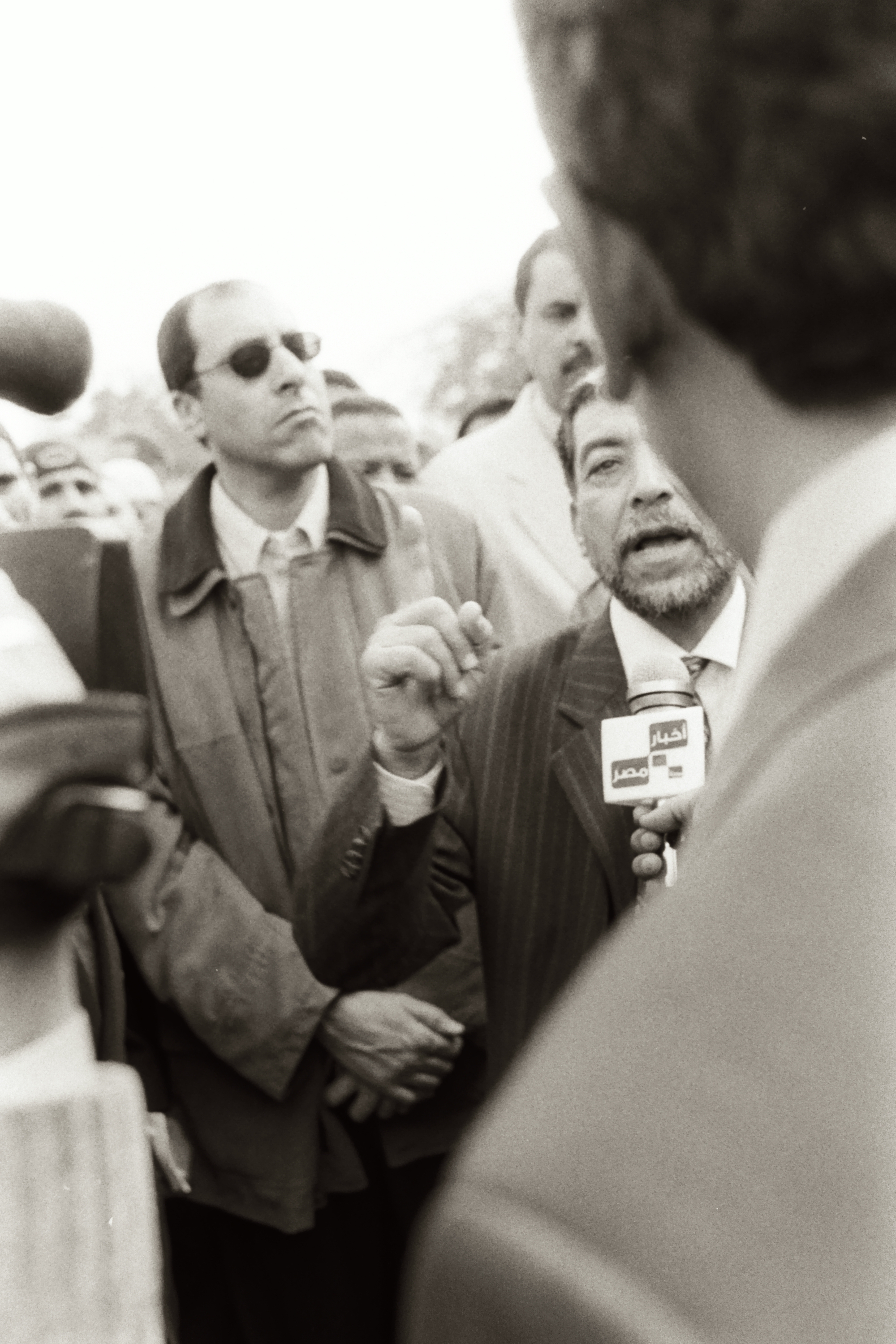
  • انتصار اضراب غزل كفر الدوار، فبراير ٢٠٠٧، عدسة دان موريسون
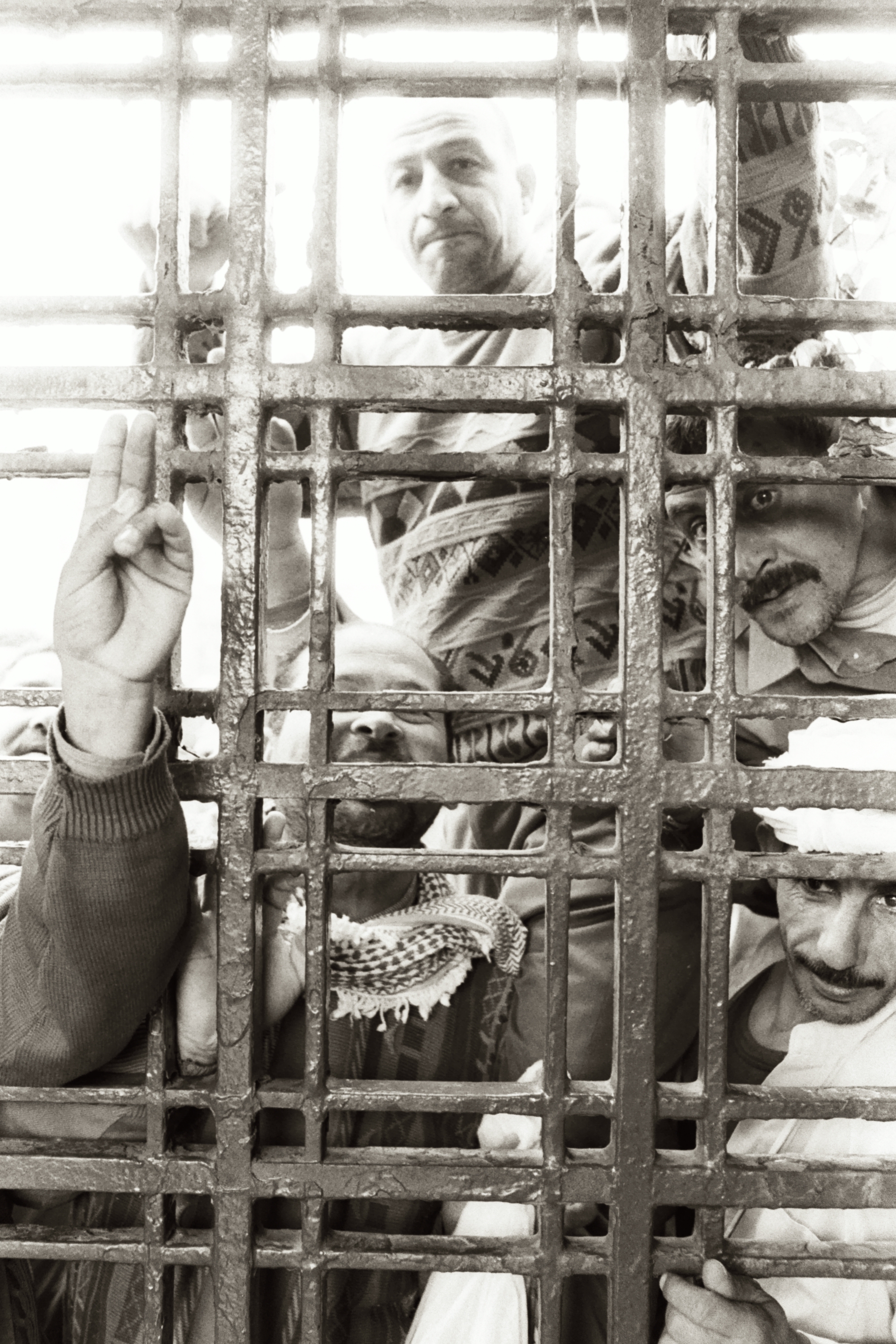
  • انتصار اضراب غزل كفر الدوار، فبراير ٢٠٠٧، عدسة دان موريسون
  • انتصار اضراب غزل كفر الدوار، فبراير ٢٠٠٧، عدسة دان موريسون

Dan Morrison reports for the San Francisco Chronicle:

Explosion of strikes rocks Egyptian firms
Thousands have walked off their jobs in a nation where such work stoppages are illegal — and many have won raises, benefits
Dan Morrison, Chronicle Foreign Service
Tuesday, February 20, 2007
Kafr el-Dawar, Egypt — Ali Ghalab sat on a dusty office couch in a pinstriped suit, explaining why his 11,700 employees joined a wave of wildcat strikes that have shocked the government and paralyzed Egypt’s textile industry.
“It’s the Muslim Brotherhood,” the factory chairman yelled, referring to the officially banned Islamist movement, “and the communists. The Muslim Brotherhood stands behind every trouble in every single factory.”
A mile away, more than 1,000 strikers had barricaded themselves inside the textile plant in Kafr el-Dawar, a gritty town on the Nile Delta about 100 miles north of Cairo. They were demanding more money and greater opportunity for promotion. A shipment of cotton fabric destined for Turkey was locked inside with the disgruntled employees.
“Ali is a shoe,” they chanted. “He is useless.”
Rattled by rising prices, falling benefits and looming privatization, tens of thousands of Egyptian workers at state-owned industries have been in rebellion. In recent weeks, more than 35,000 workers at nearly a dozen textile, cement and poultry plants have gone on strike in a nation where any strike is illegal and even the smallest public protest can be squelched with police truncheons. Train engineers, miners and even riot police also have walked off the job or held demonstrations in the past 2 1/2 months.
“It’s very unusual. There’s been nothing like this in at least five years,” said Gamal Eid, a lawyer at the Egyptian Organization for Human Rights. “It’s not just the number of strikes, it’s the number of people involved.”
The strikers are bucking the government and their own unions to secure better wages and benefits at a time when inefficient state-owned companies are being sold off or scaled down. State-owned companies employ 10 percent of Egypt’s workforce of more than 22 million.
Late last month, Investment Minister Mahmoud Mohieldin set off a minor panic when he announced that 100 state-owned companies would be sold to private owners this year. New foreign investors and cash-strapped state corporations are trying to cut back on expenses at most factories, which are in heavy debt due to mismanagement and an excess of employees, labor experts say.
For more than a generation, Egyptian factories have existed primarily to provide employment, a policy the government of President Hosni Mubarak has been pulling away from since the 1980s. In 1993, the Kafr el-Dawar plant, for example, had 28,000 workers; today it has 11,700.
Labor Minister Aisha Abdel Hadi was not available for comment for this report. But in a recent interview with the Cairo daily, Al Masry al Youm, she said Mubarak “cannot sleep at night knowing there is one unhappy worker.”
The growing tension between management and labor broke into open defiance late last year.
In December, 18,000 textile workers at Mahalla, Egypt’s largest public-sector factory north of Cairo, took to the streets over low wages and purported corruption. They won an annual bonus worth 45 days’ pay — but may strike again to demand the removal of their local union leadership, who sided with management.
“It won’t be two or three days, it’ll be an open-ended strike,” said Karim el-Beheiri, 23, a Mahalla leader. El-Beheiri said managers were retaliating by evicting retirees from company housing. “It’s a witch-hunt against our parents,” he said.
In Egypt, there are 13 industrial unions whose top leaders are appointed by the state; local-level officers are elected with the support of state security agents. Local law also does not permit labor competition — a union can’t organize workers from another sector, and there has never been a legal strike in Egyptian history, labor experts say.
“Control over the unions has always been thought of as a national security issue,” said Ragui Assaad, an Egyptian labor expert. “It’s not about wages and collective bargaining, it’s about making sure the state has control over an active, organized, movement that can make trouble.”
Labor’s victory at Mahalla set off a wave of wildcat strikes, as workers from other factories began demanding similar bonuses. Employees at Kafr el-Dawar seized their plant early this month. Six days into the strike, company Chairman Ali Ghalab said the workers were deluded if they thought they could get the same bonus as Mahalla.
“We are probably the most in debt of all the textile companies,” he said. “If I had the money, I would pay them.”
He said workers benefit from frequent promotions, inexpensive housing and a company hospital that even offers free open-heart surgery.
“They are being manipulated,” he said. “The governor himself went to see them the other day. They were so rude.”
At the factory, a small crowd of police and intelligence men listened to growing chants inside. A few striking workers laughed at management’s claims of health care and the opportunity of promotion. One said a friend had contracted hepatitis C after having a molar pulled by a company dentist.
The workers denied that the Muslim Brotherhood — whose members run as independents and comprise the largest opposition block in parliament — is linked to their strike.
“When the ruling party has a bad dream, they wake up and blame the Muslim Brothers,” said Khalid Ali, a 36-year plant veteran. “You know why we’re striking? Conditions have reached a dismal level. It’s bad for workers all over Egypt.”
Egypt’s growing economy can’t keep pace with the more than 600,000 graduates from technical colleges who enter the workforce annually. State-subsidized fuel prices rose 30 percent last year, and inflation passed 12 percent, while salaries have remained stagnant or fallen slightly, according to the Economist news magazine.
Egypt’s teachers routinely charge for after-school tutoring in exchange for passing grades, parents say.
“If you earn 500 pounds (about $87 a month), you have to pay 400 just to tutor your kid,” said Khalid Ali, citing a typical factory salary. Other men showed scars, a missing finger, a crooked shin and a gashed forearm — all the result of factory injuries.
As word that a compromise had been reached between Kafr el-Dawar workers and the Labor Ministry, cell phones rang, strikers chanted and held up their fingers in the V-for-victory sign. The government agreed to give them a cost-of-living allowance equivalent to a 45-day bonus, increased promotions and improved health care facilities among other guarantees.
As workers streamed into the factory’s concrete yard, a convoy of cars arrived carrying the local governor, Muhammad Shaarawy. A former general in the state security directorate, Shaarawy announced the deal via a weak bullhorn.
While Egypt’s security agencies typically crack down on protesters seeking political reform, they are often more tactful in their approach to labor uprisings, which can involve tens of thousands. In fact, security agents sometimes act as mediators during wildcat strikes, says Gamal Eid, the human rights lawyer.
They will do “whatever it takes to keep the pressure down,” he said.

Giza garbage collectors end their strike

Posted on 16/02/200726/12/2020 By 3arabawy

Around 3,000 garbage collectors in Giza ended their two-day strike on Wednesday, following threats from the company management threatened to fire them all, Al-Masry Al-Youm reported.

The strike started after the Giza governor decided to fire General Hafez Fekri, the head of Giza Cleaning & Beautification Authorities. The garbage collectors went on strike and protested in front of the Giza governorate HQ, denouncing the decision.

It may be unusual to find some workers going on strike in solidarity with their boss, but in the case of those garbage collectors, they feared the firing would be accompanied by taking away the bonuses and financial gains they achieved under the directorship of General Fekri.

“The strike did not just end by intimidating the garbage collectors,” a socialist journalist who followed the strike told me. “The company management assured the strikers that their gains would not be taken away, and that’s when the garbage collectors decided to suspend their action.”

Update on Ghazl el-Mahalla: Compromise rejected; impeachment campaign continues

Posted on 16/02/200716/01/2021 By 3arabawy

Once again, the militancy of the base cadres outdid that of their leaders.

Ghazl el-Mahalla workers rejected a compromise offered by the General Union on Wednesday– and initially accepted by a group of the December strike leaders–insisting on continuing the campaign to impeach their corrupt local union officials.

Ghazl el-Mahalla labor leaders arrived in the General Union of Textile Workers, on Wednesday morning for negotiations with the union bureaucrats. In the previous days, I was told, the General Federation of Trade Unions bureaucrats have been floating the idea of offering the Ghazl el-Mahalla workers the right to establish a “Representatives’ Committee” that will work side by side with the current Factory Union Committee the workers were trying to impeach.

The Representatives’ Committee was to include 105 (or 106–I heard the two figures) workers, elected from the floor shops, and was to have a power equal to that of the Factory Union Committee. The Federation was adamant about the impeachment proposal, fearing it could trigger a wave of impeachment proposals in other factories, and in other sectors. The Federation implied to the workers, I was told by an activist who attended the meeting, that the Factory Union Committee was to be “marginalized,” and that the Representatives’ Committee was to have “more say in how things are run in the factory.”

The labor leaders who arrived at the General Union, I was told by one of the December strike leaders, seemed to have accepted the compromise, and considered it a gain. (Even the Workers Coordination Committee’s initial statement I received, celebrated this as a victory. Also Socialist activists I spoke to on Wednesday afternoon, still considered it a “partial gain.”) However, Ghazl el-Mahalla workers’ militancy has outdone everybody’s… THE PROPOSALS WERE REJECTED BY THE FACTORY WORKERS, WHO INSISTED ON THE IMPEACHMENT OF THEIR FACTORY UNION COMMITTEE OFFICIALS.

“The news of the compromise had reached Mahalla already, over the mobile phones, as (the labor leaders) were heading back from Cairo in the buses,” one of the December strike leaders told me Thursday. “The workers at the factory said ahha (note: ahha is Egyptian colloquial for ‘screw this shit’). When they arrived in the factory, and each went to his floor shop and told the rest of what happened, there were angry shouts. The proposal was rejected.”

I asked the labor activist about what was the next step. He assured me the campaign to impeach the Factory Union Committee and the withdrawal from the govt-dominated General Federation of Trade Unions was still on, but did not provide me with details. “The mass resignations are ready. We will not pay a piaster to the Federation at the end of this month. We are out of it,” he said. “The government has to know what happened in December is nothing compared to what’s coming.”

Keep your eyes on Mahalla, dear readers. I assure you there are some fantastic developments in the making.

In other developments, more than 13,000 workers went on strike, 6am Thursday, at Samanoud Textile Factory, according to a statement I received from the Workers’ Coordination Committee, demanding the increase of their monthly food allowance to LE43, as decreed by the Labor Minister following the Kafr el-Dawar Textile strike.

The management of the company tried to avoid giving the workers the same treatment as their brethren at Kafr el-Dawar, claiming the Samanoud Textile company was not public, but private, sector. The workers accused the bosses of lying, as the private sector owns only 22% of the company’s shares, according to the Workers’ Coordination Committee.

The negotiations between the strikers on the one hand, and the management and State Security agents on the other hand, lasted for only two hours, after which the management succumbed to the workers’ demand. The strike was suspended, and work at the factory resumed at 8:30am.

And on the same day, 1900 textile workers went on strike in Ghazl Mit Ghamr company, protesting the witch-hunting campaign launched by the company’s manager Muhammad Abdel Ra’ouf Abdrabbo, who referred 17 workers to administrative disciplinary panels, accusing them of inciting their colleagues to go on strike. The workers had tried to go on strike last week, but suspended the attempt following threates from State Security agents coupled with a promise of a 30-day bonus by the management. (On pay day the management tried to pass this 30-day bonus as a “loan,” but retreated under workers’ pressure.)

The workers, according to the Workers’ Coordination Committee, are demanding the following:

-A halt to the withchunting by the management and revoking any punitive measures against the 17 workers
-Revoking the decision to transfer two labor activists to demoted positions
-Freezing the management board of the local branch of the union which has failed to represent the workers, and electing a new board to run factory union committee
-The non-renewal of the contracts of the company “consultants,” whose salaries are exponential, despite “their failure to provide anything to modernize the factory,” according to the statement I received from the workers coordination committee
-The return of the transportation service that used to be provided by the company, which helped the workers reaching their factory from the villages of Meit Ya’ish, Meit el-Ezz, Meit el-Faramawi, Barhamtoush

-Improving the medical care, which has been subject to austerity measures: There is not a single ambulance in the factory. The factory’s pharmacy is short of supplies.

  • Previous
  • 1
  • …
  • 470
  • 471
  • 472
  • …
  • 484
  • Next

Search 3arabawy

Follow 3arabawy

  • Facebook
  • Flickr
  • Instagram
  • Bluesky
  • X
  • YouTube
  • Spotify
©2026 3arabawy